BPM 12c Subprocesses (Part 2 of 3): Embedded Subprocess by Antonis Antoniou
June 11, 2016 Leave a comment
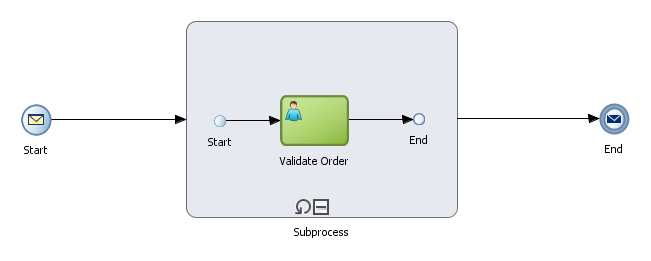
In this second blog on sub-processes we will explore the embedded sub-processes, also referred to as inline sub-processes and as the name implies this is a sub-process type that consists of a series of activities (for example tasks, gateways, events, etc.) that resides within the parent process.
An embedded sub-process has certain distinct characteristics such as they always begin with a none start event and end with a non end event, they do not contain swimlanes and most importantly they share their parent’s context, meaning they can access parent process data which simplifies things since you are not required to define input and output parameters and pass them as data objects. If required you can defined data objects that are local to your embedded sub-process.
An embedded sub-process is mainly used to simplify the process model by grouping activities together into an embedded sub-process that can be collapsed or expanded to hide and show the implementation details.
Another common use of the embedded sub-process is to define loops which will be the case with the sample process that we will implement as part of this blog post.
We will be implementing a very simple process which will make use of the embedded sub-process to loop through a list of order items for review.
Create the basic BPM application and BPM project (i named it OracleBPM12cEmbeddedSubProcessDemoApp and OracleBPM12cEmbeddedSubProcessDemo respectively) and choose "Empty Composite" in step 3 of the "Create BPM Application" wizard since we will first create the the XSD schema file to describe our process’s input and output parameters. Read the complete article here.
For regular information on Oracle SOA Suite become a member in the SOA & BPM Partner Community for registration please visit www.oracle.com/goto/emea/soa (OPN account required) If you need support with your account please contact the Oracle Partner Business Center.
 Blog
Blog  Twitter
  LinkedIn
 ![image[7][2][2][2]](https://paascommunity.com/wp-content/uploads/2013/04/image7222.png?w=20&h=20 "image[7][2][2][2]") Facebook
Facebook ![clip_image002[8][4][2][2][2]](https://paascommunity.com/wp-content/uploads/2013/04/clip_image00284222.jpg?w=26&h=23 "clip_image002[8][4][2][2][2]") Wiki
Wiki
 About Jürgen Kress

 PaaS Community Blog