PaaS (Process & Integration) Partner Community Newsletter March 2020

Congratulations to more than 850 consultants who achieved the Oracle Cloud Platform Application Integration Associate certification this fiscal year! To become an certified expert we offer you hands-on Oracle Integration and Digital Assistant bootcamps across the globe including Dallas, Redwood Shores, Sao Paulo, Riyadh, Utrecht, Reston, Riyadj, Delhi, Mumbai and Webtraining.

imageWatch Dhwani Shah (part 2), how Evosys transforms Real Estate solutions based on the Oracle Cloud Platform. We want to promote also your customer success, submit your story via the customer reference program.

Based on the huge demand we offer free online trainings for SaaS Integration:

· Oracle Application Integration Cloud Sales Specialist including free online exam!

· Oracle Application Integration Cloud Platform for Solution Engineer including free online exam!

· Free live virtual hands-on SaaS Integration Bootcamps to become an Oracle Cloud Platform Application Integration 2019 Associate | 1Z0-1042.

Thanks to the community for sharing all the integration articles: Oracle Integration at GitHub & Introducing the Box Adapter in Oracle Integration & ERP Integration using File Based Data Import: Oracle Integration & A Simple Guide to Connect to a Private FTP Server using FTP adapter & How to embed CDATA into XML: Oracle Integration Cloud & OIC Feature Flag – Data Stitch & Integration Versioning: Oracle Integration Cloud & Get XML Document from SOA Infra table & Unable to create an error notification rule in Oracle SOA Suite 12.2.1? Patch 26088894 is not the fix.

In the process & innovation section Jan shares an article When and How to Create an Integration to Call a Service from a Process? And Ankur on Managing Oracle Process Cloud Service (PCS) Application.

For a short summery of our monthly key information watch the PaaS Partner Updates on YouTube. The March edition highlights sales kits for partners, and hands-on chatbot & integration trainings for SaaS partners. This month’s community webcast will be an update on ERP Integration by Niall Commiskey. Join our PaaS Partner Community Webcast March 25th 2020.

Want to publish your best practice article & news in the next community newsletter? Please feel free to send it via Twitter @soaCommunity #PaaSCommunity!

To read the newsletter please visit www.tinyurl.com/PaaSNewsMarch2020

Please like and share the newsletter at Twitter and LinkedIn
PaaS Newsletter March 2020

PaaS Partner Community

For regular information on Oracle PaaS become a member in the PaaS (Integration & Process) Partner Community please register here.

clip_image003 Blog clip_image005 Twitter clip_image004 LinkedIn image[7][2][2][2] Facebook clip_image002[8][4][2][2][2] Wiki

Technorati Tags: newsletter,SOA Community newsletter,SOA Community,Oracle,OPN,Jürgen Kress

Jarvis Pizzeria: EAN / GTIN code validation in DMN Service by Marcel van de Glind

Iimagen this blog we describe the implementation of an EAN / GTIN code validator in een Decision Model Service.

As a Pizzeria that wants to treat the customer like a king, we think it is very important that we can always serve the customer with our full range of pizzas.

For this it is necessary that we have a good stock management policy. Every pizza we make must be processed accurately in the system. To simplify this processing, we provide each pizza box with an EAN barcode that needs to be scanned for stock management.

In this blog we describe a Decision Model that can be used to validate the scanned / entered EAN codes.

The purpose of this blog is to demonstrate that it is fairly easy to implement such an algorithm in a Decision Model.

What is EAN / GTIN?

From wikipedia: EAN also known as European Article Number or EAN) is a standard describing a barcode symbology and numbering system used in global trade to identify a specific retail product type, in a specific packaging configuration, from a specific manufacturer. The standard has been subsumed in the Global Trade Item Number standard from the GS1 organization; the same numbers can be referred to as GTINs and can be encoded in other barcode symbologies defined by GS1.

The most commonly used EAN standard is the thirteen-digit EAN-13.

And from the https://www.gs1.org/ website.

The last digit of all fixed-length, numeric GS1 Identification Keys is a check digit that ensures the integrity of the key. The check digit is calculated using a simple algorithm, based on the other numbers in the key. Read the complete article here.

PaaS Partner Community

For regular information on Oracle PaaS become a member in the PaaS (Integration & Process) Partner Community please register here.

clip_image003 Blog clip_image005 Twitter clip_image004 LinkedIn image[7][2][2][2] Facebook clip_image002[8][4][2][2][2] Wiki

Technorati Tags: SOA Community,Oracle SOA,Oracle BPM,OPN,Jürgen Kress

Machine Learning in Digital Process Automation — Part II by Ralf Mueller

image

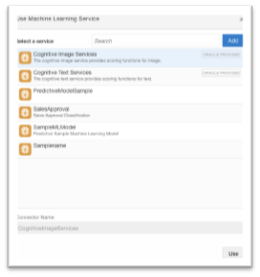
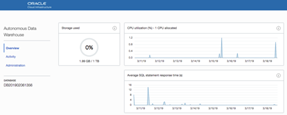
In this second part of the ML in Digital Process Automation article series, we focus on how to consume a Machine Learning Model created in Autonomous Data Warehouse (ADW) for scoring in Integration Cloud Processes. It is assumed that the reader is familiar with the content of Part I. For this article we assume an existing ML model stored on Object Storage. We will give step-by-step instructions on how to bring such models into Oracle Integration Cloud and use them in process automation.

By the time of this writing, the Machine Learning functionality for Integration Cloud Process Automation is in “Limited Availability” mode and must be enabled by a feature flag. Please get in touch with your Integration Cloud representative to get this feature enabled for your Integration Cloud instance.

OML Micro-Services

Oracle Integration Cloud comprises of a new set of micro-services for Machine Learning, the Oracle Machine Learning (OML) micro-services developed by the OML team in Oracle Advanced Analytics organization as part of the Oracle Machine Learning Platform. We will give an in-depth overview of OML micro-services in a later article, for now, it is sufficient to understand the functionality coming with OML micro-services

  • Cognitive Text Services
    Cognitive Text Services provide Machine Learning functionality for Text Classification, Keywords, Summary, Similarity, and Sentiment Analysis. The underlying ML models are pre-trained by Oracle and can be used out-of-the-box. Typical examples in digital process automation include giving a summary of a large text document or give sentiment on customer input.
  • Cognitive Image Services
    Cognitive Image Services provide Machine Learning functionality for Image Classification, NSFW content and Image Similarity. Like with the Cognitive Text Services, the underlying ML models are pre-trained by Oracle. Read the complete article here.

PaaS Partner Community

For regular information on Oracle PaaS become a member in the PaaS (Integration & Process) Partner Community please register here.

clip_image003 Blog clip_image005 Twitter clip_image004 LinkedIn image[7][2][2][2] Facebook clip_image002[8][4][2][2][2] Wiki

Technorati Tags: SOA Community,Oracle SOA,Oracle BPM,OPN,Jürgen Kress

Jarvis Pizzeria blog refresh part 1 of 3 by Marcel van de Glind

image

In this blog I do a quick refresh of the first 13 Jarvis Pizzeria blog posts (note: the different headers in this blog contain a link to the actual blog).

1. An Introduction to Jarvis Pizzeria!

This is the introduction to the blog series in which the original team is introduced and the scope of the blogs is indicated.

As stated before (Jarvis Pizzeria is back again), the scope has been extended from PCS only to the entire OIC. But this refresh is only about PCS (because that was the former scope). So also the solutions that we describe that we would do differently nowaday with the complete OIC toolbox. ICS and VBCS will be added more and more visibly over time in new posts.

2. Collaborate in PCS

The purpose of this blog is to find out the team collaboration capabilities of PCS. In this field nothing has really changed in itself during the last year. I think that this already works fine, so changes are not really necessary.

In the initial blog we states the following:

“It looks like the saved, but not yet published, changes within the application are automatically published, since we verified that the user taking over the lock directly sees those changes. But this might not be the desired behaviour.”

I assume that this behavior was an error, that has been resolved as a recent test has shown.

3. Integration in PCS

In this blog we demonstrated the creation and use of both a SOAP and a REST service in PCS (not yet in ICS, that will certainly be shown in a new blog later on).

4. Setting up the Jarvis 1.0 process

The purpose of the blog is to try out / demonstrate the various options for starting a process. In the structured process we start the 3 pizzeria sub-processes in different ways. Read the complete article here.

PaaS Partner Community

For regular information on Oracle PaaS become a member in the PaaS (Integration & Process) Partner Community please register here.

clip_image003 Blog clip_image005 Twitter clip_image004 LinkedIn image[7][2][2][2] Facebook clip_image002[8][4][2][2][2] Wiki

Technorati Tags: SOA Community,Oracle SOA,Oracle BPM,OPN,Jürgen Kress

Jarvis Pizzeria is back again by Marcel van de Glind

image

Jarvis Pizzeria is back after closing their doors for more than a year ago by now.

Because the OIC projects were not up for grabs in recent years, and it has not been easy to join one of those scarce projects, Jarvis Pizzeria had closed its doors in June 2018, it now appears to be temporary. In the meantime the entire Jarvis team went its own way, with everyone facing new challenges.

Recently OIC projects start to pop-up on several places in the Netherlands. in June 2019 I started working as an OIC developer on one of these projects, a large / prestigious project. The direct consequence of this is that Jarvis Pizzeria has also reopened its doors. After two months of preparation, this is the first blog in a new series of Jarvis Pizzeria blogs.

But things have changed compared to 2018:

  • The scope of Jarvis has been broadened. The focus was initially on PCS, now it is on OIC (so including ICS and VBCS).
  • Of the original founders I am now the only one left (@Richard Olrichs and @Marc Kuipers, thanks again for all the contributions and the pleasant cooperation).
  • Although I regret that Marc and Richard have left the Jarvis company, I am also very pleased to announce that there will also be a new face at Jarvis. The following paragraph has been specially set aside to introduce him.
  • In the past we all posted the same blog on our own company blog. In the future we will do something else. The full blog will be posted on one of our two company blogs and on the other’s company blog a summary of the blog will be posted with a reference to the full post.

So let me introduce the new OIC champion of Jarvis Pizzeria. Read the complete article here.

PaaS Partner Community

For regular information on Oracle PaaS become a member in the PaaS (Integration & Process) Partner Community please register here.

clip_image003 Blog clip_image005 Twitter clip_image004 LinkedIn image[7][2][2][2] Facebook clip_image002[8][4][2][2][2] Wiki

Technorati Tags: SOA Community,Oracle SOA,Oracle BPM,OPN,Jürgen Kress

Thoughts on Gartner RPA Magic Quadrant. RPA is no magic silver bullet! By Eduardo Chiocconi

image

During the course of this month, Gartner published a new research (MQ) about Robotic Process Automation (aka: RPA). You can get this report directly from Gartner or get one of the approved distributed reprints from the RPA leads in the Magic Quadrant (UiPath, BluePrism, etc).

Gartner indeed warrants the RPA technology the merits of being the fastest growing technology in the last couple of years and I am a witness in first person of this fact. In the Integration space, RPA has been a true disruptor, where RPA is used to cover different use cases that I have covered in other posts [Value of RPA and Use Cases] as well as webinars with joint Partners like eAlliance and JOLT Technologies. RPA is indeed a true disruptor in the space. If you want to check a replay of one of the webinar place follow this link: [Webinar Replay].

As I read the full introduction report before the individual vendor analysis, I was also surprised with the amount of cautionary comments and concerns if RPA is not used in the proper context and scenarios. They do a very good job at covering attended and unattended RPA use cases and that the majority of the RPA projects are really about screen scraping. Read the complete article here.

PaaS Partner Community

For regular information on Oracle PaaS become a member in the PaaS (Integration & Process) Partner Community please register here.

clip_image003 Blog clip_image005 Twitter clip_image004 LinkedIn image[7][2][2][2] Facebook clip_image002[8][4][2][2][2] Wiki

Technorati Tags: SOA Community,Oracle SOA,Oracle BPM,OPN,Jürgen Kress

OIC Process – Decision Tables or, as we say in Ireland, Táblaí Rialacha! By Niall Commiskey

image

I have only touched on this feature superficially in previous posts – now to some more detail!
Again, all quotes lifted from the docs are in italics.
Decisions is a very powerful feature in OIC.
Rules can be created within OIC Process applications, and are easily leveraged within your processes,
via the Decision Activity.

Not only that, Decisions can operate standalone; you can expose your Decision Model as a REST service to the outside world. Ergo, you can leverage rules from OIC Integrations, Visual Builder or any REST aware 3rd party app.
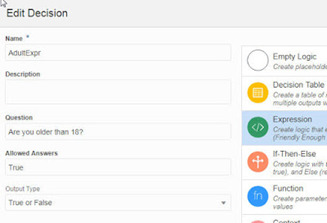
So let’s begin… Again – the business value add – Decision Models allow you to automate the decision logic inherent in your business processes. These models adhere to the DMN standard 1.1.and are FEEL aware – Friendly Enough Expression Language.This makes it easier for you to define your rules. So now to some simple examples – as you can see Decisions can be of different types. Read the complete article here.

PaaS Partner Community

For regular information on Oracle PaaS become a member in the PaaS (Integration & Process) Partner Community please register here.

clip_image003 Blog clip_image005 Twitter clip_image004 LinkedIn image[7][2][2][2] Facebook clip_image002[8][4][2][2][2] Wiki

Technorati Tags: SOA Community,Oracle SOA,Oracle BPM,OPN,Jürgen Kress

How to build approval process: Oracle Process Cloud by Ankur Jain

image

This blog will show the step-by-step process on how to create a process which involves a start activity, decision flow, human task, end event, etc in Oracle Process Cloud. We will use the "Form Approval Pattern" to develop the process and edit it as per our business need.

In this article, we will create a Loan Processing application in which user fills the loan application which goes to the approver if the loan amount is greater than >100 else the loan application will be auto-approved.

In the previous article, we showcased how to develop a simple process from scratch.

The process will look like below at the end of this article.

Let’s see how to use “Form Approval Pattern” in Oracle Process Cloud.

PaaS Partner Community

For regular information on Oracle PaaS become a member in the PaaS (Integration & Process) Partner Community please register here.

clip_image003 Blog clip_image005 Twitter clip_image004 LinkedIn image[7][2][2][2] Facebook clip_image002[8][4][2][2][2] Wiki

Technorati Tags: SOA Community,Oracle SOA,Oracle BPM,OPN,Jürgen Kress

Machine Learning in Digital Process Automation — Part I by Ralf Mueller

image

This is the first of a multi-part series of articles on how to use Machine Learning (ML) in Digital Process Automation and Integration applications in Oracle Integration Cloud. For this series, we’re using a mix of Oracle Cloud Services and implement a couple of use cases step by step. The first article (this one) focuses on setting up the Machine Learning environment and implementing the Machine Learning Model for our first use case.

Example Use Case

Approval Workflows are very popular examples of Process Automation applications since approvals are widely used in any organization, for example

  • Approve hiring of employee in Employee Onboarding process
  • Approve purchase of equipment in Procurement process
  • Approve travel expenses in Travel Management process
  • etc. etc.

The list can go on and on. For this series though, we take a use case from Sales and want to implement the following scenario

  • Orders from customers are coming in from Sales Reps of a company
  • Orders have, among other data, the following relevant information
    – Amount of the order
    – Quarter when the order was created (1, 2, 3, 4)
    – Customer Status (green, yellow, red)
    – Requested Discount by the customer (0–99%)
  • Depending on the order information, we want to predict whether the order should be approved by a Sales VP for the given quarter.

This is a typical situation for any company where Sales Reps bring in orders from customers and a Sales VP has to decide, if the order should be approved for this quarter or not. Especially towards a quarter-end, this can become quite stressful for the Sales VP, so some automation here would improve the Sales Process significantly and could help to handle more orders. Read the complete article here.

PaaS Partner Community

For regular information on Oracle PaaS become a member in the PaaS (Integration & Process) Partner Community please register here.

clip_image003 Blog clip_image005 Twitter clip_image004 LinkedIn image[7][2][2][2] Facebook clip_image002[8][4][2][2][2] Wiki

Technorati Tags: SOA Community,Oracle SOA,Oracle BPM,OPN,Jürgen Kress

Enable notification in 5 minutes: Oracle Process Cloud Service by Ankur Jain

imageWould you like to notify the user to take action (approve/reject) or just simply notify that some action has happened in middle of the process? Here is the article which helps you to enable the notifications in Oracle Process Cloud Service.

This article will not take more than 5 minutes to complete. Oracle PCS provides the Notify activity which allows us to send email notifications.

I’m extending my previous blog to enable the notification. So please check the article before you proceed further.

In the PCS, first, we have the turn on the from address. Please see the blog to see how to configure from address so that email can be sent.

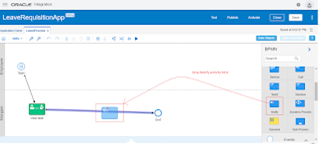
Let’s see how to configure the Notify activity.

  • Open the LeaveProcess and drop the Notify activity from the System Pallete between User Task and End activity

PaaS Partner Community

For regular information on Oracle PaaS become a member in the PaaS (Integration & Process) Partner Community please register here.

clip_image003 Blog clip_image005 Twitter clip_image004 LinkedIn image[7][2][2][2] Facebook clip_image002[8][4][2][2][2] Wiki

Technorati Tags: SOA Community,Oracle SOA,Oracle BPM,OPN,Jürgen Kress