Are MicroServices the Death of BPM and Case Management? By Jan Kettenis


When reading about MicroServices you could get the impression that orchestrated business processes or even case management applications will soon become legacy. I seriously doubt that, considering the challenges you will face with creating a landscape of MicroServices that will be able to support some of the characteristics that gave birth to BPM and Case Management in the first place. Also, Martin Fowler’s primary guideline concerning MicroServices is "don’t even consider MicroServices unless you have a system that’s too complex to manage as a monolith". In the following I discuss the issues you might face with Business Process and Case Management in a pure MicroServices architecture. My conclusion being that MicroServices will not be the death of BPMN or Case Management. On the contrary, it probably is going to help delivering on some of their promises we so far seem not always be able to deliver upon.
Update 23-03-2017: you may also be interested to learn that Netflix (one of the examples you will always find when people point to a successful MicroService implementation) found the need for a Netflix Conductor: a microservices orchestrator.

Business Processes and Cases Are Not MicroServices

Let’s face it, BPM is about (stateful) orchestration. MicroServices are supposed to be stateless, and its business capability should not depend on others to complete its work, which makes it like the opposite. In BPMN the order in which activities are executed is prescribed or ‘orchestrated’ as we say, by ‘flows’ that go from one point to another. Read the complete article here.

SOA & BPM Partner Community

For regular information on Oracle SOA Suite become a member in the SOA & BPM Partner Community for registration please visit www.oracle.com/goto/emea/soa (OPN account required) If you need support with your account please contact the Oracle Partner Business Center.

Blog Twitter LinkedIn image[7][2][2][2] Facebook clip_image002[8][4][2][2][2] Wiki

Technorati Tags: SOA Community,Oracle SOA,Oracle BPM,OPN,Jürgen Kress
PCS Correlation and PCS calling ICS by Niall Commiskey

image

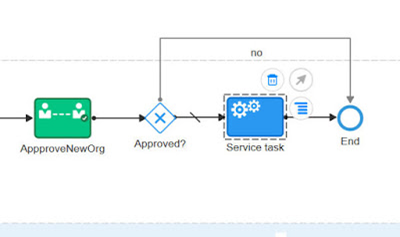
Nice new feature in PCS. from the docs…

Correlations enable business processes to communicate with each other based on the state of an instance. The state of all the process data objects in a process defines the state of the instance.

When you define a correlation for a business process, you can identify an instance in another process based on the instance state and then send a message to that specific instance.

For example, you can use correlations to communicate a sales process with the corresponding shipping and mailing processes. When the customer confirms an order, the shipping process sends a message to the shipping and mailing processes using a correlation that defines that it uses the order ID to locate the instances in both processes. Read the complete article here.

SOA & BPM Partner Community

For regular information on Oracle SOA Suite become a member in the SOA & BPM Partner Community for registration please visit www.oracle.com/goto/emea/soa (OPN account required) If you need support with your account please contact the Oracle Partner Business Center.

Blog Twitter LinkedIn image[7][2][2][2] Facebook clip_image002[8][4][2][2][2] Wiki

Technorati Tags: SOA Community,Oracle SOA,Oracle BPM,OPN,Jürgen Kress

Instance Archiving and Purging in Oracle Process Cloud Service by Antonis Antoniou

image

Archiving and purging your process instances systematically can improve drastically the performance of your processes. This task has been simplified in Oracle Process Cloud Service that gives you the option to run archives on demand or automate this task via scheduled jobs.

All archived instances (data) are stored in the Oracle Cloud Storage Service that is bundled with your Oracle Process Cloud Service. Archived instances are compressed in a zip file and once an archive task is processed, you will receive an email that will contain the link to the zip file that you can click on it to download the archived instances.

Purge will remove the BPM runtime information. Purge runs as a separate job and runs directly on the database. So when you configure archiving and purging, then two separate jobs will be executed independently of each other. So let’s see how you can schedule instance archiving and purging.

Configuring instance archiving and purging is an administrative task, therefore from the Oracle Process Cloud Service home page click on the “Configure” banner to go to the application settings. Read the complete article here.

SOA & BPM Partner Community

For regular information on Oracle SOA Suite become a member in the SOA & BPM Partner Community for registration please visit www.oracle.com/goto/emea/soa (OPN account required) If you need support with your account please contact the Oracle Partner Business Center.

Blog Twitter LinkedIn image[7][2][2][2] Facebook clip_image002[8][4][2][2][2] Wiki

Technorati Tags: SOA Community,Oracle SOA,Oracle BPM,OPN,Jürgen Kress
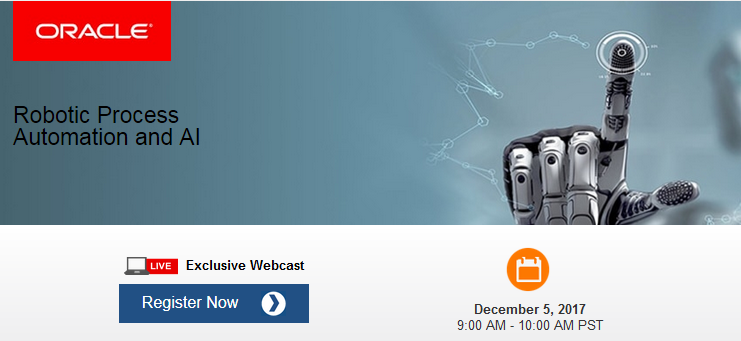
Robotic Process Automation and AI – Webcast December 5th 2017

imageSimplify Legacy Complexity to Turbo Charge Digital Transformation

Robotic Process Automation (RPA) is a hot topic because its easy record and playback capability enables you to deliver immediate results while putting you on the fast-track to AI-powered recommendations and Adaptive Case Management. If you’ve got legacy systems of record, dashboards, or spreadsheets you manage manually, RPA’s computer vision technology with Oracle Cloud Platform for Integration and Automation can take on mundane tasks and free up critical resources to help you grow your business.
Join Oracle’s Vikas Anand, VP Product Management, and Bobby Patrick, UiPath’s CMO on this webcast as we discuss how Oracle Integration Cloud with RPA can help you:

Oracle Integration Cloud (OIC) is available

image

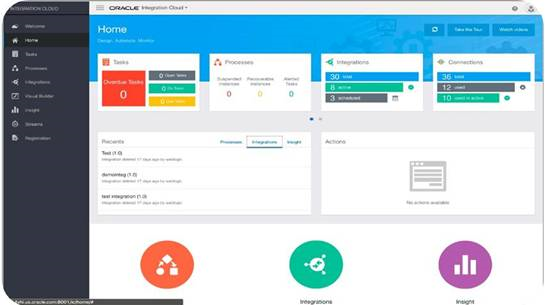
Oracle Integration Cloud (OIC) brings together all the capabilities of Application Integration, Process Automation, Visual Application Building and Integration Analytics into a single unified cloud service. Oracle Integration Cloud now brings real-time and batch based integration, structured and unstructured processes, case management, stream analytics and integration insight allowing customers to service all their end to end integration needs in one cohesive platform so that all users can now build and deliver capabilities needed to realize true Digital Business Transformations.  Billing is simplified with a single metric of OCPUs per hour (no more connection or user counting!!).  Natively discover and invoke integration flows from processes in OIC and vice versa. Customers can configure and schedule patching according to their own schedule, and they can scale the Database to accommodate their business’s retention policy.  The Integration Cloud runtime can be scaled out to meet the most demanding customer volumes, and VPN is now available so customers can choose to use the Connectivity Agent, API Platform, or VPN for on-premises application connectivity.

Oracle Integration Cloud Overview Video (YouTube)

Key Features:

· SaaS and On-Premises Integration: Quickly connect to 1000s of SaaS or on-premises Applications seamlessly through 50+ native app adapters or technology adapters. Support for Service Orchestration and rich integration patterns for real-time and batch processing.

· Process Automation: Bring agility to your business with an easy, visual, low-code platform that simplifies day to day tasks by getting employees, customers, and partners the services they need to work anywhere, anytime, and on any device. Support for Dynamic Case Management

· Visual Application Design: Rapidly create and host engaging business applications with a visual development environment right from the comfort of your browser.

· Integration Insight: The Service gives you the information you need — out of the box, with powerful dashboards that require no coding, configuration, or modification. Get up and running fast with a solution that delivers deep insight into your business.

· Stream Analytics: Stream processing for anomaly detection, reacting to Fast Data. Super-scalable with Apache Spark and Kafka.

Key Differentiators:

Oracle Integration Cloud is an industry recognized leader in Application Integration and Process Automation. Both Gartner and Forrester have recognized Oracle iPaaS as a Leader for its vision and strategy in their respective reports for the year 2017.   Oracle Integration Cloud is the only product on the planet that brings together all key elements of SaaS Extension and Integration under one product. The service also seamlessly integrates with Oracle API Platform Cloud Service for API first design and/or exposing Integrations as APIs.

Learn more about Oracle Integration Cloud here

Partner Resource kit: Presentation, faq, click-through demo, documentation and decision matrix published at our SOA Community Workspace (SOA Community membership required):

· Oracle Integration Cloud Overview (PPT)image

· Frequently Asked Questions

· Oracle Integration Cloud Click-through Demo

· Oracle Integration Cloud Documentation

· Cloud Integration Decision Matrix

· Overview Video YouTube

· Oracle Integration Cloud product page

    SOA & BPM Partner Community

    For regular information on Oracle SOA Suite become a member in the SOA & BPM Partner Community for registration please visit www.oracle.com/goto/emea/soa (OPN account required) If you need support with your account please contact the Oracle Partner Business Center.

    Blog Twitter LinkedIn image[7][2][2][2] Facebook clip_image002[8][4][2][2][2] Wiki

    Technorati Tags: SOA Community,Oracle SOA,Oracle BPM,OPN,Jürgen Kress

BAM Data Objects by Marcel van de Glind

image

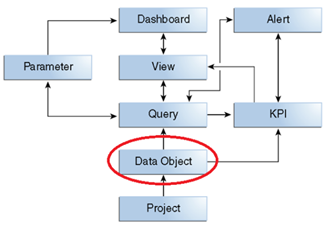
In previous posts, I’ve focused on the components around BAM (starting with Impact of ACM Implementation on BAM). Now is will start with a number of posts that are related to the components of BAM. Hereby I will use the image below. The image comes from the BAM documentation of Oracle. This post will mainly be about Data objects.

A BAM data object models data for use within BAM. It contains the data to be monitored. The data can be saved in raw format in a database or in an external table. The data can also be a stream from an ongoing activity.

A data object is structured like a table, with columns and rows. A column can be one of these types:

  1. A measure column contains numeric data, such as procedure costs or case processing times.
  2. A dimension column contains data used to group or partition numeric data, such as departments or case type.
  3. An attribute column contains information that can be used for filtering or references, such as an ID or a timestamp.

A hierarchy is a set of dimension columns in a data object with a hierarchical relationship, such as Judicial system, Department, Team and Employee.

The following types of data objects exist:

  1. A simple data object is used as is. It can contain indexes and hierarchies, but no other column additions or modifications. It corresponds to a database view in the BAM database. Other data objects can use or refer to simple data objects.
  2. A derived data object extends a simple data object or another derived data object. It inherits the columns and hierarchies of the parent data object and adds its own columns. Read the complete article here.
  3. SOA & BPM Partner Community

    For regular information on Oracle SOA Suite become a member in the SOA & BPM Partner Community for registration please visit www.oracle.com/goto/emea/soa (OPN account required) If you need support with your account please contact the Oracle Partner Business Center.

    Blog Twitter LinkedIn image[7][2][2][2] Facebook clip_image002[8][4][2][2][2] Wiki

    Technorati Tags: SOA Community,Oracle SOA,Oracle BPM,OPN,Jürgen Kress

BAM Database by Marcel van de Glind

image

Recently I did a POC with BAM 12c at the customer. In a series of post’s I will describe my findings/experiences.
In the first post I described the initial situation (Impact of ACM Implementation on BAM). And in the second post I described the solutions we have recognised/examined to make Management Information (MI) available to the ACM implementation.

During this examination we also looked in detail to the BAM database. The relevant findings of this are described in this post.

In this description we begin from BAM. The Data Objects of the ACM case with associated Case Activities can be found in the processanalytics directory of BAM. See figure below.

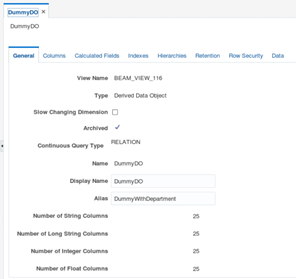
The default Data Object ‘Activity ‘ looks like this.

Where it is about here is that there is a reference to the used database view (BEAM_VIEW_25). We also see that the ALIAS field is not filled in. In the following custom Data Object we see that there is an ALIAS filled in.

The filled in alias is the ‘Synonym’ of the view on the database. In the list below we see that there is a synonym on the database for beam_view_116 and for beam_view_25 that this is not the case. Read the complete article here.

SOA & BPM Partner Community

For regular information on Oracle SOA Suite become a member in the SOA & BPM Partner Community for registration please visit www.oracle.com/goto/emea/soa (OPN account required) If you need support with your account please contact the Oracle Partner Business Center.

Blog Twitter LinkedIn image[7][2][2][2] Facebook clip_image002[8][4][2][2][2] Wiki

Technorati Tags: SOA Community,Oracle SOA,Oracle BPM,OPN,Jürgen Kress
PCS 17.1.3 leveraging ICS by Niall Commiskey

image

Now we have even tighter integration between PCS and ICS. Together they provide us with an unbeatable process and integration platform.
Let’s start with a simple example –
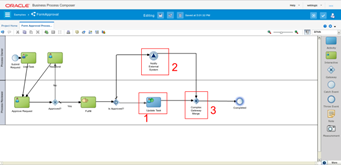
Here is my ICS process – all it does is create an organization in Service Cloud.

Now to PCS – I can "register" my ICS environment in Workspace (Administration – Services).

Now to my process – this is a simple order process. The order comes from an organization.
A confirmation email is sent to the Org email address, once the order has been approved. Read the complete article here.

SOA & BPM Partner Community

For regular information on Oracle SOA Suite become a member in the SOA & BPM Partner Community for registration please visit www.oracle.com/goto/emea/soa (OPN account required) If you need support with your account please contact the Oracle Partner Business Center.

Blog Twitter LinkedIn image[7][2][2][2] Facebook clip_image002[8][4][2][2][2] Wiki

Technorati Tags: SOA Community,Oracle SOA,Oracle BPM,OPN,Jürgen Kress

Migrating your Oracle BPM assets into Oracle Process Cloud Service (PCS) by Andre Boaventura

image

If you are already an Oracle BPM user, it is likely that you might have heard or even ventured in its respective cloud version called Oracle Process Cloud Service (aka PCS). Essentially, Oracle PCS is a solution that enables you to rapidly design, automate, and manage business processes, as well as it is done with Oracle BPM, however the major advantage is that you can do everything in the cloud, without any concerns with infrastructure installation, setup and provisioning while keeping IT teams focused on high-value projects rather than endless tuning, monitoring, troubleshooting and workarounds, as regularly it is required to be done for on-premise projects, which in turn, allows you to focus on the business value of your solution, that is what really matters whenever we  talk about Business Process Management.

I have been working with several Oracle BPM customers in the last few years in my current role as Senior Principal Product Manager, and I have seen along these years, an increasing demand of Oracle customers wishing to move to cloud as soon as possible, given all the very known benefits that are spurring adoption such as lower costs, greater agility, improved responsiveness and better resource utilization among other technical and business drivers.

Also, there are lots of new customers that want to get started with a streamlined solution to model, design, implement, run and monitor their processes. Thus, as you can notice, Oracle PCS is the perfect match to address all of these customer requirements mentioned above. Read the complete article here.

SOA & BPM Partner Community

For regular information on Oracle SOA Suite become a member in the SOA & BPM Partner Community for registration please visit www.oracle.com/goto/emea/soa (OPN account required) If you need support with your account please contact the Oracle Partner Business Center.

Blog Twitter LinkedIn image[7][2][2][2] Facebook clip_image002[8][4][2][2][2] Wiki

Technorati Tags: SOA Community,Oracle SOA,Oracle BPM,OPN,Jürgen Kress
Adaptive Case Management in PCS – PaaS Partner Community Webcast – October 31st 2017

image

Attend our October edition of the PaaS Partner Community Webcast live on October 31st 2017 at 16:30 CET. In the webcast Eduardo Chiocconi will update you on the Oracle Adaptive Case Management functionality within Process Cloud Service.image

Eduardo Chiocconi LinkedIn & Twitter

Visit the registration page here.

Call ID: 5566478 Call Passcode: 244096

UK: +44 (0) 208 118 1001 & United States: 140 877 440 73

More Local Numbers

Oracle is adding a new important capability to its Process Automation solution in the cloud: Adaptive Case Management. In this session we will cover the latest developments of this new added functionality including Best Next Actions for your end users, Milestone-based case tracking and business friendly case modeling. This new functionality complements the existing structured and deterministic BPMN modeling capabilities and allows combining structured and unstructured to address a larger number of business processes.

Schedule:

Tuesday October 31st 2017 16:30 – 17:30 CET

Visit the registration page here.

Missed our PaaS Partner Community Webcast? – watch the on-demand versions:

· Oracle OpenWorld 2017 September 25th 2017

· Cloud Compliance & Certification

· Wercker July 21st 2017

· Sales Play webcast June 28th 2017

· Process Cloud Service update – DMN capabilities May 23rd 2017

· Drive DevOps Agility and Operational Efficiency with Oracle Management Cloud April 25th 2017

· Implementing DevOps and Agile Methodologies in Oracle Projects March 21st 2017

· Mobile Cloud Service & Chat Bots February 28th 2017

· b2b January 31st 2017

· Community Resources & free Cloud trails December 20th 2016

· SOA 12 & BPM Suite 12c Roadmap update November 29th 2016

· Microservices October 25th 2016

· Oracle OpenWorld 2016 update September 27th 2016

· API Cloud Platform Service August 30th 2016

· BPM Suite & PCS Update July 26th 2016

· Integration Cloud Service June 28th 2016

· Sales Plays Webcast June 9th 2016

· Real-Time Integration Business Insight May 31st 2016

For the latest information please visit Community Updates Wiki page (SOA Community membership required).

SOA & BPM Partner Community

For regular information on Oracle SOA Suite become a member in the SOA & BPM Partner Community for registration please visit www.oracle.com/goto/emea/soa (OPN account required) If you need support with your account please contact the Oracle Partner Business Center.

Blog Twitter LinkedIn image[7][2][2][2] Facebook clip_image002[8][4][2][2][2] Wiki

Technorati Tags: SOA Community,Oracle SOA,Oracle BPM,OPN,Jürgen Kress