SOA Suite UMS: Deregister obsolete Messaging Client applications by Martien van den Akker

clip_image002There are already several blogs on how to receive and send email using the UMS email adapter. A few good starting points that use GMail as a provider are the ones written by our respected con-colleagues of Amis:

So I won’t bother to do a how-to on that on my account. Although I managed to get that working with a local Exchange setup.

What I managed to do is to read e-mail and then process it to upload the attachments and body using BPEL and java in a Spring-Context to Adaptive Case Management. If you want to do something similar make sure you install the patch 18511990 for fetching the attachment-properties and -content, since without the patch the properties for inline attachements are not written properly to the soa-infra database. See my earlier blog-posts here and here.
Having it all setup and playing around with it, you might end up in the situation that the service won’t listen to the actual email-address you reserved for it, as I did. This might be the case when you change the email address in your receiving adapter component in the composite. Or after deploying several versions of the composite, especially with different addresses.
It turns out that there is a panel to deregister Messaging Client Applications to cleanup the mess.
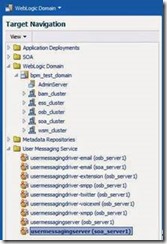
First go to the Enterprise Manager and under the Weblogic Domain navigate to the ‘usermessagingserver’ (there are also entries for the different usermessagingdriver’s, but in this case you need the server itself):

Right click on it and in the pop-up choose ‘Messaging Client Applications’: Read the complete article here.

SOA & BPM Partner Community

For regular information on Oracle SOA Suite become a member in the SOA & BPM Partner Community for registration please visit www.oracle.com/goto/emea/soa (OPN account required) If you need support with your account please contact the Oracle Partner Business Center.

Blog Twitter LinkedIn image[7][2][2][2] Facebook clip_image002[8][4][2][2][2] Wiki

Salesforce und SAP verbinden – Webcast July 31st 2015

imageOPITZ Consulting Presents: Salesforce und SAP verbinden – Die Oracle Integrationsplattform in der Cloud oder On-Premise

Join the Webcast July 31st 2015 10.00-11.00 am GMT

Highlights

Auch in Deutschland gewinnt das Thema Cloud an Fahrt. Zunehmend werden Softwarepakete als SaaS-Lösungen gleich in der Cloud angeschafft, weil die Vorteile, sich nicht um den Betrieb kümmern zu müssen und die damit einhergehende Flexibilität, starke Treiber sind nicht nur in der IT, auch in den Fachbereichen. Diese SaaS-Systeme müssen mit der bestehenden Anwendungslandschaft integriert werden: schnell, übersichtlich, qualitativ hochwertig und wartungsoptimal.
Dieses Webinar stellt Möglichkeiten und Architekturen vor, wie eine Integration mit Cloudsystemen aussehen kann und diskutiert auch gleich die Frage, ob die passende Integrationsplattform dann nicht auch in der Cloud stehen sollte. iPaaS ist hier das magische neue Buzzword: Integration Platform as a Service.
Wir zeigen an einem Livebeispiel mit der Oracle BPM Suite 12c/ SOA Suite 12c, wie sich Salesforce als Cloudsystem und SAP als typische On-Premise Installation für den Anwendungsfall des Ordermanagements miteinander verbinden lassen.

For details please visit the registration page here.


SOA & BPM Partner Community

For regular information on Oracle SOA Suite become a member in the SOA & BPM Partner Community for registration please visit www.oracle.com/goto/emea/soa (OPN account required) If you need support with your account please contact the Oracle Partner Business Center.

Blog Twitter LinkedIn image[7][2][2][2] Facebook clip_image002[8][4][2][2][2] Wiki

Deploying SOA Suite 12c artifacts from Nexus by Maarten Smeets


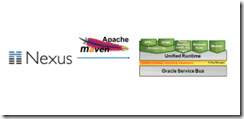
clip_image001SOA Suite 12c introduces Maven support to build and deploy artifacts. Oracle has provided extensive documentation on this. Also there already are plenty of blog posts describing how to do this. I will not repeat those posts (only shortly describe the steps). What I couldn’t find quickly enough though was how to deploy artifacts from an artifact repository to an environment. This is a task often done by provisioning software such as Puppet or Jenkins. Sometimes though you want to do this from a command-line. In this post I’ll briefly describe steps required to get your Continuous Delivery efforts going and how to deploy an artifact from the Nexus repository to a SOA Suite runtime environment.

Preparations

In order to allow building and deploying of artifacts without JDeveloper, several steps need to be performed. See the official Oracle documentation on this here: http://docs.oracle.com/middleware/1213/soasuite/develop-soa/soa-maven-deployment.htm#SOASE88425.

Preparing your artifact repository

Optional but highly recommended
  • install and configure an artifact repository (Nexus and Artifactory are both popular. For Nexus see: http://books.sonatype.com/nexus-book/reference/install.html)
  • configure your settings.xml file in your .m2 folder in order provide information about your artifact repository (for a default Nexus installation described here)

Read the complete article here.

SOA & BPM Partner Community

For regular information on Oracle SOA Suite become a member in the SOA & BPM Partner Community for registration please visit www.oracle.com/goto/emea/soa (OPN account required) If you need support with your account please contact the Oracle Partner Business Center.

Blog Twitter LinkedIn image[7][2][2][2] Facebook clip_image002[8][4][2][2][2] Wiki

Technorati Tags:

Managing Idempotence in SOA Suite by Waslley Souza

clip_image002According to the SOA Suite 12c documentation, an idempotent activity is an activity that can be safely retried. It means if your BPEL Process fails, a rollback operation will be executed and all data won’t be persisted in the database. OK, but sometimes you want to persist some data even your BPEL Process fails. How can you achieve it? Set the operation as nonidempotent and the Dehydration will occur after this operation.

In this post, you will learn how to set an operation as nonidempotent.
As a starting point, let’s use the application created here: Using DB Adapter in SOA Suite 12c.
We will add a new Database Adapter to manage the jobs table, and when we try to add a new employee with a new job, the job will be persisted even if the BPEL Process fails.

Download the sample application: SOAIdempotentApp.zip.

Open the EmployeeProject file.
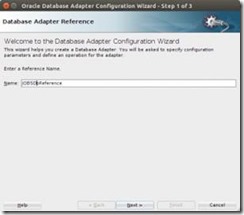
To create the Database Adapter, right-click External References section, and choose Insert > Database.
In Step 1, set the name as JOBSDbReference and click Next.

hIn Step 2, choose the Database Connection, set the JNDI Name and click Next.
In Step 3, choose Insert Only and Select By Primary Key options, and click Next. Read the complete article here.

SOA & BPM Partner Community

For regular information on Oracle SOA Suite become a member in the SOA & BPM Partner Community for registration please visit www.oracle.com/goto/emea/soa (OPN account required) If you need support with your account please contact the Oracle Partner Business Center.

Blog Twitter LinkedIn image[7][2][2][2] Facebook clip_image002[8][4][2][2][2] Wiki

Upgrading to SOA 12c and details of the next UKOUG Middleware SIG by Simon Haslam


clip_image002SOA 12c is the most important release of Oracle’s flagship integration product set that we’ve seen for 5 years (when 11g was launched). Oracle has also now produced the first SOA 12c bundle patch-set (12.1.3.0.1) so in my opinion any new SOA installations should definitely be using 12c, and existing 11g users should be seriously considering upgrading to take advantage of the many new features.

For administrators what is particularly nice about this release is that a lot of work has clearly een put into the upgrade process, building on some of the changes introduced in WebLogic 12.1.2. The upgrade is actually surprisingly straightforward – in outline you have to:

  • Carefully review pre-requisites and do any purging of old instances
  • Install Fusion Middleware Infrastructure and SOA Suite 12c into a new Oracle home
  • Shut down SOA 11g, backup repository and domain home
  • Run RCU to install the new 12c schemas into the existing repository alongside the 11g ones
  • Run the Upgrade Assistant to upgrade the 11g schemas, including running instance data, to 12c format
  • Run the new Reconfiguration Wizard against the 11g domain home to rewire for the 12c home
  • Run the Upgrade Assistant a second time to upgrade some infrastructure components
  • If you have modified setDomainEnv,sh etc you will need to re-apply the changes
  • Backup repository and domain home, then start up SOA

Of course you may only have short-lived processes so be able to drain down the old SOA 11g system and switch over to a brand new SOA 12c system running in parallel, in which case the above upgrade is probably unnecessary.

The above does not consider migration from SOA Suite 10g to 11g/12c which is much more complicated and, if you’ve not already done it by now, a project in itself. Plus I’ve not mentioned Service Bus or BAM yet but we’ll describe in more detail in a week’s time… Read the complete article here.

SOA & BPM Partner Community

For regular information on Oracle SOA Suite become a member in the SOA & BPM Partner Community for registration please visit www.oracle.com/goto/emea/soa (OPN account required) If you need support with your account please contact the Oracle Partner Business Center.

Blog Twitter LinkedIn image[7][2][2][2] Facebook clip_image002[8][4][2][2][2] Wiki

Leveraging Agile and Scrum on SOA and BPM projects by Kris Nelson


Wclip_image002[5]ithin our implementation framework at AVIO, we use an Agile methodology called Scrum.  We have found this to be a great fit for Oracle Fusion Middleware projects in the SOA, BPM and WebCenter space — especially when projects seek to improve or bring innovative new approaches to an organization.

If you are new to Agile and Scrum, check out this great video which covers some of the key concepts: Agile methodologies like Scrum have several benefits over traditional waterfall methodologies, such as:

  • Seeking progress within each iteration (or sprint) to review the accuracy of requirements and adjust course
  • Implementing a simple structure and focus on the team’s effectiveness as primary goals
  • Encouraging breaking larger efforts into smaller, more manageable chunks
  • Emphasizing team collaboration — especially business and IT)

Read the complete article here.

SOA & BPM Partner Community

For regular information on Oracle SOA Suite become a member in the SOA & BPM Partner Community for registration please visit www.oracle.com/goto/emea/soa (OPN account required) If you need support with your account please contact the Oracle Partner Business Center.

Blog Twitter LinkedIn image[7][2][2][2] Facebook clip_image002[8][4][2][2][2] Wiki

Fusion Middleware WebService Security whitepaper by Michel Schildmeijer


clip_image002

Building an Oracle Fusion Middleware Platform at customers, with various products such as SOA Suite, OSB or any other product forces you to think about security integration and implementation.

In this whitepaper, I cover a basic scenario to think of and tell you how you can start securing web services making use of Oracle Web Service Manager. There’s also an explanation about how these scenarios fit in your Oracle Fusion Middleware Infrastucture. Get the whitepaper here.

SOA & BPM Partner Community

For regular information on Oracle SOA Suite become a member in the SOA & BPM Partner Community for registration please visit www.oracle.com/goto/emea/soa (OPN account required) If you need support with your account please contact the Oracle Partner Business Center.

Blog Twitter LinkedIn image[7][2][2][2] Facebook clip_image002[8][4][2][2][2] Wiki

SOA Mythbusters

clip_image002Introduction

So, do you work with Oracle SOA Suite? that’s great because we also do, every single day since a long time ago. As Oracle professionals, we’ve seen the SOA stack grow, change, incorporating new products and technology with each version, from 10g to 12c.

We’re Rolando Carrasco (Oracle ACE) and Arturo Viveros (Oracle ACE Associate), the SOA Myth Busters from Mexico, and as we go with this series we will put to the test a number of questions, myths and urban legends regarding both SOA & the Oracle SOA Platform in seek of finding out which myths are true and which are not.

BPEL vs OSB

In this episode, we will dive into one of the hottest arguments Oracle SOA Practitioners have been sustaining over the years: BPEL against Service Bus.Can and should they work together? Is one of them better than the other? Are there any well-founded guidelines that I can rely on in order to decide between them? And what about SOA Suite 12c? Around this subject there seem to be plenty of myths, misunderstandings and misconceptions, so let’s get it on and uncover as much of the truth as possible.

Let’s get started

Read the episodes here:

SOA & BPM Partner Community

For regular information on Oracle SOA Suite become a member in the SOA & BPM Partner Community for registration please visit www.oracle.com/goto/emea/soa (OPN account required) If you need support with your account please contact the Oracle Partner Business Center.

Blog Twitter LinkedIn image[7][2][2][2] Facebook clip_image002[8][4][2][2][2] Wiki

Preparation for Live Mobile Hacking with an OFM 12c red stack – Budapest 2015 by Lucas Jellema


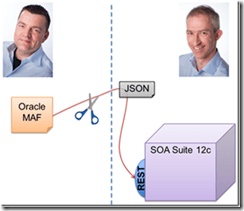
clip_image002On March 4th, I presented – together with ADF and Mobile Application Framework expert Luc Bors – a live development demo session at the EMEA Oracle Fusion Middleware Partner Forum in Budapest, Hungary. Luc and I are in the middle of our preparations for this event. And I thought perhaps it would be nice to share some of the background for this session.

It all started in the Fall as Jürgen Kress, responsible at Oracle for Fusion Middleware Partner Adoption EMEA, sent out a call for papers for the Forum, looking for proposals for presentations and other types of sessions. Luc and I prepared a proposal for a session where we would do live development (always appealing for the audience and somewhat nerve racking for the presenters) and show the development of a mobile app (using Oracle MAF) on top of a mobile back end (created using SOA Suite 12c and its REST capabilities). Luc and I have done similar sessions in the past. They can be a lot of fun – and be quite stressful because of all the things that can and typically will go wrong.

Jürgen accepted our proposal, invented the title (Live Mobile Hacking with an OFM 12c red stack) and allocated a general slot for us: a full hour as the last section of the second day.

The Case

That was several months ago, and now the event is imminent and we better start preparing in anger. First of all we needed a case: what would be the storyline for our live demo? We decided on the airline industry – inspired perhaps a little bit by the airport case that provides the backbone for the book I am currently writing on SOA Suite 12c. A flight provides a good example of an application that does not have constant connectivity – one of the features we would like to demonstrate. Everyone partakes in flights from time to time. And between flight attendants, ground staff and the back office systems of the airline and the airport, it would not be hard to find interactions that we could use in the demo.

Read part I here. and read part II here and read Luc’s post here

SOA & BPM Partner Community

For regular information on Oracle SOA Suite become a member in the SOA & BPM Partner Community for registration please visit www.oracle.com/goto/emea/soa (OPN account required) If you need support with your account please contact the Oracle Partner Business Center.

Blog Twitter LinkedIn image[7][2][2][2] Facebook clip_image002[8][4][2][2][2] Wiki

Getting Started with Oracle Stream Explorer free online training at Oracle Learning Library

clip_image002

A Tour of Oracle Stream Explorer clip_image003This tutorial will give you a tour of the basic concepts, artifacts and features of Oracle Stream Explorer.
Integrating Simulated Data as an Input Stream in Oracle Stream Explorer clip_image003[1]This tutorial will show you how to integrate a CSV file, add data context from a database table, and use this as an input stream in Oracle Stream Explorer.
Integrating with HTTP Publish & Subscribe in Oracle Stream Explorer clip_image003[2]This tutorial will show you how to use a CSV file as an input stream into Oracle Stream Explorer. This helps you model and simulate different use cases with many different event types for different scenarios.

Using the Event Delivery Network in Oracle Stream Explorer clip_image003[3]This tutorial will show you how to use the Event Delivery Network in Oracle Stream Explorer in a fraud detection scenario. The Event Delivery Network is part of the SOA Suite infrastructure.

Leveraging JMS Integration in Oracle Stream Explorer clip_image003[4]This tutorial will show you how to use a JMS in Oracle Stream Explorer.

Using Exploration Chaining in Oracle Stream Explorer clip_image003[5]This tutorial will show you how to use previously published Explorations as an input stream to other Explorations in Oracle Stream Explorer.
Customizing Explorations using Oracle Stream Explorer and the Oracle JDeveloper Java Development Environment clip_image003[6] This tutorial will show you how to export Explorations and augment the functionality provided using the Oracle Stream Explorer and the Oracle JDeveloper Java development environment.
IOT Sensor integration with Raspberry Pi clip_image003[7]This Tutorial will walk you through the steps to use an Internet of Things (IOT) Gateway device, such as a Raspberry Pi processing REST messages using the Oracle™ Stream Explorer.

SOA & BPM Partner Community

For regular information on Oracle SOA Suite become a member in the SOA & BPM Partner Community for registration please visit www.oracle.com/goto/emea/soa (OPN account required) If you need support with your account please contact the Oracle Partner Business Center.

Blog Twitter LinkedIn image[7][2][2][2] Facebook clip_image002[8][4][2][2][2] Wiki