Danilo Schmiedel talking about Process Cloud Service

image

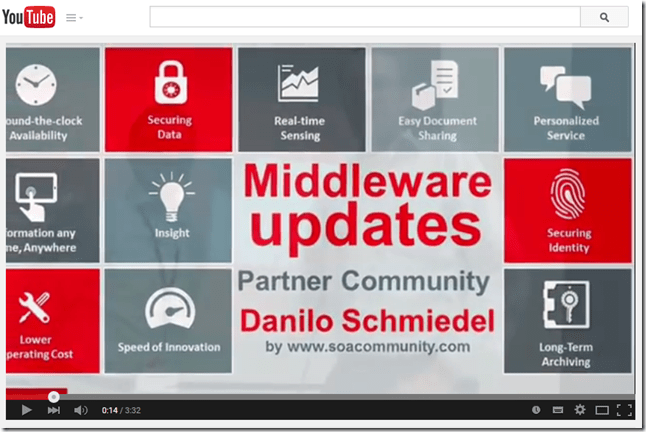
Danilo Schmiedel talking about Process Cloud Service and tips how to sell more middleware, watch the video here

For additional Middleware Updates please visit out YouTube Channel here.

PCS demo system: We are in process to make the PaaS Services available via GSE. Please make sure that you first request your GSE access here. BPM Specialized Partners and member of the SOA & BPM Partner Community can access PCS demo accounts with myself.

PCS presentation, eBook, datasheet & marketing kit At our SOA Community Workspace (SOA Community membership required) we posted

PCS Partners: Looking for a BPM Specialized Partner which can support you with your PCS implementation? Visit the solutions catalog here, and search for your local BPM Specialized partner have trained & certified consultants and implemented successful BPM customer projects. Across EMEA more than 390 companies are Specialized in BPM! Find local Specialized partners by product www.oracle.com/specialized & Learn more about PCS here

SOA & BPM Partner Community

For regular information on Oracle SOA Suite become a member in the SOA & BPM Partner Community for registration please visit www.oracle.com/goto/emea/soa (OPN account required) If you need support with your account please contact the Oracle Partner Business Center.

Blog Twitter LinkedIn image[7][2][2][2] Facebook clip_image002[8][4][2][2][2] Wiki


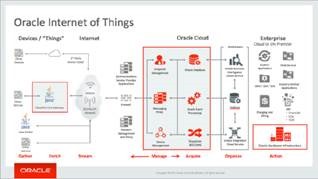
The Internet of Things Will Be Huge, Is Your IT Infrastructure Ready to Support It? by Harish Venkat

clip_image002IDC predicts that the worldwide IoT market will grow from $1.3 trillion in 2013 to $3.04 trillion in 2020 (1). IDC also states that within three years, 50% of IT networks will transition from having excess capacity to handle the additional IoT devices to being network constrained. (2)
As further evidence, analyst firm 451 Research reported an increase in M&A spending in 2014 that pushed ‘Internet of Things’-related deal-making past the $14bn mark, a fortyfold increase in acquirer spending compared to 2013. (3)
This rate of growth cannot be ignored. IoT is inevitable and will create tremendous opportunity for a new wave of services built around connected devices. It will also pose challenges to IT and infrastructure leaders for the following reasons:

  • The volume of data that will come off devices will be enormous and capable of completely overwhelming network infrastructures.
  • IT infrastructures will need to support these vast amounts of data.
  • Solutions that aren’t fully integrated will fail to deliver needed data and analytic capabilities. All devices will need to be integrated with all other devices, so seamless integration of applications and technologies will be critical.
  • Realizing business value from IoT will be dependent upon scalable and flexible infrastructures that can integrate and secure data received from various components and devices.

How can you prepare? A good first step is to modernize IT infrastructures and upgrade legacy architectures. As is the case with other technology trends like mobile, big data, and social, IT needs to be agile and strongly aligned with the business. This means anticipating and responding to business needs quickly, providing real-time information that informs decision-making, and being scalable to support planned and unplanned growth. Read the complete article here.

SOA & BPM Partner Community

For regular information on Oracle SOA Suite become a member in the SOA & BPM Partner Community for registration please visit www.oracle.com/goto/emea/soa (OPN account required) If you need support with your account please contact the Oracle Partner Business Center.

Blog Twitter LinkedIn image[7][2][2][2] Facebook clip_image002[8][4][2][2][2] Wiki

Service Bus 12c: Retrieving Username from HTTP Basic authentication token by Sven Bernhardt


clip_image001Using HTTP Basic authentication is a common mechanism to check user’s authenticity, when creating REST-enabled API’s to prevent applications and it’s functionalities from unathorized access. Service Bus 12c (SB) supports this authentication method by using a OWSM security policy. The corresponding authentication information are transported in the HTTP header.

In some cases, for example when only user-relevant data should be determined when querying information from Enterprise Information Systems (EIS), the information about the current user that are available  in the HTTP header might be helpful. As an alternative the username information could be transported in the payload of each Service Call, e.g. as a query parameter.

In the following I will describe, which steps are needed to extract the username from the HTTP header, so transporting the same information twice, in the header and the payload, can be avoided.

Starting point is a simple HelloWorld service, which expects a valid HTTP Basic authentication token. In the example a corresponding OWSM policy is used to realize this. The service as such has an operation “greet” that takes no parameter. As result, it returns a personalized salution based on the passed authorization header. Read the complete article here.

SOA & BPM Partner Community

For regular information on Oracle SOA Suite become a member in the SOA & BPM Partner Community for registration please visit www.oracle.com/goto/emea/soa (OPN account required) If you need support with your account please contact the Oracle Partner Business Center.

Blog Twitter LinkedIn image[7][2][2][2] Facebook clip_image002[8][4][2][2][2] Wiki

OSB 12c – Pipeline Template by Vivek Garg


clip_image002As we know Oracle SOA 12c comes with lot of new features, one of that is service bus is merged with SOA Suite i.e. we need not to use separate IDE to build service bus projects. In 12c we use Jdeveloper to build service bus projects.

In previous post we discuss about SOA templates which helps to improve developer productivity, similarly in service bus we have pipeline template. We will discuss about pipeline template in this post, we see how to create pipeline template and how to use pipeline template.

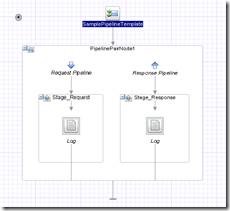
A pipeline template depicts the general message flow and we can generate concrete message flow using this pipeline template.

One point which we need to keep in mind that we cannot create a pipeline template in Oracle Service Bus Console.

How to create pipeline template

Now we see how to create pipeline template from Jdeveloper. To create pipeline template, create a new project and choose “Service Bus project” option. Also provide the project name and click on finish. Read the complete article here.

SOA & BPM Partner Community

For regular information on Oracle SOA Suite become a member in the SOA & BPM Partner Community for registration please visit www.oracle.com/goto/emea/soa (OPN account required) If you need support with your account please contact the Oracle Partner Business Center.

Blog Twitter LinkedIn image[7][2][2][2] Facebook clip_image002[8][4][2][2][2] Wiki

SOA 12c – EDN Articles by Silva

 
SOA 12c – EDN – Mapping to Custom Topic with Weblogic JMS

EDN documentation says:

You can create additional JMS topics (Oracle WebLogic Server JMS or AQ JMS) and map different event types to these additional JMS topics in Oracle Enterprise Manager Fusion Middleware Control.

In this post, we will see how to do this mapping of Business Event to Custom Topic.

This involves 2 steps:

  • Create a new Topic.
  • Modify the business event mapping in EM.

Creating a new Topic

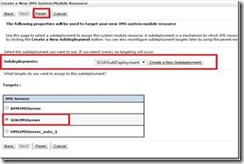
Navigate to Services –> Messaging –> JMS Modules –> SoaJMSModule in Weblogic Administration console. Read the complete article here .

SOA & BPM Partner Community

For regular information on Oracle SOA Suite become a member in the SOA & BPM Partner Community for registration please visit www.oracle.com/goto/emea/soa (OPN account required) If you need support with your account please contact the Oracle Partner Business Center.

Blog Twitter LinkedIn image[7][2][2][2] Facebook clip_image002[8][4][2][2][2] Wiki

B2B 12c – HTTP Generic Channel with transport callout by Bruno Neves Alves


First of all, season’s greetings to everyone!

Then, let me introduce this post saying that, already in the version 11g, a generic HTTP listening channel for message posting to B2B using the HTTP protocol was available. Any configured trading partner could use this generic channel to post messages to B2B.

A single common URL was available by default:
http://%5Bhost-name%5D:%5Bhost-port%5D/b2b/httpReceiver

In this way, a single listening channel is able to serve multiple trading partners for every HTTP communications with B2B.

When this channel is used, the process follows the default steps for message processing, namely:

Sender identification (i.e. using HTTP Header);

Document protocol/version/type identification ;

Agreement identification;

Message processing (parsing and validation);

Synchronous delivery to a back-end application.

The only differentiation factor is: since this channel is generic and not configurable or even available on the list of listening channels in B2B console, make it unavailable for channel callout configuration.

This has now changed with the 12c version.

With the version 12c of B2B is now possible to define a generic HTTP transport callout and associate it with a specific transport level callout.

As of now, this is driven by an B2B configuration Fusion Middleware property that needs to be added on Oracle Enterprise Manager Fusion Middleware Control

Read the complete article here.

Blog Twitter LinkedIn image[7][2][2][2] Facebook clip_image002[8][4][2][2][2] Wiki

Installation of Oracle B2B 12c by Tiago Teixeira


clip_image002In this post I will quickly go through the steps that are necessary in order to install Oracle B2B and create a SOA domain that you can use.
I will consider that the installation will be used for a development environment and that it is done on the Linux machine.
Note that prior to the installation of B2B you will need to have machine running a Database and perform the installation of Oracle Fusion Middleware 12c Infrastructure and of the Oracle Fusion Middleware 12c SOA Suite and Business Process Management on the same machine where you will be installing B2B. You will also need to have the latest Oracle JDK 7 Update installed on that same machine.
The necessary software can be downloaded using Oracle eDelivery:

  • V44959-01.zip – Latest Oracle JDK 7 Update for Linux x86-64 (Prerequisite)
  • V44416-01.zip – Oracle Fusion Middleware 12c (12.1.3.0.0) Infrastructure (Prerequisite)
  • V44420-01.zip – Oracle Fusion Middleware 12c (12.1.3.0.0) SOA Suite and Business Process Management (Prerequisite)
  • V44421-01.zip – Oracle Fusion Middleware 12c (12.1.3.0.0) B2B and Healthcare

To install Oracle Fusion Middleware 12c Infrastructure please refer to:
Oracle Fusion Middleware Installing and Configuring the Oracle Fusion Middleware Infrastructure
To install Oracle Fusion Middleware 12c SOA Suite and Business Process Management please refer to:
Oracle Fusion Middleware Installing and Configuring Oracle SOA Suite and Business Process Management
I’m considering that a new domain will be configured from scratch. If a SOA domain was already created previously a few of the next steps can be ignored and the existing domain can be extend to include B2B. If that is the case, for the next steps, remember to shutdown any running instances of Weblogic Server.

     1. The first part of the installation will be to install the software:

After you have downloaded the V44421-01.zip file unzip it: Read the complete article here.

SOA & BPM Partner Community

For regular information on Oracle SOA Suite become a member in the SOA & BPM Partner Community for registration please visit www.oracle.com/goto/emea/soa (OPN account required) If you need support with your account please contact the Oracle Partner Business Center.

Blog Twitter LinkedIn image[7][2][2][2] Facebook clip_image002[8][4][2][2][2] Wiki

Inside Fusion Middleware 12c: Increasing Scalability with JMS Adapter 12c by Stefan Koser


clip_image002JMS Adapter (also known as Oracle JCA Adapter for JMS) is a component available with Oracle SOA Suite or Oracle Service Bus (OSB) which provides a very powerful way to use  the Java Messaging Service (JMS) for sending or receiving messages.

The most important goals for optimizing an SOA Suite or OSB environment are to make sure that

  • Each node of the cluster makes effective use of Java threads and other resources.
  • The cluster will be able to scale efficiently when adding new nodes.

In this article, we will show how JMS Adapter in the new release 12c can be configured in high throughput scenarios to use much fewer threads that in earlier versions. This means, that adding new nodes to the cluster will not require additional threads in all other nodes. As a result, a cluster with many nodes will perform and scale much better.

There are 2 main use cases of JMS Adapter with SOA Suite or OSB:

  • Inbound activation of a composite by receiving messages from a JMS destination (queue or topic)
  • Publishing messages from a composite to a JMS destination

We will focus in this article on the first use case for receiving messages. Only in that scenario – for listening to a queue, the activation framework of the Java EE Connector Architecture (JCA) layer will start a number of threads for JMS Adapter.

First, we will describe how many threads will be created by default or in versions prior to 12c, and then how this changes when using the new feature available with 12c.

Default thread creation for JMS Adapter

For the first example, we will assume a scenario with a 2-node SOA cluster where a Uniform Distributed Queue (UDQ) “jms/TestQueue” is defined and one SOA composite with an inbound JMS Adapter is listening to this queue. See line 2 of the JMS destination overview in Weblogic server in the following table:

With the default behavior, the number of threads used to read messages from this queue in each Java Virtual Machine (JVM) is one. This is derived from the default of the corresponding configuration parameter: Read the complete article here.

SOA & BPM Partner Community

For regular information on Oracle SOA Suite become a member in the SOA & BPM Partner Community for registration please visit www.oracle.com/goto/emea/soa (OPN account required) If you need support with your account please contact the Oracle Partner Business Center.

Blog Twitter LinkedIn image[7][2][2][2] Facebook clip_image002[8][4][2][2][2] Wiki

Protecting Sensitive Data in Oracle SOA Suite 12c by Jennie DeRosa

clip_image001

Given the recent security breaches, data security should always be a concern when designing and creating IT solutions. In particular, what are some considerations that should be made when implementing a solution within the Oracle SOA Suite? Is it sufficient to protect the data using WS-Security/SSL or is additional security needed? If you have sensitive data traversing through the SOA Suite then additional security must be considered.

As noted within the National Institute Standards and Technology (NIST) publication, ‘to appropriately protect the confidentiality of personally identifiable information (PII), organizations should use a risk-based approach’. To understand what is considered PII, or sensitive data, along with recommendations to protect PII read Guide to Protecting the Confidentiality of Personally Identifiable Information.

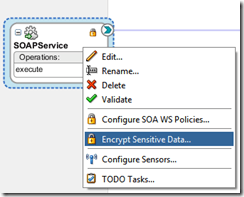
WS-Security and SSL only will protect data outside a SOA composite or Service Bus. Once the data hits either one of these, it is viewable in clear text within audit trails, console or logs. This means sensitive data is viewable within the console and log, causing this data to be unencrypted at rest. An example of this is shown below. Anyone with access to EM (Enterprise Manager) could view the sensitive data just by opening the audit trail of a process: Read the complete article here.

SOA & BPM Partner Community

For regular information on Oracle SOA Suite become a member in the SOA & BPM Partner Community for registration please visit www.oracle.com/goto/emea/soa (OPN account required) If you need support with your account please contact the Oracle Partner Business Center.

Blog Twitter LinkedIn image[7][2][2][2] Facebook clip_image002[8][4][2][2][2] Wiki

Purging data from Oracle SOA Suite 11g – Part 1 by C2B2

clip_image002The following questions will be answered:

    • How does Oracle SOA Suite 11g (PS6 11.1.1.7) store data?
    • What data does Oracle SOA Suite 11g (PS6 11.1.1.7) store?
    • Why do you need to purge Oracle SOA Suite 11g (PS6 11.1.1.7) data?
    • What are the purging options available for Oracle SOA Suite 11g (PS6 11.1.1.7)?
    • Which data will be purged by the Oracle SOA Suite 11g (PS6 11.1.1.7) purge script?
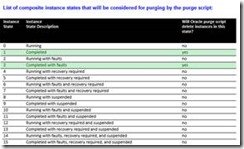
    • List of composite instance states that will be considered for purging by the purge script
    • How to install the Oracle SOA Suite 11g (PS6 11.1.1.7) purge script?
    • How to execute the Oracle SOA Suite 11g (PS6 11.1.1.7) purge script?
    • What is Looped purging (Oracle SOA Suite 11g (PS6 11.1.1.7) purge script)?
    • What is Parallel purging (Oracle SOA Suite 11g (PS6 11.1.1.7) purge script)?
    • Description of parameters used by the Oracle SOA Suite 11g (PS6 11.1.1.7) purge script
    • Example 1: Executing the Oracle SOA Suite 11g (PS6 11.1.1.7) purge script for all composites
    • Example 2: Executing the Oracle SOA Suite 11g (PS6 11.1.1.7) purge script for a specific composite

How does Oracle SOA Suite 11g (PS6 11.1.1.7) store data?

SOA Suite uses a database schema called SOAINFRA (collection of database objects such as tables, views, procedures, functions etc.) to store data required for the running of SOA Suite applications. The SOAINFRA (SOA Infrastructure) schema is also referred to as the ‘dehydration store’ acting as the persistence layer for capturing SOA Suite data.

What data does Oracle SOA Suite 11g (PS6 11.1.1.7) store? Read the complete article here.

SOA & BPM Partner Community

For regular information on Oracle SOA Suite become a member in the SOA & BPM Partner Community for registration please visit www.oracle.com/goto/emea/soa (OPN account required) If you need support with your account please contact the Oracle Partner Business Center.

Blog Twitter LinkedIn image[7][2][2][2] Facebook clip_image002[8][4][2][2][2] Wiki