
APIs and Microservices at Work in the Real World

image

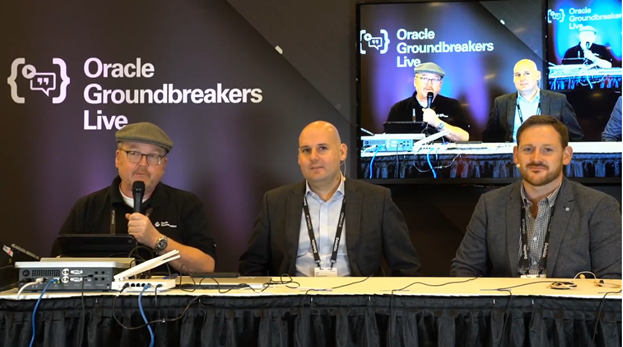
Luis Weir (Capgemini) and Wes Davies (Co-op Group) discuss microservices, API management, and the technical aspects of their work on the project that won one of this year’s Oracle Cloud Platform Innovation awards. As mentioned in the interview, Luis is a panelist in the latest Oracle Developer Podcast, "On Microservices Design and Implementation," available at: https://blogs.oracle.com/developers/p…

Watch the video here.


PaaS Partner Community

For regular information on Oracle PaaS become a member in the SOA & BPM Partner Community for registration please visit www.oracle.com/goto/emea/soa (OPN account required) If you need support with your account please contact the Oracle Partner Business Center.

clip_image003 Blog clip_image005 Twitter clip_image004 LinkedIn image[7][2][2][2] Facebook clip_image002[8][4][2][2][2] Wiki

Technorati Tags: SOA Community,Oracle SOA,Oracle BPM,OPN,Jürgen Kress
Analytics and Stats for APIs by Phil Wilkins

image

The Oracle API Platform provides the means to examine statistics and slice and dice the numbers by application, gateway, duration and so on resulting in visually appealing graphical representations.  The way the analytics works means you can book mark specific views, so you can return the same report view with the relevant features as often as you like.  However, presently there is no data export option.

The question why would I want to export the information comes down to several possible use cases, all of which relate to cost management.  The API Platform will eventually have all the desired data views, but now something to help address the following:

  • money-tization, we can see which consumer has been using the services by how much and then send the data to a companies accounting systems to invoice the users
  • Ability to examine demand and workload over time to create a projection of the likely infrastructure – to achieve this the API statistics need to be overlaid with infrastructure and performance details so we can extrapolate API growth against server workload.

To address these kinds of requirements, we have taken advantage of the fact the API Platform has drunk its own Champagne as they say and made many of the analytics querying APIs publicly available.  As with the other API Platform tools, the logic has been written in Groovy, and freely available for use – we’ve covered the code through a Create Common license. Read the complete article here.


PaaS Partner Community

For regular information on Oracle PaaS become a member in the SOA & BPM Partner Community for registration please visit www.oracle.com/goto/emea/soa (OPN account required) If you need support with your account please contact the Oracle Partner Business Center.

clip_image003 Blog clip_image005 Twitter clip_image004 LinkedIn image[7][2][2][2] Facebook clip_image002[8][4][2][2][2] Wiki

Technorati Tags: SOA Community,Oracle SOA,Oracle BPM,OPN,Jürgen Kress

Defining Boundaries for Logical Gateways on the API Platform a multi cloud / multi region context by Phil Wilkins

image

The Oracle API Platform takes a different licensing model to many platforms, rather than on CPU it works by the use of Logical Gateways and blocks of 25 million successful API calls per month. This means you can have as many actual gateway nodes as you like within a logical group to ensure resilience as you like, essentially how widely you deploy the gateways is more of a maintenance consideration (i.e. more nodes means more gateways to take through a maintenance process from the OS through to the gateway itself).

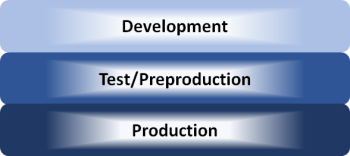
In our book (here) we described the use of logical gateways (groups of gateway nodes operating together) based on the classic development model, which provides a solid foundation and can leverage the gateway based routing policy very effectively.

But, things get a little trickier if you move into the cloud and elect to distribute the back end services geographically rather than perhaps have a single global instance for the back-end implementation and leverage technologies such as Content Delivery Networks to cache data at the cloud edge and their rapid routing capabilities to offset performance factors. Read the complete article here.


PaaS Partner Community

For regular information on Oracle PaaS become a member in the SOA & BPM Partner Community for registration please visit www.oracle.com/goto/emea/soa (OPN account required) If you need support with your account please contact the Oracle Partner Business Center.

clip_image003 Blog clip_image005 Twitter clip_image004 LinkedIn image[7][2][2][2] Facebook clip_image002[8][4][2][2][2] Wiki

Technorati Tags: SOA Community,Oracle SOA,Oracle BPM,OPN,Jürgen Kress
The Se7en Deadly Sins of API Design by Luis Weir

image

During Oracle Code One 2018 (formerly Java One) I was lucky enough to deliver a funny yet insightful presentation titled "The Seven Deadly Sins of API Design" focused on API design anti-patterns and how to overcome them.

The presentation was partly inspired by Daniel Bryant presentation titled 7 Deadly Sins of Microservices but really focused on API design and API-led architectures, not so much on Microservices (though the too are related so some coverage was inevitable). But my main motivation was really around the fact that we’re all sinners when it comes to making mistakes. When I first started designing REST APIs (or before that SOAP/WSDL based services), I myself made so many mistakes. However the main thing is to learn from them. And not just from our own mistakes, but that of others. So my presentation is about this, shortlisting the seven most common pitfalls on API design and architectures and then using the deadly sins as a vehicle to tell a story on how to "deliver us from evil".

The 7 deadly sins, also known as capital sins, represent corrupt and/or perverse versions of love. In this case, corrupt or perverse APIs. Following a description of each deadly sin including a description of what anti-pattern I went for on each:

  1. Lust: unrestrained desire for something. In this sin I talk about why sometimes we focus so much in the implementation aspects of an API, but specially on what tools to us, and not so much on the usability of the API itself which also means getting feedback from the audience of the API to ensure the interface is fit for purpose and intuitive enough -something I refer to as API-design first.
  2. Gluttony: the over-indulge specially by over eating. I use this sin to articulate the fact that many API implementations end-up with several layers of middleware (e.g. mainly load balancers and multiple API Gateways) before an actual service endpoint is actually reached. This is bad for many reasons (e.g. added complexity, additional costs, etc) and my conclusion is that we should not just add layers on top of layers for no strong reason. In some scenarios it might be inevitable but as rule of thumb we should question any additional layer added on top of the service. For example, I think one API Gateway should be enough and is justified, adding another one? umnn…
  3. Greed: intense and selfish desire for something. In here I talk about how many times a frontend results in poor user experience consequence of chatty APIs that require several API calls in order to construct e.g. a single UI page. Instead, I talk about how to prevent this sin by implementing different patterns such as web-hooks and/or API composition (e.g. with GraphQL). Read the complete article here.


PaaS Partner Community

For regular information on Oracle PaaS become a member in the SOA & BPM Partner Community for registration please visit www.oracle.com/goto/emea/soa (OPN account required) If you need support with your account please contact the Oracle Partner Business Center.

clip_image003 Blog clip_image005 Twitter clip_image004 LinkedIn image[7][2][2][2] Facebook clip_image002[8][4][2][2][2] Wiki

Technorati Tags: SOA Community,Oracle SOA,Oracle BPM,OPN,Jürgen Kress

Podcast: On Microservices Design and Implementation by Bob Rhubart

image

"Like buying a Ferrari and towing it around with a horse."

That’s how Java Champion and Microservices Patterns (Manning Publications) author Chris Richardson describes the approach some organizations take to implementing microservices. It’s often a matter of faulty motivation.

In helping organizations around the world get started with microservices, the first question Chris asks his clients is, "Why do you want microservices?" The responses are often surprising. "I’ve talked to people who viewed microservices as magic pixie dust. You sprinkle it on things and everything will be better," Chris reports.

Another problem is the mistaken belief that the goal is microservices. "Microservices is a means to an end," Chris says. From a DevOps perspective, "there are two really good metrics," Chris explains. "One of them is deployment frequency, how often you’re deploying into production. The other one is lead time, the time from commit to deploy. To me, those are the two metrics that you should be optimizing. Microservices is the way to get there." Listen to the podcast here.


PaaS Partner Community

For regular information on Oracle PaaS become a member in the SOA & BPM Partner Community for registration please visit www.oracle.com/goto/emea/soa (OPN account required) If you need support with your account please contact the Oracle Partner Business Center.

clip_image003 Blog clip_image005 Twitter clip_image004 LinkedIn image[7][2][2][2] Facebook clip_image002[8][4][2][2][2] Wiki

Technorati Tags: SOA Community,Oracle SOA,Oracle BPM,OPN,Jürgen Kress

PaaS Summer Camp August 26th-30th 2019 Lisbon Portugal

PaaS Summer Camp 2019Registration for the ninth edition of the PaaS Summer Camp is open. The training takes place August 26th-30th 2019 in Lisbon Portugal. The goal is to enable partners to develop and deploy successful Oracle Cloud Platform Services. Attendees can choose between three different hands-on tracks:

• Integration & Process: Integrate & Extend SaaS: ERP & HCM

• Application Development with Microservices and Containers

• Chatbot & Content Management

For details please visit the registration page here.


PaaS Partner Community

For regular information on Oracle PaaS become a member in the SOA & BPM Partner Community for registration please visit www.oracle.com/goto/emea/soa (OPN account required) If you need support with your account please contact the Oracle Partner Business Center.

clip_image003 Blog clip_image005 Twitter clip_image004 LinkedIn image[7][2][2][2] Facebook clip_image002[8][4][2][2][2] Wiki

Technorati Tags: SOA Community,Oracle SOA,Oracle BPM,OPN,Jürgen Kress

API For Developers

image

Designing APIs

Great coding can’t overcome faulty design. If you want your APIs to earn their keep, start with solid design principles and practices.

Developing APIs

Take your APIs from planning to production with expert guidance from coders who have been there.

API Management

This is where the rubber meets the road. Proper management will help ensure that your well-designed, expertly coded APIs will deliver.

Get the API Kit here

PaaS Partner Community

For regular information on Oracle PaaS become a member in the SOA & BPM Partner Community for registration please visit www.oracle.com/goto/emea/soa (OPN account required) If you need support with your account please contact the Oracle Partner Business Center.

clip_image003 Blog clip_image005 Twitter clip_image004 LinkedIn image[7][2][2][2] Facebook clip_image002[8][4][2][2][2] Wiki

Technorati Tags: SOA Community,Oracle SOA,Oracle BPM,OPN,Jürgen Kress
PaaS (Process & Integration) Partner Community Newsletter June 2019

Dear PaaS Partner Community

Want to increase the Oracle PaaS business? Create new service offerings and solutions for the Cloud? Attend the PaaS Overview Webcast July 2nd 2019. Martijn Vlek, Vice President Sales Cloud Native & Integration will present the latest PaaS sales plays, kits and how to get access to the Oracle Cloud platform.

Registration for the ninth edition of the PaaS Summer Camp is open. The training takes place August 26th-30th 2019 in Lisbon Portugal. The goal is to enable partners to develop and deploy successful Oracle Cloud Platform Services. Attendees can choose between three different hands-on tracks:

• Integration & Process: Integrate & Extend SaaS: ERP & HCM

• Application Development with Microservices and Containers

• Chatbot & Content Management

For details please visit the registration page here.

You have implemented successful solutions, based on the Oracle Cloud Platform, at your customers? Time to shine, submit your Oracle Excellence Award nomination here. An outstanding success story and award winner is the Coop case implemented by Capgemini.

Thanks to the community for sharing all the integration articles: Avatar-Guided Oracle Integration Simulator Demo & Oracle Integration Cloud (OIC) – Tips & Tricks & Demystifying Oracle Integration Cloud (OIC) & OIC Integration with Netsuite – initial setup and basic troubleshooting & OIC-integration-with-Oracle ATP & Ordering Delivery with Oracle Integration & A Simple Guide to Return Custom HTTP Error Response from REST based OIC Flows & OAuth Custom Three Legged Security Policy in REST Connection: Oracle Integration Cloud & Oracle Integration Cloud Taleo EE (OTAC) – Create Requisition & Microsoft SQL adapter in Oracle Integration Cloud & Moving SOA to Oracle Cloud Infrastructure & Oracle API Platform Cloud Service – Enabling the Digital Transformation & API Platform – Plans & Subscriptions & FlexDeploy Loves Oracle API Platform: Series Overview & Quick steps for setting up a Gateway Node in Oracle API Cloud Service.

In the process & innovation section we published a free on-demand training to build a custom user interface for a process application. Niall describes how to link a process to a cloud instance. While Phil described Oracle approach to robotic process automation and Everything As Code. Oracle Blockchain is an Oracle PaaS services and a SaaS service. One of the first SaaS solutions is supply chain tracking.

For a short summery of our key monthly information watch the Fusion Middleware & PaaS Partner Updates on YouTube. The June edition highlights the PaaS overview webcast, the summer camp and the Oracle Excellence awards. This month’s community webcast will be an update on process cloud services join our monthly PaaS Partner Community Webcast – June 25th 2019

To read the newsletter please visit www.tinyurl.com/PaaSNewsJune2019 (OPN Account required).

Please like and share the newsletter at Twitter and LinkedIn

Jürgen Kress

Newsletter Logo 2017

PaaS Partner Adoption
Oracle EMEA
Tel. +49 89 1430 1479
E-Mail: juergen.kress@oracle.com
clip_image003Blog clip_image004LinkedIn clip_image005 Twitter

To become a member of the SOA Partner Community please register at http://www.oracle.com/goto/emea/soa (OPN account required) If you need support with your account please contact the Oracle Partner Business Center.

Blog clip_image005 Twitter clip_image004 LinkedIn image[7][2][2][2] Facebook clip_image002[8][4][2][2][2] Wiki

Technorati Tags: newsletter,SOA Community newsletter,SOA Community,Oracle,OPN,Jürgen Kress

New Sales Central Content for FY20

image

Our Sales Central pages are loaded with new content to equip our sellers with all the materials they need. Sales kits include elevator pitch, cheat sheet, reference and customer presentation in ppt format. Check those out (and make sure to download and give your ratings).

Overview:

· Oracle Cloud Platform

· Cloud Platform for Oracle SaaS

· Universal Credits & BYOL Programs-Viewpoint

Sales kits:

· Connect and Extend Apps with PaaS

· Integrate SaaS and On-premises Applications, Processes, and APIs

· Extend & Enhance ERP, HCM & CX Apps with Oracle Digital Assistant

· Build Innovative Apps with AI & Blockchain

Product Content

· Integration

· Digital Assistant

· Content & Experience Management

· Cloud Native Services (Container Native Platform)

· Java Cloud Service

· Blockchain Platform

For more information attend the PaaS Overview Webcast July 2nd 2019.


PaaS Partner Community

For regular information on Oracle PaaS become a member in the SOA & BPM Partner Community for registration please visit www.oracle.com/goto/emea/soa (OPN account required) If you need support with your account please contact the Oracle Partner Business Center.

clip_image003 Blog clip_image005 Twitter clip_image004 LinkedIn image[7][2][2][2] Facebook clip_image002[8][4][2][2][2] Wiki

Technorati Tags: SOA Community,Oracle SOA,Oracle BPM,OPN,Jürgen Kress
Stripping off the ECID Header using Oracle Traffic Director by Simon Haslam

image 

My long-time followers will know that I like Oracle Traffic Director (OTD) a lot (and its Sun iPlanet heritage): it is a fast, stable and mature software load balancer.

OTD is available on Exalogic, with WebLogic Multi-Tenant, and more commonly now as a component of Oracle Java Cloud Service or SOA Suite Cloud Service.

Recently I was asked if OTD could strip the ECID HTTP header off inbound requests to SOA. Whilst I knew I could manipulate or remove headers, I hadn’t done that with ECID before… and it turns out that is not quite so straight-forward and there’s no documentation about it. Therefore last weekend I burnt quite a few midnight hours on this, along with one the Oracle Support OTD engineers in California, and we came up with a solution. Unfortunately, for non-technical reasons, this solution hasn’t gone into production but I’m confident it could, so thought I’d describe it here in case anyone else has the same requirment (I also suggested on the SR that a MOS note is written about it).

What is an ECID?

Firstly, let’s recap what an Execution Context Identifier (ECID) is. This is a unique ID, attached as the ECID-Context HTTP header, that is propagated through the various layers of an application stack to allow you to track and correlate requests. For example, if you are using SOA you can us Enterprise Manager (EM) Fusion Middleware Control (FMWC) to track all the steps and calls to other systems that a composite might make.

Typically a Fusion Middleware components will add a new ECID if one is not there, or pass it through, with or without manipulation if it is. OTD is a case in point – by default every request sent to an origin server will have an ECID, and if there wasn’t one on the inbound request OTD will generate one… this also alludes to the fact that the ECID-Context header is “special” for OTD.

What was the requirement?

This particular case involved an on-prem Oracle SOA platform calling our SOA CS platform repeatedly (1000s of times) as the source system processed a bulk feed. Transactions weren’t involved so every call to our SOA platform was essentially independent but, because the call already had an ECID corresponding to the instance on the source, this meant we had lots of instances with the same ECID, which in turn made EM FMWC unusable. So I was asked to remove the ECID, in that way either OTD or SOA (it didn’t matter which) would give each call a new, unique one. Read the complete article here.

PaaS Partner Community

For regular information on Oracle PaaS become a member in the SOA & BPM Partner Community for registration please visit www.oracle.com/goto/emea/soa (OPN account required) If you need support with your account please contact the Oracle Partner Business Center.

clip_image003 Blog clip_image005 Twitter clip_image004 LinkedIn image[7][2][2][2] Facebook clip_image002[8][4][2][2][2] Wiki

Technorati Tags: SOA Community,Oracle SOA,Oracle BPM,OPN,Jürgen Kress