Custom functions to extend ICS transformations – ICS Definitive Guide #4 by Robert van Molken

image

In the second release of 2017 (17.2.5) ICS will introduce the capability of importing and using custom functions. These functions are created using JavaScript and can be used in transformations, expressions and as a action in Orchestrations. In this definitive guide we will go through all ins and outs of this new capability.

Custom functions – a new pillar of ICS

In our book we talked about the pillars of ICS; Connections, Integrations, Lookups, Agents, Adapters and Packages. This release introduced Libraries. A library is a set of Javascript functions. Keep in mind that the JavaScript functions are running server-side so some browser/client-side capabilities/APIs are not available. Functions can’t be created within ICS, but can be uploaded as part of a library in both JS and JAR file (collection of JS files) formats. Read the complete article here.

SOA & BPM Partner Community

For regular information on Oracle SOA Suite become a member in the SOA & BPM Partner Community for registration please visit www.oracle.com/goto/emea/soa (OPN account required) If you need support with your account please contact the Oracle Partner Business Center.

Blog Twitter LinkedIn image[7][2][2][2] Facebook clip_image002[8][4][2][2][2] Wiki

Technorati Tags: SOA Community,Oracle SOA,Oracle BPM,OPN,Jürgen Kress
The evolution of the API by Phil Wilkins

 image

The level of talk and adoption of APIs has been really picking for sometime now. So what is the fuse about? After all the idea of an API isn’t exactly new, for those of us who started out with C will point to header files as being a simple API, a bit more recently and you’d point to Java interface classes, then there has been SOAP+WSDL and that’s before we have even talked about CORBA, EJBs and standards for interchange like ebXML etc.

Well, I think we have seen several things. Firstly compute power has now reached a stage where the abstraction costs of are viewed as fairly negligible in most scenarios. When it comes to defining APIs, we have found a sensible balance between precision of definition and simplicity to define and develop. Recognition that there is raw value is data and therefore exposing the data for use creates revenue opportunities. Then along came microservices – an approach among other things that needs APIs to help manage, measure and if necessary control interactions without which we can end up with a new type of monolith bound together by a raft of unseeable cross deployment calls.  Oracle Ace Director Luis Weir and I discussed this at the recent Oracle Code London event (more here).

To realise APIs in a manner that is far more effective than those earlier approaches I mentioned, means some tools, platforms and some (defacto) standards are needed. So we have the tools to describe the APIs to a level where test frameworks and stub solutions can be generated without being cumbersome and easy to document and share. Look at the Swagger toolset and APIary which supports the Open API and API Blueprint standard notations. Read the complete article here.

SOA & BPM Partner Community

For regular information on Oracle SOA Suite become a member in the SOA & BPM Partner Community for registration please visit www.oracle.com/goto/emea/soa (OPN account required) If you need support with your account please contact the Oracle Partner Business Center.

Blog Twitter LinkedIn image[7][2][2][2] Facebook clip_image002[8][4][2][2][2] Wiki

Technorati Tags: SOA Community,Oracle SOA,Oracle BPM,OPN,Jürgen Kress
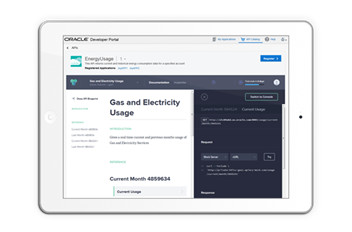
API Platform Cloud Service Video Series by Oracle Learning Library

image

In this video series you learn how to implement, deploy, document and publish your managed APIs in Oracle API Platform Cloud Service.

Oracle API Platform Cloud Service – Work Smarter!

Oracle API Platform Cloud Service is a comprehensive and powerful API management solution. The true power of the product lies in its architectural innovations, enabling enterprises to adopt a modern approach to API management. Follow Carlos through a night of adventure as he must complete a task assigned by his boss, Natalia, at 6PM Friday evening. Natalya asks Carlos to create an API and deploy it to a QA gateway for testing by 6AM Saturday morning. The only problem: Carlos has a full night of fun planned and has to figure out how to create and deploy an API without affecting his personal life.

1 – Implementing APIs in Oracle API Platform Cloud Service

Learn how to implement APIs in Oracle API Platform Cloud Service, by adding the API Request and Service Request endpoints to the managed API. For more information, see the documentation.

2 – Managing API Deployments in Oracle API Platform Cloud Service

Learn how to manage API deployments in Oracle API Platform Cloud Service by redeploying an existing API. For more information, see the documentation.

3 – Documenting your API in Oracle API Platform Cloud Service

Learn how to add documentation to managed APIs in Oracle API Platform Cloud Service. For more information, see the documentation.

4 – Publishing APIs in Oracle API Platform Cloud Service

Learn how to publish, republish and un-publish your API and its documentation in Oracle API Platform Cloud Service. For more information, see the documentation.

5 – Managing API Grants in Oracle API Platform Cloud Service

Learn about the different API grants in Oracle API Platform Cloud Service. For more information, see the documentation.

6 – Register your Applications to APIs with the Oracle API Platform Cloud Service Developer Portal

Learn how to view the published details of your APIs in Oracle API Platform Cloud Service Developer Portal, and how to register your applications to APIs. For more information, see the documentation.

7 – Configure Rate Limiting, Header Validation and Routing Policies

Learn how to configure API Rate Limiting, Header Validation and Resource Based Routing policies in Oracle API Platform Cloud Service. For more information, see the documentation.

8 – Configure Key Validation and Header Based Routing Policies

Learn how to configure Key Validation and Header Based Routing policies in Oracle API Platform Cloud Service. For more information, see the documentation.


SOA & BPM Partner Community

For regular information on Oracle SOA Suite become a member in the SOA & BPM Partner Community for registration please visit www.oracle.com/goto/emea/soa (OPN account required) If you need support with your account please contact the Oracle Partner Business Center.

Blog Twitter LinkedIn image[7][2][2][2] Facebook clip_image002[8][4][2][2][2] Wiki

Technorati Tags: SOA Community,Oracle SOA,Oracle BPM,OPN,Jürgen Kress

API Management and Microservices, a Match Made in Heaven by Luis Weir

image

It’s not news anymore that Microservices architecture is changing the way systems are designed and built, however what’s rarely discussed in detail is how the APIs exposed by those Microservices are managed and accessed from other systems or even other Microservices and more importantly how those APIs are discovered and consumed by a community of developers when building solutions. In this presentation Capgemini’s PaaS experts Phil and Luis will explain in detail how Microservices Architecture and API Management relate to each other. To do this reference architectures, capability models and architectural patterns will be described and then it will be shown -with practical examples, how to implement modern solutions in the Oracle Cloud. Watch the video here.

SOA & BPM Partner Community

For regular information on Oracle SOA Suite become a member in the SOA & BPM Partner Community for registration please visit www.oracle.com/goto/emea/soa (OPN account required) If you need support with your account please contact the Oracle Partner Business Center.

Blog Twitter LinkedIn image[7][2][2][2] Facebook clip_image002[8][4][2][2][2] Wiki

Technorati Tags: SOA Community,Oracle SOA,Oracle BPM,OPN,Jürgen Kress

When Creating APIs, Focus your API Gateway on What it Does Best by Robert Wunderlich

image

When talking with customers and prospects, I often hear about two requirements; converting REST to SOAP or SOAP to REST and Caching of data for performance.

These are great opportunities for an API Gateway, but should be used with extreme caution. Misuse of either of these features can cause performance problems in your gateway or even worse, putting your sensitive data at risk!

Using an Integration Platform with an API Platform provides the opportunity to follow some best-practice approaches to data isolation as well as scaling of certain heavy-weight operations. Furthermore, by separating these concerns, sensitive data is better protected

First, let’s look at the key purposes of an API Platform and an Integration Platform.

The API Platform is responsible for the following:

Oracle API Platform Cloud Service Overview by Luis Augusto Weir


imageOracle has  release of Oracle API Platform Cloud Service. This new platform -not to be confused with Oracle’s previous solution, has been built almost entirely from the ground up to satisfy modern API management requirements.
I have been lucky enough to be part of the beta programme and have actually been implementing the product for the last 4 months or so (but trying it for almost a year now). In this blog post I share some of the insight and experiences I’ve gained in the process.
What is the Oracle API Platform Cloud Service?
Is a 3rd generation API Platform that delivers a ‘true hybrid’ model that allows for APIs to be created, deployed and managed centrally (from the Oracle Cloud) whilst API gateways (engines that run the APIs) can be deployed in any cloud (i.e. Amazon, Azure, Oracle Cloud, IBM Softlayer/bluemix, etc) and/or on-premises.
In addition with the incorporation of Apiary into the portfolio, the platform also incorporates a solid/world-class API-first solution so developers also get the tools and means to properly design APIs either using Swagger or API blueprint (Apiary’s own API design notation), whilst interacting with the API consumers and therefore ensuring that before any code is built, the API contract is fit-for-purpose.
API Platform Architecture
The platform consists of 7 key components as the diagram illustrates:

  • Management service: The management service is the cloud-based system that underpins the management console, developer portal and platform API. It’s the engine of the entire platform. The brains.
  • Management Console:  As the name suggests this is where APIs, Gateways and User/Roles are managed. It’s a role-based application so what a user can do pretty much depends on the role the user belongs to.
  • Developer Portal: A web-based application where developers can search and subscribe to APIs. This is where all of the API documentation can be found and also where application keys are provided after a subscription to an API takes place.
  • Platform API: The entire platform was built following an API-first model. In fact, it can be argued that management service is in fact an API, as everything that can be done (and more) via the management and developer portals can be done by directly invoking the Platform API. The platform API is also consumed by the gateways when phoning home to retrieve new API’s, policies and also send analytics information.
  • Apiary: As previously mentioned, Apiary is a platform for designing APIs that encourages API designers to maintain an active dialogue with API consumers. Both the management and developer portals are already integrated with Apiary so when a user finds an API in the portal, the API specification (i.e. API blueprint) can also be accessed from one single place.
  • API Gateways: These are the engines that run the APIs and can be deployed anywhere. In any vendor’s cloud and/or on-premises. Gateways communicate to the management service iby making API calls (feature known as "phone home"). In this model, it’s the gateways responsibility to establish the communication to the "mother ship" (management service) and not the other way around. Because of this, the management of gateways becomes a lot easier as there is no need to open firewall ports (i.e. opening firewall ports) as all communications are outbound triggered.
  • Identity Cloud Service: Most organisations already have their own LDAP directory (i.e. MS Active Directory) where users and roles are managed. The Identity Cloud Service is used to allow the API platform to use an organisation’s existing directory as the source for users and roles.
  • image

API Platform Roles
The platform by default support 5 types of roles.

  • Administrator: Super user of the platform. Has all rights to deal with user settings and also create/manage APIs and configure gateways.
  • Gateway manager: Role responsable for the gateway operations including deploying, registering, and managing gateways.
  • API manager: The API implementers roles as it gives users full lifecycle rights, including design, create and deploy APIs and also manage the API grants.
  • API designers: Individuals who take on a full or part-time responsibility (i.e. an architect or developer) to define APIs (either in swagger or API blueprints) using Apiary.
  • Application developer: In other words, these are the API consumers. Users with this role can log into the portal and search/subscribe to APIs.
  • Gateway runtime: Not really a user role, it’s a service account used by the gateways to communicate with the to the management service via the platform API. Users assigned this role can’t sign into the Management Portal or the Developer Portal.

User can be created and assigned to any of these roles (excluding Gateway runtime which is a service account). Platform restrictions will apply depending on what role a user belongs to. Read the complete article here

SOA & BPM Partner Community

For regular information on Oracle SOA Suite become a member in the SOA & BPM Partner Community for registration please visit www.oracle.com/goto/emea/soa (OPN account required) If you need support with your account please contact the Oracle Partner Business Center.

Blog Twitter LinkedIn image[7][2][2][2] Facebook clip_image002[8][4][2][2][2] Wiki

Technorati Tags: SOA Community,Oracle SOA,Oracle BPM,OPN,Jürgen Kress

Superior Third Generation API Management: Two partners, one comprehensive solution

image

You want to get the most out of your digital transformation initiatives. But if you lack visibility and access to key information assets and functionality across your operations, these initiatives can be severely limited. To deliver the omni-channel customer and employee-centric solutions you desire, all your information and functionality must be accessible in a consistent way throughout all your channels. The only way to attain this is with comprehensive and matured APIs, which are managed throughout their full cycles (API management).

Visibility, access, growth—APIs are key in unlocking

new digital business opportunities

If you’re looking to deliver fresher and richer user experiences, APIs can facilitate rapid user interface evolution without having to change the entire system. If you’re looking to modernize legacy systems, APIs can act as a bridge to modernize them one piece at a time, reducing risks and costs. If you want to monetize key information assets via partner channels or the general public, APIs can also make this happen. Get the document here.

SOA & BPM Partner Community

For regular information on Oracle SOA Suite become a member in the SOA & BPM Partner Community for registration please visit www.oracle.com/goto/emea/soa (OPN account required) If you need support with your account please contact the Oracle Partner Business Center.

Blog Twitter LinkedIn image[7][2][2][2] Facebook clip_image002[8][4][2][2][2] Wiki

Technorati Tags: SOA Community,Oracle SOA,Oracle BPM,OPN,Jürgen Kress

API Platform Cloud Service is available – Partner resource kit

image

For Oracle Partners we offer an API Platform Cloud Service resource kit (community membership required):

· Sales kit

· Online training and certification: API Platform Cloud Service Partner Sales Rep GLP and API Platform Cloud Service Partner Sales Consultant GLP

· API trial service

· API CS Whitepaper & API Platform Cloud Service Data Sheet & Apiary Data Sheet

· API Platform Cloud Service Documentation

· Upcoming API hands-on trainings

· API CS website & OTN page

SOA & BPM Partner Community

For regular information on Oracle SOA Suite become a member in the SOA & BPM Partner Community for registration please visit www.oracle.com/goto/emea/soa (OPN account required) If you need support with your account please contact the Oracle Partner Business Center.

Blog Twitter LinkedIn image[7][2][2][2] Facebook clip_image002[8][4][2][2][2] Wiki

Technorati Tags: SOA Community,Oracle SOA,Oracle BPM,OPN,Jürgen Kress

Oracle Service Bus: transport thread blocking evidences by Fabio Mazanatti

image

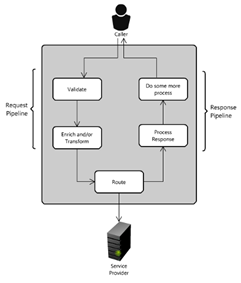
The common case scenario for a service exposed via Oracle Service Bus is to receive a message, validate/enrich/transform it, call a service provider and then do some additional work with the response from the provider before returning it to the caller. The initial steps are grouped inside a request pipeline; the message then goes through a route to the provider, and the final processing is done by a response pipeline before sending it back to the caller:

Usual structure of an OSB service

The threading model used by Oracle Service Bus states that the request pipeline must execute on a thread (the Inbound Request Message Thread) and the response pipeline must use another thread to process the response (properly named the Outbound Response Message Thread). The route is done by a transport provider, which can or cannot use the request thread to wait for the provider’s response.

When the transport holds the request thread until it gets a response, it is called a blocking transport. Conversely, if the transport puts the call and releases the thread, it’s called a non-blocking transport. Some of the transports are listed below, with info about their support to non-blocking calls: Read the complete article here.

SOA & BPM Partner Community

For regular information on Oracle SOA Suite become a member in the SOA & BPM Partner Community for registration please visit www.oracle.com/goto/emea/soa (OPN account required) If you need support with your account please contact the Oracle Partner Business Center.

Blog Twitter LinkedIn image[7][2][2][2] Facebook clip_image002[8][4][2][2][2] Wiki

Technorati Tags: SOA Community,Oracle SOA,Oracle BPM,OPN,Jürgen Kress

Oracle Real-Time Integration Business Insight

image

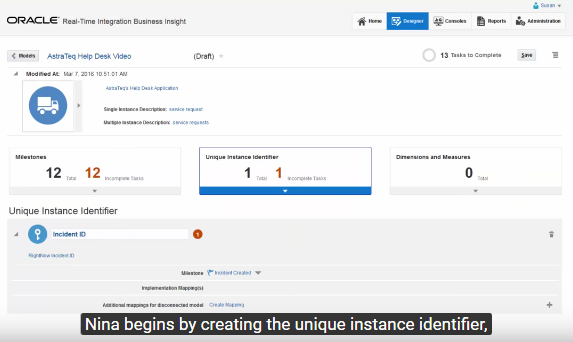
Oracle Real-Time Integration Business Insight: Designing Insight Models This video describes the designing of business models in Oracle Real-Time Integration Business Insight.

Oracle Real-Time Integration Business Insight: Working with Reports This short video will be part of the Introducing Oracle Real-Time Integration Business Insight (aka Insight) video series. This video demonstrates what business insights you can gain from the pre-configured reports.

SOA & BPM Partner Community

For regular information on Oracle SOA Suite become a member in the SOA & BPM Partner Community for registration please visit www.oracle.com/goto/emea/soa (OPN account required) If you need support with your account please contact the Oracle Partner Business Center.

Blog Twitter LinkedIn image[7][2][2][2] Facebook clip_image002[8][4][2][2][2] Wiki

Technorati Tags: SOA Community,Oracle SOA,Oracle BPM,OPN,Jürgen Kress