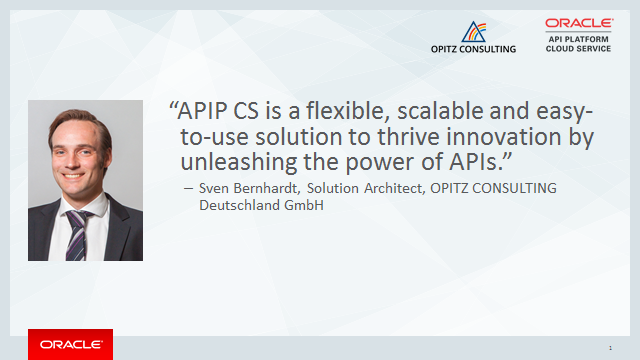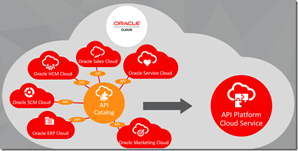
APIP CS is a flexible, scalable and easy-to-use solution to thrive innovation by unleashing the power of APIs

image

API Platform Cloud Service Resources


SOA & BPM Partner Community

For regular information on Oracle SOA Suite become a member in the SOA & BPM Partner Community for registration please visit www.oracle.com/goto/emea/soa (OPN account required) If you need support with your account please contact the Oracle Partner Business Center.

Blog Twitter LinkedIn image[7][2][2][2] Facebook clip_image002[8][4][2][2][2] Wiki

Technorati Tags: API CS,API Platform Cloud Service,Cloud,PaaS,SOA Community,Oracle SOA,Oracle BPM,OPN,Jürgen Kress

API Platform Cloud Service Partner resource kit

image

For Oracle Partners we offer an API Platform Cloud Service resource kit (community membership required):

· Sales kit

· Online training and certification: API Platform Cloud Service Partner Sales Rep GLP and API Platform Cloud Service Partner Sales Consultant GLP

· API trial service

· API CS Whitepaper & API Platform Cloud Service Data Sheet & Apiary Data Sheet

· API Platform Cloud Service Documentation

· Upcoming API hands-on trainings

· API CS website & OTN page

SOA & BPM Partner Community

For regular information on Oracle SOA Suite become a member in the SOA & BPM Partner Community for registration please visit www.oracle.com/goto/emea/soa (OPN account required) If you need support with your account please contact the Oracle Partner Business Center.

Blog Twitter LinkedIn image[7][2][2][2] Facebook clip_image002[8][4][2][2][2] Wiki

Technorati Tags: API CS,API Platform Cloud Service,Cloud,PaaS,SOA Community,Oracle SOA,Oracle BPM,OPN,Jürgen Kress

Oracle API Platform Cloud Service (APIP CS) is available!

image

Oracle API Platform Cloud Service provides a foundation for Digital Transformation through the first API Management offering that comprises the full API Lifecycle. Encompassing the complete API continuum from API Design & Standardization via Apiary’s trusted API Design & Documentation Platform through to API Security, Discovery & Consumption, Monetization, and Analysis, the API Platform Cloud Service provides a completely new, simplified API management user experience on top of a proven API gateway.

It is easy for an organization to eliminate the challenges associated with traditional API management with the API Platform Cloud Service. Teams have the agility provided by Apiary to collaborate on design specs quickly, developing front- and back-end services in parallel, achieving visibility into API use for better control and monetization of digital assets, as well as the assurance that their APIs are secured against unauthorized users and potential attacks.

Key Features:

· Apiary Mock Server: Quickly model an API on Apiary’s hosted server to make sure that everyone is on-board

· Apiary Interactive Documentation: Give API consumers the information they need to succeed. The Apiary Documentation Console takes the API Description and allows you to not only read and write, but also to interact with your API—even before you’ve built it

· API Implementation: Build new APIs using Apiary UI

· API Deployment: Deploy, Activate, Deprecate, and Remove APIs

· API Inventory & Catalog: Know which APIs are available for use

· Application Registration & Management: Manage the applications using your APIs to ensure proper usage

· Operational Analytics: 10 pre-built charts to see, for example, who is using your API, how, and if they are encountering issues

· Policies: Top security, quality of service, and routing policies

· User Roles & Grants: Control access to your APIs with API-level entitlements

Key Differentiators:

The  API  Platform  Cloud  Service  is  a  leader  where  there  has  been  a  gap  in  full  lifecycle API Management. The API Platform Cloud Service is the only platform that provides complete support for API Lifecycle from API Design & Standardization to API  Security,  Discovery  &  Consumption,  Monetization,  and  Analysis  on  top  of  a  proven API gateway.

· Deployment  Flexibility

· Low Operational Cost:

· Rich Functional, Operational and Audit Capabilities

· Customizable   Developer   Portal

· Proven  Technology

What Oracle APIP Beta Participants & Apiary Customers Say About Oracle Innovation:

“Customers want to unlock the value in their systems by delivering APIs to internal developers and even customers to re-invent and remix critical business functions. A product like APIP reduces the administrative burden of launching services by handling API discovery, security, throttling, and versioning in a innovated hybrid cloud solution. We look forward to helping our customers take advantage of this game-changing product from Oracle.”

— Steve Giovannetti, CTO & Founder, Hub City Media, Inc.

“Trunk Club has been able to develop new solutions quickly with Oracle Apiary. Originally, a lack of API documentation left a lot of room for interpretation, but since implementing Oracle Apiary, API documentation has been a game changer. Front-end and back-end teams have been able to focus on better API design, and the integrated mock server has allowed us to develop in parallel. Not only has development time gone down, using Oracle Apiary brought the architecture and payload discussion earlier in the development process, making it easier for us to collaborate across teams and platforms.”

— Brian Lee, Engineering Manager at Trunk Club

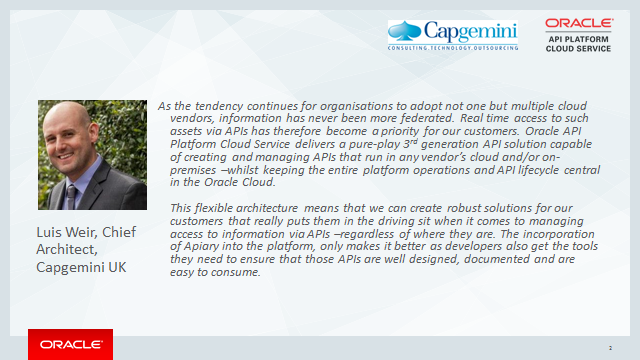
“As the tendency continues for organizations to adopt not one but multiple cloud vendors, information has never been more federated. Real time access to such assets via APIs has therefore become a priority for our customers. Oracle API Platform Cloud Service delivers a pure-play 3rd generation API solution capable of creating and managing APIs that run in any vendor’s cloud and/or on-premises –whilst keeping the entire platform operations and API lifecycle central in the Oracle Cloud.

This flexible architecture means that we can create robust solutions for our customers that really puts them in the driving sit when it comes to managing access to information via APIs –regardless of where they are. The incorporation of Apiary into the platform, only makes it better as developers also get the tools they need to ensure that those APIs are well designed, documented and are easy to consume.”

— Luis Weir, Chief Architect, Application Services, Capgemini UK.

Learn more about APIP Cloud Service:  https://cloud.oracle.com/api-platform and a partner resource kit here.

SOA & BPM Partner Community

For regular information on Oracle SOA Suite become a member in the SOA & BPM Partner Community for registration please visit www.oracle.com/goto/emea/soa (OPN account required) If you need support with your account please contact the Oracle Partner Business Center.

Blog Twitter LinkedIn image[7][2][2][2] Facebook clip_image002[8][4][2][2][2] Wiki

Cloud Integration Part 2: Cloud to Cloud by Joel Perez and Arturo Viveros

image

This second article in the four-part series by Oracle ACE Director Joel Perez and Oracle ACE Associate Arturo Viveros takes an in-depth look at Cloud to Cloud Integration. The article series is directed towards IT managers and architects, particularly those who are hungry for knowledge related to cloud solutions and the dynamics involved when attempting to integrate them effectively into established business architectures.

Why is Cloud to Cloud Integration such a relevant theme?

Commonly, we find that organizations with flourishing cloud adoption strategies tend to address an ever-growing number of concerns through an stunning variety of cloud-based solutions, producing, as a result, highly granular and heterogeneous landscapes; this as opposed to the generally more homogenized on-premise ecosystems. And even though each one of these alternatives may begin by serving a very specific purpose, it’s usually just a matter of time before the need for interaction arises.

Things move more quickly in the cloud, and those integration needs are usually pressing in the sense of leveraging cloud investments and attaining promised benefits such as flexibility, business agility, etc.

Cloud integration projects, then, are definitely going to happen by necessity, but the last thing organizations want is a re-emergence of the dreaded “spaghetti architectures,” in which an array of point-to-point, custom-made interfaces are developed and deployed almost randomly, compromising with their proliferation the security, maintainability, standardization, performance and flexibility of our IT platforms: What companies ultimately desire is a modern, dynamic, reliable and (most of all) adaptable integration platform that lets them keep up with the needs of the cloud-oriented industry.

Here’s where a concept such as iPaaS (Integration Platform as a Service) comes into play: an innovative alternative which nonetheless is becoming increasingly relevant.

Let’s look at Gartner’s definition of iPaaS: "…a suite of cloud services enabling development, execution and governance of integration flows and connecting any combination of on premises and cloud-based processes, services, applications and data within individual or across multiple organizations"

One of the interesting quirks of a paradigm like this one is that the solution for achieving adequate integration in a cloud-to-cloud scenarios is nothing else but another cloud solution.

By nature, this alternative would not require any kind of up-front investment in hardware, infrastructure or licensing, nor would it imply maintenance costs, coding, deployment or fine-tuning. Rather, organizations could get a fast start by just paying a subscription and starting to use the tool.

Introducing Oracle Integration Cloud Service

The question is: Does Oracle’s stack offer anything that can provide such capabilities and help us effectively resolve cloud-to-cloud integration scenarios?

And the answer is an emphatic “Yes!” As of very recently, Oracle has joined the iPaaS ranks alongside the leading players in the cloud integration market with the launch of its Integration Cloud Service  (ICS). The investment has been very strong, and has yielded a powerful, best-of-breed solution. From a technical perspective, one of the aspects that make Oracle ICS such a compelling and competitive solution is the foundation running under the curtains. Here are some of ICS’s building blocks: Read the complete article here.

SOA & BPM Partner Community

For regular information on Oracle SOA Suite become a member in the SOA & BPM Partner Community for registration please visit www.oracle.com/goto/emea/soa (OPN account required) If you need support with your account please contact the Oracle Partner Business Center.

Blog Twitter LinkedIn image[7][2][2][2] Facebook clip_image002[8][4][2][2][2] Wiki

Technorati Tags: SOA Community,Oracle SOA,Oracle BPM,OPN,Jürgen Kress

Oracle Integration Platform Portfolio – on premises and primarily in the cloud by Lucas Jellema

image


One of the very first capabilities Oracle ever introduced in its PaaS portfolio was integration. It was clear from the onset of any talk about clouds that facilities to do integration between cloud and on premises as well as between various clouds [from different vendors]would be essential. With its SOA Suite, Oracle had a very strong on premises offering for integration, and it used this foundation for its first steps on the cloud integration path.

The initial approach from Oracle on integration in the cloud was two-fold:

  • SOA Suite Cloud Service offered the originally on premises products SOA Suite 12c along with API Manager, B2B and MFT (Managed File Transfer) running on DBaaS and a WebLogic domain provisioned automatically
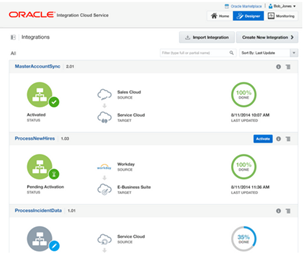
  • ICS (Integration Cloud Service) provided a citizen developer’s user experience for declaratively creating SaaS to SaaS integration flows, using a quickly expanding portfolio of pre-built cloud adapters; ICS made use of the SOA Suite SB engine under the covers

Additionally, a roadmap was outlined for the continued development of the on premises SOA Suite product that was to mimicked by the SOA Suite CS.

This year, the strategy around integration has somewhat changed, in several ways, visualized in this figure: Read the complete article here.

SOA & BPM Partner Community

For regular information on Oracle SOA Suite become a member in the SOA & BPM Partner Community for registration please visit www.oracle.com/goto/emea/soa (OPN account required) If you need support with your account please contact the Oracle Partner Business Center.

Blog Twitter LinkedIn image[7][2][2][2] Facebook clip_image002[8][4][2][2][2] Wiki

Technorati Tags: SOA Community,Oracle SOA,Oracle BPM,OPN,Jürgen Kress

Oracle API Management by Luis Weir

image

We all hear about automation, bots, IoT, self-driving cars, microservices, and cyborgs, but how could this all work without APIs? APIs will continue to play an increasingly important role in making this world a reality. Come hear from our team of futurists about their vision of how the digital landscape will evolve and the role that API Management will have in this brave new world.
Presented by Luis Weir, Principal, Oracle Ace Director, Capgemini, at Oracle OpenWorld 2016. Get the presentation here.

SOA & BPM Partner Community

For regular information on Oracle SOA Suite become a member in the SOA & BPM Partner Community for registration please visit www.oracle.com/goto/emea/soa (OPN account required) If you need support with your account please contact the Oracle Partner Business Center.

Blog Twitter LinkedIn image[7][2][2][2] Facebook clip_image002[8][4][2][2][2] Wiki

Technorati Tags: SOA Community,Oracle SOA,Oracle BPM,OPN,Jürgen Kress

The API Platform Service by Lucas Jellema

image

APIs are hot. Public APIs are an enterprise’s programmatic interface to B2B partners, governments and other stakeholders including app and web builders. Internally, APIs are the touch points for encapsulated functionality and data and the entry points into microservices – to name that other hot term. APIs are usurping the role services have or were supposed to have and it would be hard to very clearly define the distinction between service and API. APIs are perhaps a fairly light weight type of service that live almost exclusively in the world of REST/JSON and use OAuth2 and OpenID Connect for authentication and authorization. Note: see this presentation by Luis Weir (ACE Director, CapGemini) from OOW2016 for a thorough introduction in the what and why of APIs and API Management. From this presentation comes Luis’ definition of an API – that also gives an idea of what is important to take care of with APIs:

Enterprises that want to work with APIs will require facilities to design, test, publish, govern, secure, manage, monetize and monitor those APIs. The API Management space is hotly contended with many vendors offering their products in this area. Oracle is very close (winter 2016/17) to releasing the brand new API Platform Cloud Service to facilitate API management in any which way. As such, API Management is key element in the Integration story of the Oracle PaaS portfolio.

The API Platform broadly speaking consists of two parts that together cover the API Delivery Life Cycle: Read the complete article here.

SOA & BPM Partner Community

For regular information on Oracle SOA Suite become a member in the SOA & BPM Partner Community for registration please visit www.oracle.com/goto/emea/soa (OPN account required) If you need support with your account please contact the Oracle Partner Business Center.

Blog Twitter LinkedIn image[7][2][2][2] Facebook clip_image002[8][4][2][2][2] Wiki

Technorati Tags: SOA Community,Oracle SOA,Oracle BPM,OPN,Jürgen Kress

Additional new content SOA & BPM Partner Community


image

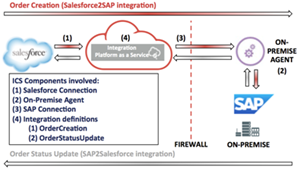
· Oracle Integration Cloud Service Use Case: Closed Loop Order Management Oracle ACE Sven Bernhardt, along with co-authors Alexander Däubler and Cornelia Spanner, examine the details of a use case in which Oracle Integration Cloud Service is used to integrate an on-prem ERP solution (SAP) with a cloud-based CRM solution (Salesforce). Read the article.

· Citizen Developer: Partner or Party Crasher? You might assume that the people in IT would have issues with non-IT people taking it upon themselves to create their own applications. But based on comments posted in a community discussion of the topic, that assumption would be faulty—and simplistic. Read the article.

· Podcast: Middleware Here and Now Recorded shortly before Oracle OpenWorld 2016, this podcast brings together a group of middleware product managers to discuss the current state of their respective products. Listen to the podcast.

· Video: Oracle Tools for Cloud Development Developing cloud services and microservices is worth getting excited about, according to Oracle ACE Director John King, thanks to Oracle JDeveloper, SQL Developer, Mobile Application Framework (MAF), and APEX. Watch the video.

· Oracle Empowers Cloud Developers Oracle has unveiled the next generation of Cloud services and development tools at JavaOne 2016, as well as a range of developer-focused initiatives. Learn more.

· Low Code Platform to Easily Extend SaaS Applications Project Visual Code, a complete cloud-based application platform for low-code development, allows enables business users and developers to extend services and build new applications with little to no coding. Learn more.

· Unmatched Cloud Platform Based on #1 Database and #1 Middleware to Accelerate Move of Enterprise IT to the Cloud PaaS enhancements unveiled today (Sept 20) also include nineteen new Cloud services including: Container Cloud Service, Oracle Identity Cloud Service, Oracle Internet of Things Cloud Service, Big Data Cloud Services and Oracle Analytics Cloud Services. Learn more.


SOA & BPM Partner Community

For regular information on Oracle SOA Suite become a member in the SOA & BPM Partner Community for registration please visit www.oracle.com/goto/emea/soa (OPN account required) If you need support with your account please contact the Oracle Partner Business Center.

Blog Twitter LinkedIn image[7][2][2][2] Facebook clip_image002[8][4][2][2][2] Wiki

Technorati Tags: SOA Community,Oracle SOA,Oracle BPM,OPN,Jürgen Kress

Oracle API Platform: Design-first Thinking for the API Economy Webcast June 15th 2017

Oracle API Platform: Design-first Thinking for the API Economy Webcast
Date: Thursday, June 15, 2017 Time: 10:00 AM PDT

Join this webcast to meet the new Oracle API Platform Cloud Service. In this short session, you will learn how a sleek, intuitive full lifecycle API Platform built on Oracle’s proven gateways will improve productivity and effectiveness in your business.
Learn how you can leverage this true hybrid offering to:

  • Focus on the full API lifecycle, starting with Design & Governance, all the way through Security, Discovery & Consumption, Monetization, and Analysis, to develop APIs and create modern applications and user experiences.
  • Develop an API-First strategy to accelerate digital transformation, safely extend the reach of intellectual property, and create new revenue streams.
  • Leverage an open, heterogeneous environment with an easy-to-use platform that is compatible with open standards

image

Vikas Anand
Vice President Product Management, Oracle

image

Amit Zavery
Senior Vice President,
Oracle Cloud Platform and Middleware Products

image

Jakub Nesetril
Founder, Apiary, Vice President, Product Development, Oracle

Register today.

image

SOA & BPM Partner Community

For regular information on Oracle SOA Suite become a member in the SOA & BPM Partner Community for registration please visit www.oracle.com/goto/emea/soa (OPN account required) If you need support with your account please contact the Oracle Partner Business Center.

Blog Twitter LinkedIn image[7][2][2][2] Facebook clip_image002[8][4][2][2][2] Wiki

Technorati Tags: SOA Community,Oracle SOA,Oracle BPM,OPN,Jürgen Kress

Sending Dynamic HTML-based Emails for SOA and BPM Projects by Mark Peterson

image

Sending email notifications in Oracle BPEL or BPM projects can turn into a major effort if you are not using ADF–and sometimes even if you are using ADF. If you use ADF, you can leverage features such as HTML editors and actionable emails. But in many situations you may need a stand-alone email formatting solution that doesn’t involve ADF, that can produce a simple HTML-based email, and that doesn’t need to be actionable. You will find that that simple SOA-based approach helps you implement your requirements efficiently and effectively.

This approach

  • Integrates with BPM and BPEL
  • Is HTML-based and can contain dynamic information from a database
  • Leverages BPEL and BPM direct assignments and role-based assignments
  • Includes a template selector, for sending different types of emails
  • Handles attachments
  • Intercepts and redirects emails for testing purposes

A detailed description of this email notification system is described below. Upon request we would be happy to provide the actual project code describe here.

Input XML

This is a sample of the input XML. Notice the data includes

  • A record ID – Used to pull data from the database for embedding information in the email
  • An array of "TO" email addresses – Use to lookup email addresses from user names or BPM application roles. Read the complete article here.

SOA & BPM Partner Community

For regular information on Oracle SOA Suite become a member in the SOA & BPM Partner Community for registration please visit www.oracle.com/goto/emea/soa (OPN account required) If you need support with your account please contact the Oracle Partner Business Center.

Blog Twitter LinkedIn image[7][2][2][2] Facebook clip_image002[8][4][2][2][2] Wiki

Technorati Tags: SOA Community,Oracle SOA,Oracle BPM,OPN,Jürgen Kress