Demystifying Oracle Integration Cloud (OIC) by Eduardo Barra Cordeiro

image

In my previous article, I gave some input about the Oracle API Platform as a digital transformation enabler. Today I am going to walk you through another product, Oracle Integration Cloud, and try to demystify what the product is and who benefits from it. I will also provide some use cases for this platform.

Why do I need an integration system in the cloud?

In a hybrid cloud environment with applications hosted in different places (clouds and/or on premise), the integration between them can become a challenge. Especially considering security, accessibility and latency.

A cloud integration solution can be a good way to resolve that. Even better, if it is simple to use and contains multiple adapters for different targets, allowing business teams to easily implement applications themselves (for the most of the part with almost zero-coding). This is the Oracle Integration Cloud.

Which components does the OIC have?

Oracle Integration Cloud consists of three parts. Combined, they provide a set of solutions that help you design business processes, integrations, orchestrations and web/mobile applications. You can use each one independently if you prefer.

Process Builder: made to design your business processes using a friendly interface and zero coding (yes, it is not a joke… you can code if you want, or if you have any specific requirements). You can also use the platform to execute activities related to your process, like task approvals, monitoring, and reports. Read the complete article here.

PaaS Partner Community

For regular information on Oracle PaaS become a member in the PaaS (Integration & Process) Partner Community please register here.

clip_image003 Blog clip_image005 Twitter clip_image004 LinkedIn image[7][2][2][2] Facebook clip_image002[8][4][2][2][2] Wiki

Technorati Tags: SOA Community,Oracle SOA,Oracle BPM,OPN,Jürgen Kress
Avatar-Guided Oracle Integration Simulator Demo

image

This interactive simulator leads you through the Oracle Integration experience. Configure connectors, build an integration flow, map data, and activate your dashboard. We highly encourage you to share this demo with prospects; it is available on oracle.com/integration and in Sales Central. Try it now

PaaS Partner Community

For regular information on Oracle PaaS become a member in the PaaS (Integration & Process) Partner Community please register here.

clip_image003 Blog clip_image005 Twitter clip_image004 LinkedIn image[7][2][2][2] Facebook clip_image002[8][4][2][2][2] Wiki

Technorati Tags: SOA Community,Oracle SOA,Oracle BPM,OPN,Jürgen Kress
Oracle Integration Cloud (OIC) – Tips & Tricks by Anthony Hobart

image

While working with Oracle Integration Cloud (OIC) on a number of customer projects recently, I’ve come across a few handy tips and tricks to make life easier.

TIP-1 : Accessing Variables Across Scopes
TIP-2 : REST Adapter PATCH Verb Support
TIP-3 : REST Inbound Message Size
TIP-4 : Convert CSV as String to XML

PaaS Partner Community

For regular information on Oracle PaaS become a member in the PaaS (Integration & Process) Partner Community please register here.

clip_image003 Blog clip_image005 Twitter clip_image004 LinkedIn image[7][2][2][2] Facebook clip_image002[8][4][2][2][2] Wiki

Technorati Tags: SOA Community,Oracle SOA,Oracle BPM,OPN,Jürgen Kress

Video: Oracle Integration and HCM Cloud Transform Recruiting

image

The Co-operative Group automated their recruitment process to reduce hiring time by connecting and extending their HCM Cloud. Head of Resourcing Services Yvonne Foster shares how Oracle Integration helped accelerate her innovation. Watch this new customer video. Special thanks to the Capgemini UK team for this successful implementation! You have implemented Oracle PaaS successful at a customer? Submit your success story here.

PaaS Partner Community

For regular information on Oracle PaaS become a member in the PaaS (Integration & Process) Partner Community please register here.

clip_image003 Blog clip_image005 Twitter clip_image004 LinkedIn image[7][2][2][2] Facebook clip_image002[8][4][2][2][2] Wiki

Technorati Tags: SOA Community,Oracle SOA,Oracle BPM,OPN,Jürgen Kress
How Skanska built AI into Connected Compliance Webcast December 19th 2019

skanskaConnected Compliance with Oracle Integration


December 19th 2019 10:00 AM PT

Join Skanska’s Conny Bjorling, Head of Enterprise Architecture, along with Oracle executives to learn how they built fairness, human intelligence, and simplicity into their automated sanctions list checking.

  • Connect Oracle, third-party, and custom enterprise applications 6X faster with API-first thinking, visual design tooling, and prebuilt adapters
  • Crush the time to deliver custom analytics from 1.5 days to 5 minutes with self-service capabilities and ML-powered guidance 
  • Get from concept to global go-live with secure, scalable augmented analytics and intelligent process automation in weeks

For details please see the registration page here.

PaaS Partner Community

For regular information on Oracle PaaS become a member in the PaaS (Integration & Process) Partner Community please register here.

clip_image003 Blog clip_image005 Twitter clip_image004 LinkedIn image[7][2][2][2] Facebook clip_image002[8][4][2][2][2] Wiki

Technorati Tags: SOA Community,Oracle SOA,Oracle BPM,OPN,Jürgen Kress

Oracle Integration & Process Customer Summit January 13 2020 in Dubai

Oracle Integration & Process Customer Summit January 13 2020 in Dubai, UAEclip_image001
This event will include topics related to Oracle’s Integration & Process service offerings as well as Oracle Digital Assistant (ODA). The Summit is a platform that enables a dialogue between customers and Oracle – our HQ PM and engineering will give attendees exclusive access to our product roadmaps, as well as discuss upcoming innovations.

Featured Speakerclip_image002

Suhas Uliyar

Vice President, Product Management
Oracle Corporation

Scott Haalandclip_image002[5]

Senior Director, Product Management
Oracle Corporation

Agenda

  • Product updates and roadmap presentations on Oracle Integration including Innovations such as Business Accelerators and Integration Insight.
  • Customer experience presentations.
  • Feedback sessions.
  • Networking with other customers.
  • Opportunities to interact 1:1 with Integration & Process engineering and product management.

For details please visit the registration page.

Sponsor:

 clip_image001[4]

PaaS Partner Community

For regular information on Oracle PaaS become a member in the PaaS (Integration & Process) Partner Community please register here.

clip_image003 Blog clip_image005 Twitter clip_image004 LinkedIn image[7][2][2][2] Facebook clip_image002[8][4][2][2][2] Wiki

Technorati Tags: SOA Community,Oracle SOA,Oracle BPM,OPN,Jürgen Kress

Oracle Integration has the best of breed RSO (Robotic Service Orchestration) support by Nicolas Damonte

image

But before justifying it, let’s start by explaining what RSO is and the differences with RPA.

The What …

RSO (Robotic Service Orchestration) is basically managing bots in the context of a business process, just like they would manage people.

RPA (Robotic Process Automation) enables the automation of manual tasks using UI Scrapping technologies. The value proposition is using bots to perform repetitive manual tasks (like data entry) mainly on legacy systems (with no APIs).

The Difference …

RPA was designed to performs tasks, not to manage end to end services.
RSO is about end to end services, managing their full orchestration and fostering a continuous improvement lifecycle.

The Justification …

PaaS Partner Community

For regular information on Oracle PaaS become a member in the PaaS (Integration & Process) Partner Community please register here.

clip_image003 Blog clip_image005 Twitter clip_image004 LinkedIn image[7][2][2][2] Facebook clip_image002[8][4][2][2][2] Wiki

Technorati Tags: SOA Community,Oracle SOA,Oracle BPM,OPN,Jürgen Kress

SOA Suite 12c upgrade – Composite DVMs by Martien van den Akker

image

Today I found something curious in a composite upgraded from 11g to 12c, regarding DVMs. I sometimes use DVMs in BPEL to prevent the use of complex xpath expressions with many conditions. For instance, if I need to know if a JMSType is in a certain range and if it is I need to continue, I can create a DVM that has those JVMTypes correlated to an indicator.

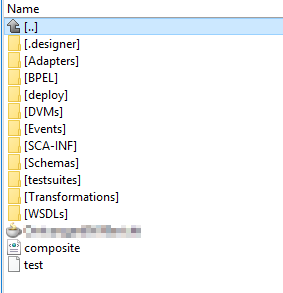
Now, in 12c we have a new project structure. Where in 11g, about every component is in the root of the project, in 12c those are moved to a subfolder. That is, if you would create a new project:

Folder like xsd, wsdl, xsl in 11g are renated to Schemas, WSDLs and Transformations in 12c. We decided to refactor the upgraded projects to the new structure in 12c. So our BPEL processes are moved to the BPEL subfolder. This means that when referencing a transformation (xsl) you would adapt your xslt functions as: Read the complete article here.

PaaS Partner Community

For regular information on Oracle PaaS become a member in the PaaS (Integration & Process) Partner Community please register here.

clip_image003 Blog clip_image005 Twitter clip_image004 LinkedIn image[7][2][2][2] Facebook clip_image002[8][4][2][2][2] Wiki

Technorati Tags: SOA Community,Oracle SOA,Oracle BPM,OPN,Jürgen Kress

Moving SOA to Oracle Cloud Infrastructure by Robert Wunderlich

image

Many customers are running their workloads on Oracle Cloud Infrastructure Classic (OCI-C), but the new Oracle Cloud Infrastructure (OCI) offers compelling benefits that customers should consider moving their workloads to the “gen 2 cloud“.  Additionally if the customer is not yet running SOA 12.2.1.3 or above, now is an ideal time to make the move.

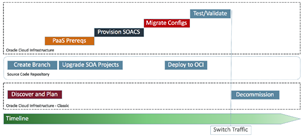
A SOA implementation is typically large and serves mission critical requirements.  This means that a “side-by-side” migration is the best approach.  At a high-level the process is as follows:

  • Discover/map the existing OCI-C deployment.  Oracle provides a set of tools to help in migrating workloads to OCI.  You can learn more about this at Upgrade to Oracle Cloud Infrastructure.
  • Branch your SOA projects: SOA projects can be deployed into a new environment and they will be upgraded on the deployment.  However, a better approach is to branch your version control and upgrade the projects in JDeveloper.  You can then validate the project to catch any potential issues. Read the complete article here.

PaaS Partner Community

For regular information on Oracle PaaS become a member in the PaaS (Integration & Process) Partner Community please register here.

clip_image003 Blog clip_image005 Twitter clip_image004 LinkedIn image[7][2][2][2] Facebook clip_image002[8][4][2][2][2] Wiki

Technorati Tags: SOA Community,Oracle SOA,Oracle BPM,OPN,Jürgen Kress

Test Remote Asynchronous Request Response services by Martien van den Akker

image

A few years ago, I described how you can test Asynchronous Request Response services.

The thing with Asynchronous Request Response services is, as I used to describe it, that they’re in essence two complementary Request-Only (Fire and Forget) services. That is, the client submits a request to the Asynchronous Request Response service, and at a certain point waits for the response by listening to an endpoint.
To make this work, the responding Asynchronous Request Response service should be told, which endpoint it should call with the response and which correlation id should be used. The WS-Addressing standard is used for that. All nicely explained in the before mentioned article.
In most customer-cases the problem is that your Client SoapUI or ReadyAPI project should catch the response, but the service is running on a SOA Suite in the datacenter and is not allowed to get to your local machine.
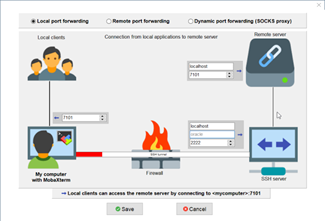
MobaXterm makes it very easy to create a tunnel. You can have a remote tunnel, that enables a local listening endpoint, that forwards every request to a remote service. Very handy if you have a Vagrant project with only a NAT NetworkAdapter, where Vagrant enabled a ssh endpoint on port 2222. You can easily create a Local tunnel on port 7101, for instance, to the remote ssh session on port 2222, that enables you to get to the weblogic console on the remote VM running on http://darlin-vce:7101/console. To create a tunnel, just open the MobaSSHTunnel – Grahpical port forwarding tool: Read the complete article here.

PaaS Partner Community

For regular information on Oracle PaaS become a member in the PaaS (Integration & Process) Partner Community please register here.

clip_image003 Blog clip_image005 Twitter clip_image004 LinkedIn image[7][2][2][2] Facebook clip_image002[8][4][2][2][2] Wiki

Technorati Tags: SOA Community,Oracle SOA,Oracle BPM,OPN,Jürgen Kress