Getting ready to run SOA on Oracle Cloud Infrastructure with Terraform by Robert Wunderlich

image

Oracle has a robust portfolio of cloud offerings ranging from SaaS to IaaS.  Some of the services like Autonomous Transaction Processing (ATP), or Oracle Integration Cloud (OIC) are fully managed by Oracle, lifting the burdens from DBAs and System Administrators.  These services run on Oracle Cloud Infrastructure (OCI) sometimes referred to as the “gen 2 cloud“.

Some of the services like SOA Cloud and Java Cloud that were originally delivered on OCI Classic (“gen 1 cloud”), can also run on OCI, but there are a number of prerequisites that must be completed before these services can be deployed.  For more information, see https://docs.cloud.oracle.com/iaas/Content/General/Reference/PaaSprereqs.htm

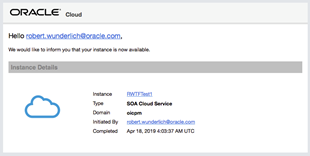
The prerequisites are well documented, but with the number of steps required, some mistakes can occur.  I experienced this when helping a partner troubleshoot an installation problem that turned out to be a simple typo.  This got me to thinking that Terraform by Hashicorp could help prevent these sort of problems, and make the process repeatable. Read the complete article here.

PaaS Partner Community

For regular information on Oracle PaaS become a member in the PaaS (Integration & Process) Partner Community please register here.

clip_image003 Blog clip_image005 Twitter clip_image004 LinkedIn image[7][2][2][2] Facebook clip_image002[8][4][2][2][2] Wiki

Technorati Tags: SOA Community,Oracle SOA,Oracle BPM,OPN,Jürgen Kress
Microservices Architecture pt.2: Why do we want Microservices architecture? By Lykle Thijssen

image

After exploring what a microservices architecture actually is (see Microservices Architecture pt.1: Definition), we can ask ourselves why we want such an architecture. After all, it seems rather complex, discourages reusability, can lead to data inconsistency and any hype will be overtaken by something else in the future. However, there are benefits too and most of the downsides can be mitigated. It’s also not always necessary to go for the most hardcore version of an idea, some middle ground can be reached to come up with a reasonable solution.
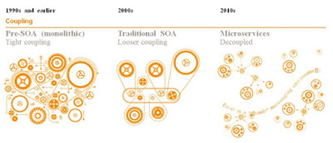
The most important reason for microservices architecture is to get rid of dependencies. Many systems are very hard to manage and maintain, because a small change can create a massive butterly effect and the entire application may be at risk. With microservices architecture, you isolate business modules, so a change in the insurance part of the company will not affect their marketing application and vice versa. This also makes it easier to release changes and updates, because the bounded context protects you from unexpected and undesirable side effects.

Another reason is that many organizations are disappointed with the traditional approach to SOA. In many cases, implementing SOA has not led to more flexibility, but actually less, as now multiple layers need to be tweaked to make a single change and massive enterprise metadata repositories make it virtually impossible to change things without massive consequences. If all your services are using your Person.xsd and you need to make a change to that one, you’re going to be royally screwed. Besides, the Person.xsd will most likely contain everything from every context, which makes it unfocused and hard to work with. On the other hand, not using these metadata models also have downsides, as you need to make a lot of transformations. Microservices architecture can be a nice middle ground here, because you can isolate the Person’s context to the business module and there are no dependencies between the different business domains. So, the context of a person is completely different for insurances as it is for marketing and guess what… that’s totally okay and no longer an issue. Read the complete article here.

PaaS Partner Community

For regular information on Oracle PaaS become a member in the PaaS (Integration & Process) Partner Community please register here.

clip_image003 Blog clip_image005 Twitter clip_image004 LinkedIn image[7][2][2][2] Facebook clip_image002[8][4][2][2][2] Wiki

Technorati Tags: SOA Community,Oracle SOA,Oracle BPM,OPN,Jürgen Kress
Using Integration flows with File Transfers by Michael Meiner

image

Oracle Integration (OIC) eliminates barriers between business applications through a combination of machine learning, embedded best-practice guidance, pre-built integration and process automation. Integration Cloud provides the means for integrating applications, automating processes and building applications visually. Integration Cloud can also consume, produce, and perform transformations, on files.

For use cases where an sftp server is needed, Integration Cloud can be coupled with Oracle Managed File Transfer (MFTCS) Cloud Service to build and end-to-end solution. MFTCS has an embedded sftp server, along with features not available in traditional sftp solutions. For instance, MFTCS can integrate with other endpoints including: SOAP, Storage Service, ODI, B2B and WebCenter.

When provisioning OIC and MFTCS, you’ll want to provision them in the same Oracle datacenter for maximum performance.

Use Case

In our use case, we perform a bulk data import of external transactions into ERP cloud.  We introduce the following marketing personas: Mary is responsible for Customer Relationship Management (CRM) in Oracle EBS. We also introduce Bob, responsible for Enterprise Resource Planning (ERP) in Oracle Fusion ERP. Mary and Bob need these systems to sync automatically, without human intervention. EBS will be generating content that needs to be consumed by ERP.

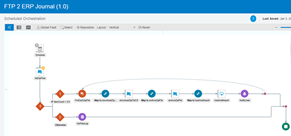
The demonstration uses Oracle’s cloud integration capabilities to automate the bulk data import process. A .csv file of transaction records is transferred to an SFTP server (i.e., MFTCS), where it is picked up and processed by the Integration Cloud. If necessary, the integration flow can add additional data to the inbound transactions prior to passing the data off to ERP cloud. Read the complete article here.

PaaS Partner Community

For regular information on Oracle PaaS become a member in the PaaS (Integration & Process) Partner Community please register here.

clip_image003 Blog clip_image005 Twitter clip_image004 LinkedIn image[7][2][2][2] Facebook clip_image002[8][4][2][2][2] Wiki

Technorati Tags: SOA Community,Oracle SOA,Oracle BPM,OPN,Jürgen Kress

Change date time format in Oracle Integration Cloud by Ankur Jain

image

We got a request from multiple folks saying they are struggling to change the date time format in Oracle Integration Cloud.

We are writing this article to see how to change the default date format(2019-04-13T05:09:05.049+00:00) to a different format.

Oracle Integration Cloud Service provides an Out of the box function(xp20:format-dateTime) which allows us to change the date time format. We are on ICS version (18.4.3.0.3) and the function is available(xp20:format-dateTime). Let us see how to apply this function and change the date format as per the requirement. The function(xp20:format-dateTime) takes below two arguments:

  1. dateTime: Provide the DateTime input parameter as a string which needs to be the format
  2. Format: Provide the format as a string as per the requirement

Example-1: Parse the date time in the format “dd-MM-yyyy“, below will be the syntax: Read the complete article here.

PaaS Partner Community

For regular information on Oracle PaaS become a member in the PaaS (Integration & Process) Partner Community please register here.

clip_image003 Blog clip_image005 Twitter clip_image004 LinkedIn image[7][2][2][2] Facebook clip_image002[8][4][2][2][2] Wiki

Technorati Tags: SOA Community,Oracle SOA,Oracle BPM,OPN,Jürgen Kress

How to use Pick action in OIC Orchestration by Sumeet Singh

image

REST Adapter in its current version only publishes a single resource with a single verb in the inbound. Also, there can only be a single source within an integration flow. This is somewhat restrictive as the users have to create multiple integrations (each with a separate resource URI) for related resources and verbs.

Let’s say someone has a requirement to create, update and delete a resource. Naturally, the expectation is that there would be a single resource which can be manipulated with different HTTP verbs. This is not possible with REST adapter and in the current version, users are forced to create multiple integrations for performing these different operations.

Pick is a solution to this. Have a look at how your pick integrations will look in canvas.

PICK is protected with ‘ oic.cloudadapter.adapter.rest.mvrp ‘ feature flag. Check this link on how to enable feature flag. Read the complete article here.

PaaS Partner Community

For regular information on Oracle PaaS become a member in the PaaS (Integration & Process) Partner Community please register here.

clip_image003 Blog clip_image005 Twitter clip_image004 LinkedIn image[7][2][2][2] Facebook clip_image002[8][4][2][2][2] Wiki

Technorati Tags: SOA Community,Oracle SOA,Oracle BPM,OPN,Jürgen Kress
Fetch Email attachments using Microsoft Email adapter in Oracle Integration Cloud by Ankur Jain

image

In the article, we’ll show how to fetch the attachments from email and dump the attachments on the SFTP server.

To complete this article, we should have in place:

  1. MS email connection: If not created, use the post to create a connection with Microsoft outlook
  2. FTP connection: If not created, use the post to create a connection with FTP

Below is the end to end use case which is demonstrated in the article:

  • Fetch the emails from MS outlook
  • Extract the attachments from each and every email
  • Dump all attachments on the SFTP server

Let’s go ahead and see how to achieve this

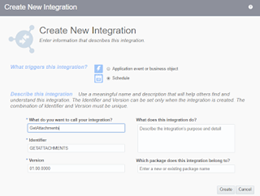
  • Create a scheduled integration with name "GetAttachments"
  • Drop the Microsoft Email adapter just below the scheduled activity. The configuration wizard will be opened. On the very first screen enter below information and click the Next button. Read the complete article here.

PaaS Partner Community

For regular information on Oracle PaaS become a member in the PaaS (Integration & Process) Partner Community please register here.

clip_image003 Blog clip_image005 Twitter clip_image004 LinkedIn image[7][2][2][2] Facebook clip_image002[8][4][2][2][2] Wiki

Technorati Tags: SOA Community,Oracle SOA,Oracle BPM,OPN,Jürgen Kress

OIC Integration with Netsuite – initial setup and basic troubleshooting by Niall Commiskey

image

It’s always good to try new things, so here I am checking out OIC integration with Netsuite.
This post covers the following –

1. Creating a new user in Netsuite, giving them login permissions and assigning roles.
2. Activating that user in Netsuite for web services access.
3. Creating a connection to Netsuite in OIC, leveraging the user created.
4. Creating a simple integration to Netsuite – Contact Creation.
5. Troubleshooting – what permissions does my user need to create a contact in Netsuite. Read the complete article here.

PaaS Partner Community

For regular information on Oracle PaaS become a member in the PaaS (Integration & Process) Partner Community please register here.

clip_image003 Blog clip_image005 Twitter clip_image004 LinkedIn image[7][2][2][2] Facebook clip_image002[8][4][2][2][2] Wiki

Technorati Tags: SOA Community,Oracle SOA,Oracle BPM,OPN,Jürgen Kress
Integration, Process and Visual Builder by Jin Park

image

OIC makes integration easy with ODI

We know OIC (Oracle Integration Cloud) is capable of file based integration for ERP over API.
And we do know that ODI (Oracle Database Integrator from Data Integration Platform Cloud) is capable of ingesting large file and processing it for ERP through the database layer aka ETL / ELT.

Okay, what if those cloud services work together and give you a simple pattern which can be applied to typical use case such as large number of big files integration with ERP through the database layer.

Following scenarios would be typical integration use case scenarios;

Financial transaction records from branches / retail merchants come in large number of big files
Files have to be ETL / ELT before cut-off time
Business / IT want to know what’s happened for last batch job processing or current job happening
Financial transaction records have to be kept for certain periods for internal audit and legislative requirements

Now let me show how those integration use cases are implemented by OIC and ODI.

Firstly ODI (Oracle Database Integrator) will do take heavy workloads such as ingesting large files, transforming raw transaction records and load them to target database. Luckily OdiInvokeWebService Tool is available for ODI as an API and Integration (from OIC) will invoke this API. Read the complete article here.

PaaS Partner Community

For regular information on Oracle PaaS become a member in the PaaS (Integration & Process) Partner Community please register here.

clip_image003 Blog clip_image005 Twitter clip_image004 LinkedIn image[7][2][2][2] Facebook clip_image002[8][4][2][2][2] Wiki

Technorati Tags: SOA Community,Oracle SOA,Oracle BPM,OPN,Jürgen Kress

Full Podcast Series Now Available – Integration: Heart of the Digital Economy by Vika Mlonchina

image

Rapid cloud adoption, mobile devices, and AI technologies are rapidly changing the way customers interact with businesses. And organizations are quickly assembling ad-hoc solutions to meet these challenges. The result is a tangled mess of hardwired enterprise systems that can no longer support business needs. Modern applications and data infrastructures are needed to enable mission-critical business systems to work with big data systems. Cloud-agnostic integration platforms are required to support agile processes that can take advantage of new tools like AI and blockchain. In this podcast series, learn how organizations can leverage integration technologies to compete successfully in the digital age.

All six podcasts in this series are now available at the Oracle Cloud Café or you can listen directly in the links below:

PaaS Partner Community

For regular information on Oracle PaaS become a member in the PaaS (Integration & Process) Partner Community please register here.

clip_image003 Blog clip_image005 Twitter clip_image004 LinkedIn image[7][2][2][2] Facebook clip_image002[8][4][2][2][2] Wiki

Technorati Tags: SOA Community,Oracle SOA,Oracle BPM,OPN,Jürgen Kress
Dive Deep into Wells Fargo’s Best Practices for Cloud ERP Integration by Vika Mlonchina

image

Recently, Daryl Eicher, Oracle Director of Product Marketing for Oracle Integration, sat down for a webcast with Aneri Shah, Wells Fargo Senior Vice President, ERP Strategist to explore the business and technical considerations that make ERP integration and automation work for agile finance and supply chain management leaders. Read on for a deep dive into their conversation to learn about Wells Fargo’s best practices for cloud ERP integration along with several other customer integration journeys.

View the full webcast

Daryl Eicher: Let’s start with why your integration strategy deserves a fresh look in light of developments in ERP modernization and emerging technologies including block chain, digital assistants, and robotic process automation. Since 2015, Oracle has been investing in our customers to provide a hybrid integration platform for their digital businesses. And today, we’re honored to be considered a leader in Gartner’s Enterprise Integration Platform-as-a-Service Magic Quadrant for two years running. So why is integration as usual not good enough for your digital business?

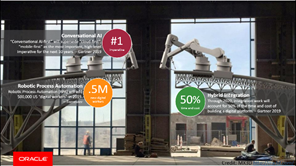
CFOs and IT innovators are united in their pursuit of practical solutions to the long standing issues of on-premises ERP complexity, agile finances, and connected digital strategy and offer CFOs the chance to use conversational AI, robotic process automation, and hybrid integration platforms to drive efficiencies, simplify procure to pay processes, and enable new data-driven revenue streams for the business. It’s a journey our customers are on that begins with design thinking about what matters most to your digital future. Aneri, can you tell us what you’re hearing from the CFO as you work with their IT leads? Read the complete article here.

PaaS Partner Community

For regular information on Oracle PaaS become a member in the PaaS (Integration & Process) Partner Community please register here.

clip_image003 Blog clip_image005 Twitter clip_image004 LinkedIn image[7][2][2][2] Facebook clip_image002[8][4][2][2][2] Wiki

Technorati Tags: SOA Community,Oracle SOA,Oracle BPM,OPN,Jürgen Kress