Process Cloud Composer Tour by Gregory Hughlett


clip_image002There are many good reasons for business to look very seriously at the Oracle Process Cloud Service as a way to provision a fully managed BPM environment that lets the business focus on process improvement.  Previous releases of Oracle BPM admitedly have focused on the technologist and not the business user.  However, the evolution to the Process Cloud has been underway since 11g via the Process Composer tool.  Process Cloud now makes it available to everyone.

For the business, there are many reasons to move to the Oracle Process Cloud: 

  • It wlll lower start-up and upfront costs for both IT infrastructure and software licenses. 
  • Cloud implementations reduce risks associated with large capital investment with smoother predictable operational expenditures. Large one-time software upgrade costs are also eliminated.
  • Cloud customers benefit from using the latest product version and can rapidly leverage new feature capabilities. 
  • Requires the business to pay only for what they need, rather than over or under engineering an on premise business application.  "Elastic scalability’ ensures the business only pays for the capacity that is needed when it is needed.
  • Provides high performance and continuous availability: automatic load balancing and failover provide continuous availability.

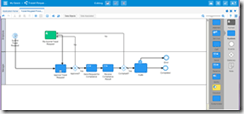
The first release of the Oracle Process Cloud provides a full lifecycle, soup to nuts process management tool.  The Process Cloud user interface is fast, modern, and designed for the business. It isn’t designed for the IT types (although us IT types will enjoy using them too.)  This topic is a tour through many of the Process Cloud screens at a high level so you can get a feel for how complete it is.  Many of the features you’ll see here can also be found in the on-premise Process Composer tool, a web-based tool, also oriented to business users.      

Process Composer Home

Depending on your role in the Process Cloud environment, you will have different options available on the Process Composer main page. Read the complete article here.

SOA & BPM Partner Community

For regular information on Oracle SOA Suite become a member in the SOA & BPM Partner Community for registration please visit www.oracle.com/goto/emea/soa (OPN account required) If you need support with your account please contact the Oracle Partner Business Center.

Blog Twitter LinkedIn image[7][2][2][2] Facebook clip_image002[8][4][2][2][2] Wiki

A quick look at Process Cloud Service by Laurens van der Starre


clip_image002Oracle Process Cloud Service is Oracle’s rapid process automation in the Cloud. It is more or less BPM in the cloud. This service allows you to quickly and easily create business processes like you are used to with Oracle BPM, only now in the cloud. In this post I’ll give a quick tour of this service.

So let’s start with the Process Cloud Service. The landing page already gives you loads of features.

The landing page of the Process Cloud

Here you have your spaces in which your processes will be saved, and where you start building new applications. So let’s create a new one. Read the complete article here.

SOA & BPM Partner Community

For regular information on Oracle SOA Suite become a member in the SOA & BPM Partner Community for registration please visit www.oracle.com/goto/emea/soa (OPN account required) If you need support with your account please contact the Oracle Partner Business Center.

Blog Twitter LinkedIn image[7][2][2][2] Facebook clip_image002[8][4][2][2][2] Wiki

Process Cloud – first impressions by Luc Gorissen


clip_image002As of this week, Oracle has released the Oracle Process Cloud Service (PCS): https://cloud.oracle.com/process. This PaaS cloud service offers a development platform for implementing business processes. Underpinning technology for this cloud service is the Oracle Fusion Middleware BPM stack. As a result, using the Process Cloud Service should be easy for people that are already familiar with Oracle Fusion Middleware BPM. For example, familiar platform components like BPM Composer and BPM WorkSpace are also present in PCS. With that in mind, we decided to give it a go!

This article outlines the steps for implementing a simple process in the Oracle Process Cloud Service. We were inspired during a discussion with a customer on SOA Governance, more specifically: how to handle/grant access to specific services. The customer mentioned that ‘he had people were complaining that it was unpredictable how long it took before access to a specific service in a specific environment was granted’. These types of processes can be handled very well within the Oracle Process Cloud. So, the ‘ServiceAccessApproval’ process will be shown in this example.

Sample process ServiceAccessApproval

The process ServiceAccessApproval in short consists of the following steps: Read the complete article here.

SOA & BPM Partner Community

For regular information on Oracle SOA Suite become a member in the SOA & BPM Partner Community for registration please visit www.oracle.com/goto/emea/soa (OPN account required) If you need support with your account please contact the Oracle Partner Business Center.

Blog Twitter LinkedIn image[7][2][2][2] Facebook clip_image002[8][4][2][2][2] Wiki

Provisioning Oracle Service Bus on Oracle Java Cloud Service – free online training


clip_image002Creating an Oracle Java Cloud Service instance and extending the Oracle WebLogic Server domain with Oracle Service Bus. To get information about licensing, see Leveraging On-Premises Licenses in the Oracle Public Cloud. To Learn more about Java Cloud Service, see the documentation. Get the free online trainings here.

SOA & BPM Partner Community

For regular information on Oracle SOA Suite become a member in the SOA & BPM Partner Community for registration please visit www.oracle.com/goto/emea/soa (OPN account required) If you need support with your account please contact the Oracle Partner Business Center.

Blog Twitter LinkedIn image[7][2][2][2] Facebook clip_image002[8][4][2][2][2] Wiki

Integration Cloud Service (ICS) Preview” by The SOA mythbusters


clip_image001INTRODUCTION.

So, do you really like SOA? That’s great because so do we, and we’ve been working with it every single day since a long time ago. As Oracle professionals, we’ve seen the SOA stack grow, change, incorporating new products and technology with each version, from 10g to 12c.

We’re Rolando Carrasco and Arturo Viveros, the SOA Myth Busters from Mexico, and as we go with this series we will put to the test a number of questions, myths and urban legends regarding integration, SOA & the Oracle FMW Platform in seek of finding out which myths are true and which are not.

ABOUT THIS EPISODE

In this short episode, we will preview the imminent (and much awaited) launch of Oracle Integration Cloud Service (ICS).

In this era of digital disruption, Cloud Integration is and will keep being one of the hottest and most relevant topics in the SOA / Middleware realms.

So, as we usually do, let’s identify a bunch of questions which we will attempt to clarify throughout this article:

  • Why is Oracle bringing to the table an iPaaS offering of its own?
  • What is the difference between ICS and SOA Suite in the Cloud?
  • Where does this leave my on premise SOA Suite implementation?
  • What is running underneath the curtains and how does Oracle ICS stack up against its main competitors?
  • Which business scenarios would be better suited for the implementation of such a tool?
  • What benefits can organizations expect to achieve by leveraging this kind of offering?
  • What about common concerns such as performance, security, ease of adoption / use, portability, standardization, etc.?
  • Are there any clear guidelines for ICS’s implementation / adoption from an architectural standpoint?
  • Can I do SOA with ICS?
  • Is ICS suitable for on premise integrations?

Let’s get started

Since the product has yet to hit the market, this time around we don’t have a de-facto myth revolving around it; but don’t worry, the myths will surely come swiftly and we will be there to tackle them whenever they arise.

For now, let’s focus on the questions at hand. It seems to us that a good way to get started in the matter is by going over some elemental definitions and concepts:

First things first

Oracle ICS is an integration product in the cloud. Let’s first nail this.

ICS stands for Integration Cloud Services. Oracle has addressed a strong Cloud need: the integration among Cloud based Applications. Oracle has been very active to become a Cloud type of monster. If we go back five years ago, maybe Oracle was not perceived as a strong Cloud player, but those days are very far away now. Oracle has a very clear cloud offering in the different recognized flavors: PaaS, SaaS and IaaS.

A set of Cloud based applications, such as: Taleo, Right Now, Big Machines (Oracle CPQ) are very well-known in the market. A very large set of customer around the globe use them.

But what about having to integrate those different Clouds? Or even more, what about integrating an Oracle Cloud with a different vendor Cloud? (e.g. Salesforce.com or Success Factors).

There is where we meet with our first question: Read the complete article here.

SOA & BPM Partner Community

For regular information on Oracle SOA Suite become a member in the SOA & BPM Partner Community for registration please visit www.oracle.com/goto/emea/soa (OPN account required) If you need support with your account please contact the Oracle Partner Business Center.

Blog Twitter LinkedIn image[7][2][2][2] Facebook clip_image002[8][4][2][2][2] Wiki

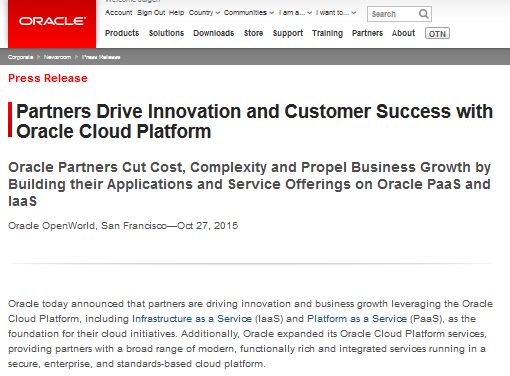
Europe leads in Oracle PaaS adaption driven by Oracle Partners!

imageIt’s a pleasure to work with the Oracle EMEA SOA & BPM and WebLogic & Developer Partner Community and see the success in our cloud adoption. The latest press release proves that our EMEA partners lead adoption. Oracle provides the same technology in the cloud as on-premises. This enables partners to secure their investment in knowledge and skills and rapidly build cloud applications for our joint customers.

Partners who can support your cloud adoption

Looking for a Middleware Specialized Partner which can support you with your cloud adoption? Visit the solutions catalog here, and search for your local Middleware Specialized partner have trained & certified consultants and implemented successful Middleware customer projects. Across EMEA we have thousands of Middleware Specialized partners! Find local Specialized partners by product www.oracle.com/specialized here.

In case you are not yet a member in the EMEA Middleware Partner Communities feel free to register at www.oracle.com/goto/emea/soa


SOA & BPM Partner Community

For regular information on Oracle SOA Suite become a member in the SOA & BPM Partner Community for registration please visit www.oracle.com/goto/emea/soa (OPN account required) If you need support with your account please contact the Oracle Partner Business Center.

Blog Twitter LinkedIn image[7][2][2][2] Facebook clip_image002[8][4][2][2][2] Wiki

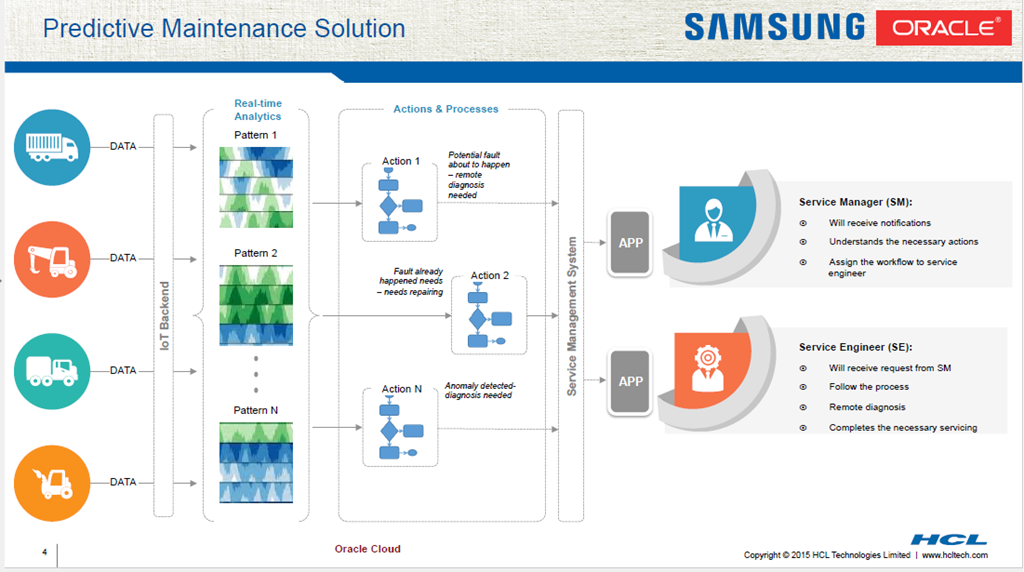
IoT PaaS showcase for Predictive Maintenance by HCL at Oracle OpenWorld2015

imageWant to see a showcase of the brand new Oracle Internet of Things (IoT cloud service consuming Mobile & Process and Integration Cloud Service? Make sure you visit the Samsung & HCL Demo center at Moscone Center South Exhibition Hall – Booth 1221.

The use case includes the complete flow from fault recognition, gather and diagnose information, repair and settle and schedule preventive maintenance. The whole show case was build on the Oracle PaaS Platform. For more information or in case you can not make it to San Francisco please contact Luis Weir here.

SOA & BPM Partner Community

For regular information on Oracle SOA Suite become a member in the SOA & BPM Partner Community for registration please visit www.oracle.com/goto/emea/soa (OPN account required) If you need support with your account please contact the Oracle Partner Business Center.

Blog Twitter LinkedIn image[7][2][2][2] Facebook clip_image002[8][4][2][2][2] Wiki

Introducing the Integration Cloud Service by Robert van Molken


clip_image002Oracle released some more Cloud offerings and in this article we introduce the Integration Cloud Service. This cloud service lets your organization create integrations between cloud application, but also between cloud and on-premise applications. Create connections to well known and less known SaaS applications using a bunch of cloud adapters, publish or subscribe to the Messaging Cloud Service, or use industry standards like SOAP & REST. The available set of cloud adapters will certainly grow in the future when the marketplace is fully up-and-running.

Why should organizations consider the Cloud?
Let’s get started with the key benefits and features before diving into them more detailed. Why should organizations consider the Cloud?
In this day and age more and more software is going into the cloud, maybe they’re even developed with a cloud-first strategy. Thinks of your CRM, ERP of your HCM application. These applications do not do standalone business they communicate with each other, they exchange information. The Integration Cloud (fno ICS) provides this integrations and does it simplified.

The Cloud has a lot advantages, it is probably the most cost efficient method to use, maintain and upgrade an enterprise service bus.  It is available at much cheaper rates and hence, can significantly lower the company’s IT expenses. Besides, there are many pay-as-you-go and other scalable options available, which makes it very reasonable for your organization. Since all your data is stored in the cloud, backing it up and restoring the same is relatively much easier than storing the same on a physical device. Once you register yourself in the cloud, you can access the information from anywhere, where there is an Internet connection.

So what has the Integration Cloud Service to offer to meet these demands?

Simplified UI
ICS gives a web-based, point & click integration experience where you can easily create integrations between Cloud applications, public web services and on-premise applications.

Rich Connectivity
ICS has a standard library of Cloud & On-premise connectors which includes Oracle SaaS applications, but also connectors for the Messaging Cloud Service and industry standards like SOAP and REST.

Recommendations
The mapping builder to create the necessary mappings between the adapter connections has a build-in recommendation engine for guidance how to best map source to target fields.

Visibility & Error Detections
ICS as build-in a rich monitoring and error management. With advanced tracking you can easily spot inconsistencies and monitoring the usage and performance of integrations. It generates alerts, and even emails them, when connections fail to work. With the guided error handling the errors are easy to repair.

Overview of the Integration Cloud Service
Because it is fully web-based you only need to open a browser and go to the URL you received after creating your ICS instance. After signing in to the Integration Cloud Service you are welcomed by the home page. Read the complete article here.

SOA & BPM Partner Community

For regular information on Oracle SOA Suite become a member in the SOA & BPM Partner Community for registration please visit www.oracle.com/goto/emea/soa (OPN account required) If you need support with your account please contact the Oracle Partner Business Center.

Blog Twitter LinkedIn image[7][2][2][2] Facebook clip_image002[8][4][2][2][2] Wiki

SOA Magazine V all about PaaS


clip_image002Welcome to the fifth edition of the SOA Magazine by SOA Community. This edition is focuses on Cloud Computing. More precisely, it highlights Platform as a Service (PaaS). Oracle is in process to launch three new PaaS Cloud Services: Process Cloud Service (PCS), Integration Cloud Service (ICS), and Java Cloud Service (JCS). JCS is the underlying foundation and enables you to build, deploy and run Java Applications. With ICS, partners and customers can build integrations between Applications. For example, an integration between Eloqua marketing and Salesforce CRM including an on-premises SAP system. PCS is the platform to build and execute BPMN process in the Cloud. Oracle’s key unique selling point is that the same software is available as on PaaS as on-premises. For example, you can start building your process in PCS export your application and run it on Oracle BPM Suite on-premises in a private Cloud. This enables customers to start and try a service in PaaS and, if required, move it to a data center of their choice.

The second major trend in IT besides Cloud Computing is Mobile. In this Magazine edition, Luca Jellema published an Tutorial to build a Flight application including mobile integration and application. This application is a great example for the complete Red Stack and we want to encourage your to make use of it! It includes all key components from the underlying WebLogic Server, SOA Suite and Service Bus for IT driven integration and BPM Suite for human based processes up to mobile integration with REST. With this application you will learn to utilize the stack and to gain productivity.

This quarterly newsletter is for both customers and partners who are active in the SOA space. The content includes articles for IT decision makers, architects and developers. The goal of the newsletter is to update you on the latest SOA technologies, market studies, trainings & certifications and conferences. We publish the newsletter in English and some articles will be in Portuguese especially for the Brazilian marketing, thanks to Ricardo Puttini and his team. Contribution is open for everybody! We want to publish your content! Like case studies, best practice, technical examples and solutions and conferences. Feel free to submit your content to Jürgen Kress.

Get the SOA Magazine V here & visit the SOA Community

SOA & BPM Partner Community

For regular information on Oracle SOA Suite become a member in the SOA & BPM Partner Community for registration please visit www.oracle.com/goto/emea/soa (OPN account required) If you need support with your account please contact the Oracle Partner Business Center.

Blog Twitter LinkedIn image[7][2][2][2] Facebook clip_image002[8][4][2][2][2] Wiki

Fusion Middleware Summer Camps 2015 – free training material and Cloud demo accounts!


Thanks to all attendees and trainers for an excellent Oracle Fusion Middleware Summer Camps 2015! You can get a good impression from the conference via our twitter feed #ofmSummerCamps. As we had 156 registrations for 100 lucky attendees we want to make sure that the whole community gets access to the information. In case you missed it all training materials are posted at our community workspaces

SOA & BPM Partner Community workspace (membership required)

Process Cloud Service (PCS) Bootcamp 08.2015

SOA Bootcamp 12c version 08.2015

Integration Cloud Service (ICS) Bootcamp 08.2015

Cloud Adapter SDK Bootcamp 08.2015

WebLogic & Mobile Partner Community workspace (membership required)

Mobile Cloud Service (MCS) Bootcamp 08.2015

Java Cloud Service (JCS) Bootcamp 08.2015

We would like to encourage you to make use of the training material for any training. PaaS Cloud demo services are available for partners free of charge. To request a demo instance please read our community wiki PaaS Demo Accounts.

During the week you got some key updates across sales, marketing and enablement, here are the key links, please share this information with your colleagues!

Sales

Marketing

Enablement

Social Networking

· Network with the community via twitter #ofmSummerCamps #soaCommunity

Thanks to the community for the first great blog posts! Here are some very nice articles, please continue to share!

OFM Summer Camps V 2015: Cloud and above the cloud… by Mohammad Esad-Djou

Fusion Middleware Summer Camps 2015: Integration Cloud Service (ICS) (Spanish article) by Avanttic team

Mobile Cloud Service – what you should know by Reinhold Becker
Fusion Middleware Summer Camps 2015: Mobile Cloud Service by Rubén Rodríguez Santiago

clip_image002

SOA & BPM Partner Community

For regular information on Oracle SOA Suite become a member in the SOA & BPM Partner Community for registration please visit www.oracle.com/goto/emea/soa (OPN account required) If you need support with your account please contact the Oracle Partner Business Center.

Blog Twitter LinkedIn image[7][2][2][2] Facebook clip_image002[8][4][2][2][2] Wiki