Additional new content PaaS Partner Community

image

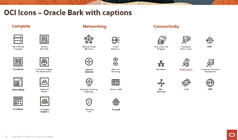
· Graphics for Oracle Cloud Topologies and Diagrams Use the graphics assets linked from this page to illustrate topologies for Oracle Cloud Infrastructure products and services. Use the included symbols, graphics, and connecting lines to create consistent architecture diagrams that accurately communicate complex offerings, systems, and ideas. You can use these assets for technical materials or presentations that include information about Oracle Cloud Infrastructure products and services. The graphics are available in PowerPoint, EPS, PNG, SVG, and Visio formats. Read the PowerPoint "Quick Guide" to get started. Get the graphics here or try the visual paradigm online editor here.

· Build, Test, and Deploy Applications on Oracle Cloud—for Free

· May 20 – New OIC Articles

· OIC May 2020 release – New Features

PaaS Partner Community

For regular information on Oracle PaaS become a member in the PaaS (Integration & Process) Partner Community please register here.

clip_image003 Blog clip_image005 Twitter clip_image004 LinkedIn image[7][2][2][2] Facebook clip_image002[8][4][2][2][2] Wiki

Technorati Tags: SOA Community,Oracle SOA,Oracle BPM,OPN,Jürgen Kress
Announcing CMMN Method and Style by Bruce Silver

image

Those familiar with my past writings may be surprised that I have written a book on the Case Management Model and Notation (CMMN) standard, because when CMMN was launched in 2014, I was unenthusiastic and vocal about it.  Business process modeling already had a standard – BPMN 2.0 – that was widely adopted by both business and technical modelers.  Why did we now need a different one?  CMMN’s creators maintained that it was necessary because there are many kinds of processes that BPMN is unable to handle.  Although BPMN could have been tweaked to handle them, those tweaks never happened.  In my opinion, they never will; the BPMN 2.0 spec appears to be forever frozen in stone.

Actually, CMMN’s backers have a valid point.  BPMN does have limitations, and in my BPMN Method and Style training we discuss them.  Those limitations mostly stem from the fact that BPMN’s conception of a process is quite narrow, much narrower in fact than that of BPM Architecture and most other areas of business process management.  For example, many of the “processes” listed in APQC’s Process Classification Framework are not what BPMN would call processes, and many cannot be modeled in BPMN at all.  CMMN, on the other hand, could handle them.  That’s reason number one for my change of heart.  Instead of describing the logic procedurally – following a defined sequence of steps – CMMN logic is declarative, each case element independently defining its own prerequisite conditions.  That gives it great flexibility, but makes the logic harder to communicate clearly. Get the book here. For additional BPM books please see the wiki here.

PaaS Partner Community

For regular information on Oracle PaaS become a member in the PaaS (Integration & Process) Partner Community please register here.

clip_image003 Blog clip_image005 Twitter clip_image004 LinkedIn image[7][2][2][2] Facebook clip_image002[8][4][2][2][2] Wiki

Technorati Tags: SOA Community,Oracle SOA,Oracle BPM,OPN,Jürgen Kress

Oracle Integration Cloud Process Coverage of BPMN 2.0_Standard

image

How the Oracle Integration Cloud Process module supports the OMG BPM2.0 Standard.

This document provides an overview of how Oracle integration Cloud release 20.1.1 supports the BPMN2.0 standard, as defined by the OMG. It is intended solely to help you assess the business benefits of the solution.

This white paper presents in what capacity Oracle Integration Cloud’s Process module supports the OMG BPMN 2.0 Process modeling and execution standard, an accepted standard in the industry of Workflow and Business Process management, further referred as "the OMG document". This white paper is correct as of January 2020, knowing that technology evolves, some elements described here may become erroneous in the future. The OMG document is over 500 pages long, and we have made a synthesis of the key concepts, as they are summarized in Table 7.1 and table 7.2 of the OMG document. These tables define a collection of elements that are summarized here below. It should be noted that arithmetic provides only a short-sighted perspective. Just counting the number of items supported will only give a superficial view of how well Oracle Integration Cloud’s Process module supports the OMG standard. Going a level deeper, one will need to take into account the relative weight of each element, in order to ponder how efficient the tool can be. Within that frame of thought, it can safely be said that an extremely vast majority of business cases can be thoroughly implemented using this solution, as several hundreds, if not thousands, of customers have already done. Get the document here (community membership required).

PaaS Partner Community

For regular information on Oracle PaaS become a member in the PaaS (Integration & Process) Partner Community please register here.

clip_image003 Blog clip_image005 Twitter clip_image004 LinkedIn image[7][2][2][2] Facebook clip_image002[8][4][2][2][2] Wiki

Technorati Tags: SOA Community,Oracle SOA,Oracle BPM,OPN,Jürgen Kress

OIC: How to Find Human Task by Correlation and How to Abort a Parallel Task by Jan Kettenis

image

This article explains how you can find an instance of a Human Task of process instance in the Oracle Integration Cloud (OIC) without knowing its task number, and how you can use that for example to withdraw a parallel task. You can use the same mechanism for other use cases as well, like to get a specific task instance for a specific process instance in a custom Workspace, etc.

When a Human Task is scheduled in a process there is no out-of-the-box way for the process instance to “know” its task number, because scheduling a task concerns an asynchronous call (so you don’t get an immediate response with the task number). So, although the task number is visible in the process flow trace (as shown below), the process instance itself does not know it.

The sample process below has two parallel tasks. The outcome of Parallel Task 2 is either CONTINUE or DONE. When DONE, Parallel Task 1 must be withdrawn. I will use this as a use case to illustrate how setting some “correlation id” on a task can be used to achieve that.

For those of you who remember the on-premise BPM Suite may be aware of the Update Task activity you could use to do just that, but such an activity does not exist in OIC. Instead you will have to use the PUT operation of the /ic/api/process/v1/tasks/{id} API. But as you can see this requires an id, which is the task number that you don’t have. To get that you can use the GET operation on /ic/api/process/v1/tasks first. However, there can be many instances of the same process, implying many instances of the Parallel Task 1, so how to find that one you are looking for? Read the complete article here.

PaaS Partner Community

For regular information on Oracle PaaS become a member in the PaaS (Integration & Process) Partner Community please register here.

clip_image003 Blog clip_image005 Twitter clip_image004 LinkedIn image[7][2][2][2] Facebook clip_image002[8][4][2][2][2] Wiki

Technorati Tags: SOA Community,Oracle SOA,Oracle BPM,OPN,Jürgen Kress
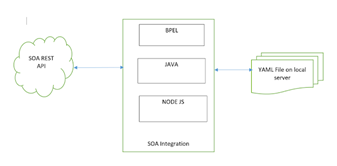
Swagger API document from Any WADL & Schema in Oracle SOA by Sandeep Pachauri

image

Hope everyone is doing well these days, Recently I started a project work over how to generate swagger API document for your any REST API, In case if you don’t know what is swagger please go and check "https://swagger.io/tools/swagger-editor/". It’s a great and easy to use tool which will help to create user friendly, human readable form API documentation with extension for generating API client in different languages with capability of testing your API from same.

What is swagger editor,

Design, describe, and document your API on the first open source editor fully dedicated to OpenAPI-based APIs. The Swagger Editor is great for quickly getting started with the OpenAPI (formerly known as the Swagger Specification) specification, with support for Swagger 2.0 and OpenAPI 3.0.

What benefits you will get by using swagger,

  • Runs Anywhere, The Editor works in any development environment, be it locally or in the web.
  • Smart Feedback, Validate your syntax for OAS-compliance as you write it with concise feedback and error handling. Read the complete article here.

PaaS Partner Community

For regular information on Oracle PaaS become a member in the PaaS (Integration & Process) Partner Community please register here.

clip_image003 Blog clip_image005 Twitter clip_image004 LinkedIn image[7][2][2][2] Facebook clip_image002[8][4][2][2][2] Wiki

Technorati Tags: SOA Community,Oracle SOA,Oracle BPM,OPN,Jürgen Kress
New FMW 12c Vagrant project by Martien van den Akker

image
Introduction

Several years ago I blogged about automatic creation of Fusion Middleware environments. See for instance this article on installation, this one on the domain creation and these notes. In between I wrote several articles on issues I got, start/stop scripts, etc. Later I found out about Vagrant and since then I worked with that. And this I enhanced through the years, for instance, nowadays I use different provisioners to setup my environment. Until this week I struggeled with a Oracle Linux 7 Update 7 box, as I wrote earlier this week. For my current customer I needed to create a few B2B environments. So I got back to my vagrant projects and scripts and build a Vagrant project that can create a SOA/BPM/OSB+B2B environment. You can find it on GitHub in my ol77_soa12c project, with the scripts in this folder.

You’ll need to get a Oracle Linux 7U7 Vagrant base box yourself. I tried to create one based on the simple base box of Oracle, as I wrote earlier this year. But in the end I created a simple base install of OL7U7, with one disk, and a Server with GUI package, a vagrant user (with password vagrant). As you can read in earlier articles.Also  you’ll need to download the installer zips from edelivery.oracle.com.

Modularisation

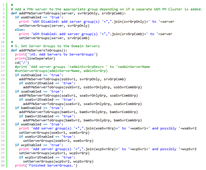
What I did with my scripts in this revision, is that I split up the main method of the domain creation script: Read the complete article here

PaaS Partner Community

For regular information on Oracle PaaS become a member in the PaaS (Integration & Process) Partner Community please register here.

clip_image003 Blog clip_image005 Twitter clip_image004 LinkedIn image[7][2][2][2] Facebook clip_image002[8][4][2][2][2] Wiki

Technorati Tags: SOA Community,Oracle SOA,Oracle BPM,OPN,Jürgen Kress
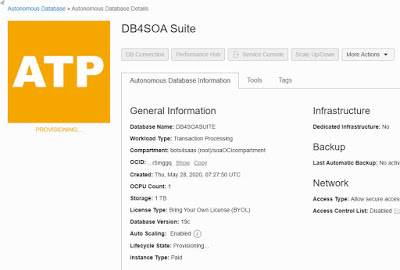
Provisioning a SOA Suite on Marketplace instance in Oracle Cloud by Niall Commiskey

imageThe way to go for customers moving SOA Suite environments to the cloud. Note: italics denote quotes from the ORCL docs.

What is SOA Suite on Marketplace?

Some background to begin with – SOA Suite is our flagship on premise integration offering. The same was and still is available in the Oracle Cloud as SOA CS (SOA Cloud Service). This new offering, available via Oracle Marketplace is the way to go, for those lifting and shifting their SOA Suite real estate to the cloud. So what are the deltas between the new offering and SOA CS? Read the complete article here.

PaaS Partner Community

For regular information on Oracle PaaS become a member in the PaaS (Integration & Process) Partner Community please register here.

clip_image003 Blog clip_image005 Twitter clip_image004 LinkedIn image[7][2][2][2] Facebook clip_image002[8][4][2][2][2] Wiki

Technorati Tags: SOA Community,Oracle SOA,Oracle BPM,OPN,Jürgen Kress
OIC for Netsuite –> mapping Custom Fields by Niall Commiskey

image

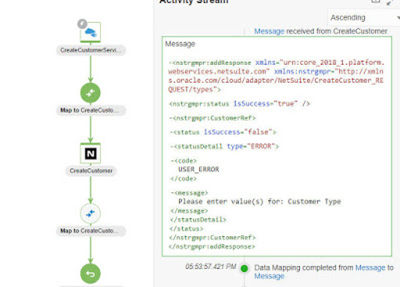
Simple scenario here – a custom field in the Customer object, need to be filled when creating a customer. I found this out, when I ran the integration, having only mapped, what I thought were the 2 mandatory fields – company and subsidiary –> internal ID. So now the fun starts – Where do I find such custom field definitions in Netsuite?

So there is a custom field Customer Type. Valid values are in the following list – As you can see, B2B has the internalID = 2. That’s the one I want to use. This is what I need to use in my mapping. So I’m now good – I have found the custom field, I know the valid value I need to set. Now to the OIC mapping – I look at the definition of the Target Netsuite Customer – Read the complete article here.

PaaS Partner Community

For regular information on Oracle PaaS become a member in the PaaS (Integration & Process) Partner Community please register here.

clip_image003 Blog clip_image005 Twitter clip_image004 LinkedIn image[7][2][2][2] Facebook clip_image002[8][4][2][2][2] Wiki

Technorati Tags: SOA Community,Oracle SOA,Oracle BPM,OPN,Jürgen Kress

Integration New Features PaaS Partner Community Webcast September 29th 2020

imageAccelerate your digital transformation with pre-integrated connectivity to Oracle as well as third-party SaaS and on-premises apps, run-ready process automation templates, and an intuitive visual app builder.

Speaker: Niall Commiskey Senior Director Product Management, Oracle HQ

Schedule: September 29th 2020 16:30-17:30 CET (Berlin time)

For details please visit the registration page here.

Take the opportunity to watch our community webcasts on-demand:

· Chatbot Design best practices for Conversational UX

· Connect, Innovate, Extend SaaS KickOff Webcast 2020

· Cloud Platform KickOff Webcast 2020

· Netsuite Integration

· Integration Insight

· Innovate HCM with Chatbots

· ERP Integration with Application Adapters

· HCM Integration with Application Adapters

· Extend SaaS with Visual Builder Cloud Service

· Integration Adapters

· Integrate SaaS

· Digital Assistant Update

· SOA Cloud Service

· PaaS Overview Webcast

· Process Cloud Service Update

· Integrate ERP Cloud

· Integrate HCM Cloud

· Functions and Cloud Native

· Blockchain

· API Platform Cloud Service part 2

· 3rd Generation API Gateways part1

· Oracle JET

· Oracle Visual Builder Cloud Service

· Container Native Application Development Platform

For the latest information please visit Community Updates Wiki page (Community membership required).

PaaS Partner Community

For regular information on Oracle PaaS become a member in the PaaS (Integration & Process) Partner Community please register here.

clip_image003 Blog clip_image005 Twitter clip_image004 LinkedIn image[7][2][2][2] Facebook clip_image002[8][4][2][2][2] Wiki

Technorati Tags: SOA Community,Oracle SOA,Oracle BPM,OPN,Jürgen Kress

PaaS Partner YouTube Update September 2020

The September video includes three topics:

• Joint marketing campaigns

• Hands-on partner bootcamps for integration & chatbots

• Integration New Features community webcast

For regular updates please subscribe to our YouTube channel here. Thanks for your likes and sharing the video on YouTube and LinkedIn. For the latest PaaS Community information please visit our Community update wiki here (Community membership required).

PaaS Partner Community

For regular information on Oracle PaaS become a member in the PaaS (Integration & Process) Partner Community please register here.

clip_image003 Blog clip_image005 Twitter clip_image004 LinkedIn image[7][2][2][2] Facebook clip_image002[8][4][2][2][2] Wiki

Technorati Tags: YouTube,SOA Community,Oracle SOA,Oracle BPM,Jürgen Kress,Middleware Update,Partner Update