Oracle Integration Approach to RPA by Phil Wilkins

image

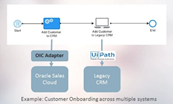
With the recent announcement of working with Automation Anywhere (press release here) adding to the partnership already in place with UiPath, Oracle’s approach to Robotic Process Automation (RPA) is differing to other players such as SAP and Pega Systems for example who have acquired vendors.

It is an interesting question as to whether partnering is the right solution given that RPA vendors can and do challenge the need for an integration platform. After all with the exception of IoT most solutions have an some form of UI or API the robot can connect to. This assertion whilst isn’t wrong it fundamentally overlooks the ability to push transaction volumes through, UIs are vulnerable to change, the ability to apply very robust security. But when discussing integration needs with business rather than technology leaders such factors can be so easily overlooked.

Whilst acquisition is a possibility, unless Oracle acquires one of the big three (Automation Anywhere, UiPath, Blue Prism) they are likely to end up with a less established and/or less feature rich offering, that could very easily be perceived as an expensive OIC adaptor. Where as by having now partnered with two of the three major players, it is easier to sell the story that the technologies can be complimentary. Read the complete article here.

PaaS Partner Community

For regular information on Oracle PaaS become a member in the PaaS (Integration & Process) Partner Community please register here.

clip_image003 Blog clip_image005 Twitter clip_image004 LinkedIn image[7][2][2][2] Facebook clip_image002[8][4][2][2][2] Wiki

Technorati Tags: SOA Community,Oracle SOA,Oracle BPM,OPN,Jürgen Kress
Oracle Process Cloud – linking to a process instance by Niall Commiskey

image

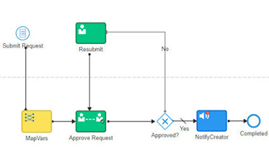
Use case here – Customer wants a process creator to be notified when a process has completed.
In this case, an email containing a link to the process history in Workspace. I try this out with the my instance id –

Now to my process – not the most complex of processes, I’m sure you will agree. Read the complete article here

PaaS Partner Community

For regular information on Oracle PaaS become a member in the PaaS (Integration & Process) Partner Community please register here.

clip_image003 Blog clip_image005 Twitter clip_image004 LinkedIn image[7][2][2][2] Facebook clip_image002[8][4][2][2][2] Wiki

Technorati Tags: SOA Community,Oracle SOA,Oracle BPM,OPN,Jürgen Kress
Process Automation: Tips and Tricks for Forms in Oracle Integration free on-demand training

image

Explore the samples to learn about several features, such as wizards, tables, and dynamic lists, that you can add to a form in a process application. Pick and choose from topics that interest you.

Attend the training here.

PaaS Partner Community

For regular information on Oracle PaaS become a member in the PaaS (Integration & Process) Partner Community please register here.

clip_image003 Blog clip_image005 Twitter clip_image004 LinkedIn image[7][2][2][2] Facebook clip_image002[8][4][2][2][2] Wiki

Technorati Tags: SOA Community,Oracle SOA,Oracle BPM,OPN,Jürgen Kress

Quick steps for setting up a Gateway Node in Oracle API Cloud Service By Sven Bernhardt

image

Oracle API Platform Cloud Service (APIP CS) is an API Management Platform for covering the complete API lifecycle. A general overview about the solution is provided in one of my previous blog posts.

In this blog post, I’ll summarize the steps that are needed to setup a first API Gateway Gateway Node.

Logical Gateway and Gateway Nodes

Before getting started with the Gateway setup, a basic concept needs to be clarified.

Oracle APIP CS support the concept of a so called Logical Gateway, which depicts a logical configuration and management unit for the several Gateway Nodes. A Gateway Node is a physical representation of a API Gateway. It is the runtime component, where APIs are exposed to the outside world and where the defined API policies are enforced, when an API is called by a client.

From a subscription perspective the number of Logical Gateways is the relevant criterium with respect to the occurring costs. No matter, on how many Gateway Nodes are registered to a Logical Gateway.

Installation

Prerequisites

Before getting started with the installation, a respective Compute Node (OCI, AWS, Azure, On-Premise) instance is needed on which the Gateway Node should be deployed. In my case, I used a OCI Compute instance, which I setup using the OCI console. Read the complete article here.

PaaS Partner Community

For regular information on Oracle PaaS become a member in the PaaS (Integration & Process) Partner Community please register here.

clip_image003 Blog clip_image005 Twitter clip_image004 LinkedIn image[7][2][2][2] Facebook clip_image002[8][4][2][2][2] Wiki

Technorati Tags: SOA Community,Oracle SOA,Oracle BPM,OPN,Jürgen Kress
FlexDeploy Loves Oracle API Platform: Series Overview by Joel Wenzel

image

APIs are everywhere.  The API boom is upon us and Oracle doesn’t intend to sit this one out.  Oracle API Platform, released in 2017, is Oracle’s answer to API lifecyle management and provides everything you would expect from a typical API abstraction layer such as:

  • Direct integration with an API designer (Apiary)
  • About 2 dozen out of the box policies such as OAuth security and API Rate limiting
  • In depth analytics of API requests

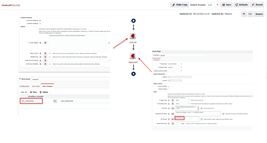
We are excited to announce that FlexDeploy now offers robust support for Oracle’s API Platform.  In the coming posts we are going to walk through the core features of the plugin and discuss some API management strategies. We’ll be covering:

After reading through this series you will have an understanding on how to provision Oracle API infrastructure as well as several different approaches to managing your APIs via FlexDeploy.

PaaS Partner Community

For regular information on Oracle PaaS become a member in the PaaS (Integration & Process) Partner Community please register here.

clip_image003 Blog clip_image005 Twitter clip_image004 LinkedIn image[7][2][2][2] Facebook clip_image002[8][4][2][2][2] Wiki

Technorati Tags: SOA Community,Oracle SOA,Oracle BPM,OPN,Jürgen Kress
API Platform – Plans & Subscriptions by Phil Wilkins

image

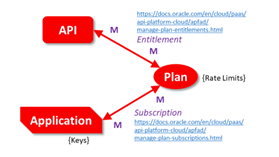
When it comes to Plans and Subscriptions on the Oracle API Platform we have a very flexible set of relationships. When it comes to checking the relationships to ensure a configuration is correct and that the impact of changing a plan or subscription is clear.  I end up having to draw a little diagram, which always leaves me second guessing myself about which way the linkages are. So I created a quick aide memoir, particularly given the unfortunate fact that Oracle’s online documentation isn’t great for diagrams. Read the complete article here.

PaaS Partner Community

For regular information on Oracle PaaS become a member in the PaaS (Integration & Process) Partner Community please register here.

clip_image003 Blog clip_image005 Twitter clip_image004 LinkedIn image[7][2][2][2] Facebook clip_image002[8][4][2][2][2] Wiki

Technorati Tags: SOA Community,Oracle SOA,Oracle BPM,OPN,Jürgen Kress

Top tweets PaaS Partner Community December 2019

imageDecember 2019 top tweets by PaaSCommunity

Send your tweets @soacommunity #PaaSCommunity and follow us at http://twitter.com/soacommunity. Make sure you share your content with the community!

PaaS Partner Community

For regular information on Oracle PaaS become a member in the PaaS (Integration & Process) Partner Community please register here.

clip_image003 Blog clip_image005 Twitter clip_image004 LinkedIn image[7][2][2][2] Facebook clip_image002[8][4][2][2][2] Wiki

Technorati Tags: SOA Community,Oracle SOA,Oracle BPM,OPN,Jürgen Kress, Twitter

Oracle API Platform Cloud Service – Enabling the Digital Transformation by Eduardo Barra Cordeiro

image

We live in a digital world. With the digital transformation, customers demand connectivity and innovative services. And in this rapidly changing marketplace, they have more options than ever. Companies need to respond quickly. It can be tough to keep up. On the bright side, this is a really exciting time because we can, in fact, deliver faster. And more. So how can you meet consumers expectations?

One of the most popular ways of communicating digital information is via APIs, or Application Programming Interfaces. A lot of widely known apps use APIs: the most common social platforms, your favorite traffic apps, like Waze, your bank app or even apps like weather. They all use APIs.

In this post, we will present the Oracle API Platform Cloud Service, and walk you through some of its concepts, including why you should consider using it.

Why an API platform?

To better understand why you should use this platform in your company, we should talk about hybrid clouds. Gartner defines a hybrid cloud service “as a cloud computing service that is composed of some combination of private, public and community cloud services, from different service providers. A hybrid cloud service crosses isolation and provider boundaries so that it can’t be simply put in one category of private, public, or community cloud service. It allows one to extend either the capacity or the capability of a cloud service, by aggregation, integration or customization with another cloud service.” Read the complete article here.

PaaS Partner Community

For regular information on Oracle PaaS become a member in the PaaS (Integration & Process) Partner Community please register here.

clip_image003 Blog clip_image005 Twitter clip_image004 LinkedIn image[7][2][2][2] Facebook clip_image002[8][4][2][2][2] Wiki

Technorati Tags: SOA Community,Oracle SOA,Oracle BPM,OPN,Jürgen Kress

Moving SOA to Oracle Cloud Infrastructure by Robert Wunderlich

image

Many customers are running their workloads on Oracle Cloud Infrastructure Classic (OCI-C), but the new Oracle Cloud Infrastructure (OCI) offers compelling benefits that customers should consider moving their workloads to the "gen 2 cloud".  Additionally if the customer is not yet running SOA 12.2.1.3 or above, now is an ideal time to make the move.

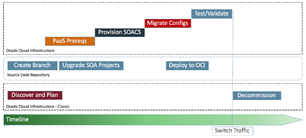
A SOA implementation is typically large and serves mission critical requirements.  This means that a "side-by-side" migration is the best approach.  At a high-level the process is as follows:

  • Discover/map the existing OCI-C deployment.  Oracle provides a set of tools to help in migrating workloads to OCI.  You can learn more about this at Upgrade to Oracle Cloud Infrastructure.
  • Branch your SOA projects: SOA projects can be deployed into a new environment and they will be upgraded on the deployment.  However, a better approach is to branch your version control and upgrade the projects in JDeveloper.  You can then validate the project to catch any potential issues. Read the complete article here

PaaS Partner Community

For regular information on Oracle PaaS become a member in the PaaS (Integration & Process) Partner Community please register here.

clip_image003 Blog clip_image005 Twitter clip_image004 LinkedIn image[7][2][2][2] Facebook clip_image002[8][4][2][2][2] Wiki

Technorati Tags: SOA Community,Oracle SOA,Oracle BPM,OPN,Jürgen Kress

Microsoft SQL adapter in Oracle Integration Cloud by Ankur Jain

image

In this article, we are going to explain MS adapter, its capabilities and how to create a connection with MS SQL server that resides in the on-premises network.

Micrsoft SQL server Adapter capabilities

The Microsoft SQL Server Adapter enables to integrate the Microsoft SQL Server database residing behind the firewall of your on-premises environment with Oracle Integration Cloud Service through use of the on-premises connectivity agent.

The Microsoft SQL Server Adapter provides the following capabilities:

  • Execution of stored procedures in the Microsoft SQL Server database
  • Execution of DML statement such as Select, Insert, Update, and Delete using the Run a SQL Statement option
  • Support for generating XSD from PureSQL. This feature generates an XSD from a PureSQL statement provided by dynamically querying on the table.
  • Support for polling new and updated records for processing in the Microsoft SQL Server database

Let’ see how to create MS SQL connection:

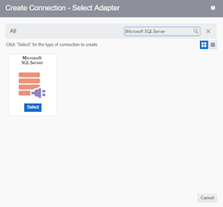
  • Login into the Oracle Integration Cloud console and click on the Connections
  • Click on the Create button from Top right corner
  • Search for the Microsoft SQL server and select the adapter. Read the complete article here.

PaaS Partner Community

For regular information on Oracle PaaS become a member in the PaaS (Integration & Process) Partner Community please register here.

clip_image003 Blog clip_image005 Twitter clip_image004 LinkedIn image[7][2][2][2] Facebook clip_image002[8][4][2][2][2] Wiki

Technorati Tags: SOA Community,Oracle SOA,Oracle BPM,OPN,Jürgen Kress