Accelerate Your Application Integration Across the Cloud and On Premises

clip_image002

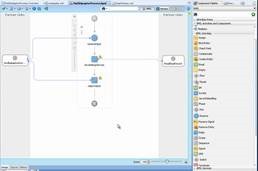
Oracle Integration Cloud Service simplifies development of integrations between your applications in the cloud and between applications in the cloud and on premises, all without needing to write code or install and manage infrastructure or middleware.

Jump-start your Software as a Service (SaaS) integration with a library of prebuilt integrations and adapters from Oracle and our partners. As a subscriber of Oracle’s SaaS applications like Oracle Sales Cloud, Oracle Marketing Cloud, and Oracle Service Cloud, you have access to these integrations through Oracle Integration Cloud Service. Prebuilt integration packages let you integrate your SaaS applications in hours, not months. Oracle Integration Cloud Service powers productivity for the cloud beyond imagination.

With Oracle Integration Cloud Service, you can:

• Connect securely to applications and services in

the cloud and on premises

• Point and click to create integrations between your

applications with a powerful browser-based visual

designer—it even runs on your favorite tablet

• Select from a growing list of integrations built by

Oracle and Oracle partners

• Monitor and manage your integrations

• Manage errors

Get the free eBook here

SOA & BPM Partner Community

For regular information on Oracle SOA Suite become a member in the SOA & BPM Partner Community for registration please visit www.oracle.com/goto/emea/soa (OPN account required) If you need support with your account please contact the Oracle Partner Business Center.

Blog Twitter LinkedIn image[7][2][2][2] Facebook clip_image002[8][4][2][2][2] Wiki

SOA & BPM Partner Community Webcast – January 26th get a Stream explorer update


clip_image001Attend our January edition of the SOA & BPM Partner Community Webcast live on January 26th 2016 16:00 CET.

Robin Smith

Product Management Stream Explorer

clip_image003

Stream Explorer

The Oracle Stream Explorer platform provides a compelling combination of an easy-to-use visual façade to rapidly create and dynamically change Real Time Event Stream Processing (Fast Data) applications, together with a comprehensive run-time platform to manage and execute these solutions.

Visit the registration page here.

Call ID: 9139664 Call Passcode: 333111

Austria: +43 (0) 192 865 12
Belgium: +32 (0) 240 105 28
Denmark: +45 327 292 22
Finland: +358 (0) 923 193 923
France: +33 (0) 15760 2222
Germany: +49 (0) 692 222 161 06
Ireland: +353 (0) 124 756 50
Italy: +39 (0) 236 008 198

Netherlands: +31 (0) 207 143 543
Spain: +34 914 143 755
Sweden: +46 (0) 856 619 465
Switzerland: +41 (0) 445 804 003
UK: +44 (0) 208 118 1001
United States: 140 877 440 73
More Local Numbers

Schedule:

January 26th 2016 16:00-17:00 CET

Visit the registration page here.

If you have difficulty logging in using the above link please go to: http://ouweb.webex.com/meetingcenter and join with session id: 597192008

Missed our SOA & BPM Partner Community Webcast? – watch the on-demand versions:

Process Cloud Service V2

SOA Suite 12.2.1

Oracle OpenWorld 2015 update

SOA & API Cloud Service

Solutions Catalog & Cloud Marketplace

GSE demo systems

Hybrid sales plays

For the latest information please visit Community Updates Wiki page (SOA Community membership required).

SOA & BPM Partner Community

For regular information on Oracle SOA Suite become a member in the SOA & BPM Partner Community for registration please visit www.oracle.com/goto/emea/soa (OPN account required) If you need support with your account please contact the Oracle Partner Business Center.

Blog Twitter LinkedIn image[7][2][2][2] Facebook clip_image002[8][4][2][2][2] Wiki

Integration Cloud Service Bootcamps Dubai, Munich, Utrecht and Dublin


clip_image001Simplify Integration.

Maximize the value of your investments in SaaS and on-premises applications through a simple and powerful integration platform in the cloud.

  • Fast. Get started in minutes!
  • Simple. Build SaaS to SaaS and SaaS to on-premises integrations in just a few clicks.
  • Enterprise-Grade. A secure, performant and highly available platform for your mission-critical integrations.
  • Integrated. Pre-integrated with your Oracle SaaS applications.

Attend a free hands-on workshop to learn Oracle Integration Cloud Service (ICS) hands-on- Goal of the workshop is to build SaaS and on-premises integrations as well your own cloud adapters with the SDK.

Target audience:

Integration Developers, Solution Architects, Technology Consultants

Registration is free of charge, except in case of cancellation fee € 150 or no-show fee €2000! Please read the registration page very careful before you register here:

Dubai February 8th & 9th 2016

München April 4th – 6th 2016

Utrecht May 2nd & 3rd 2016

Dublin June 6th & 7th 2016

For details and additional trainings visit our SOA & BPM Partner Community training calendar (SOA Community membership required)

SOA & BPM Partner Community

For regular information on Oracle SOA Suite become a member in the SOA & BPM Partner Community for registration please visit www.oracle.com/goto/emea/soa (OPN account required) If you need support with your account please contact the Oracle Partner Business Center.

Blog Twitter LinkedIn image[7][2][2][2] Facebook clip_image002[8][4][2][2][2] Wiki

Tips and Tricks for Oracle SOA Suite by Oracle A-Team, Engineering, and Customers–Webcast January 12th 2016

Webcast on Tuesday, January 12, 2016 9:00 am | Pacific Standard Time (San Francisco, GMT-08:00) | 1 hr

Join us as we recreate one of the most popular Oracle Open World sessions around the Oracle SOA Suite and deliver it to the world via webinar format. We are hoping this webinar will be the first of many and we plan to expand this into a series to create a more robust information sharing community around SOA Suite, including the Oracle product management and engineering teams, A-team, customers and partners. For this first session, we are delivering an expanded version of the OOW “Tips and Tricks for Oracle SOA Suite” session, which is always delivered to a packed room. In the webinar version, we will be able to provide a little more time to each of the speakers and topics, which are:
Joe Kardamis from The Sherwin-Williams Company, talking about agile development methodology with SOA
Antony Reynolds from the Oracle Service (SOA) & Cloud Integration Product Management team, talking about error handling and managing your dehydration store
Sherwood Zern of the Oracle A-Team with some common issues seen in Oracle Service Bus implementations
David Shaffer (dave@middleworks.com) of Middleworks, sharing tips from the SOA engineering team on working with large schemas in JDeveloper’s XSLT mapping tool
The content for this session is fast, focused and highly technical, with extra materials and links to documentation provided in the slides for attendees future reference. We encourage you to come with your related project questions and ask them during the Q&A periods. If you are working actively with the Oracle SOA Suite, we guarantee you will walk away with some truly useful information! Note: Total attendees for the webinar may be limited, and since we are not sure how popular this event will be, we encourage you to pre-register and join the webinar a few minutes early. All who register will receive invitations to future related events and the ability to access a recording of the webinar in case you have any trouble connecting.

REGISTER NOW

SOA & BPM Partner Community

For regular information on Oracle SOA Suite become a member in the SOA & BPM Partner Community for registration please visit www.oracle.com/goto/emea/soa (OPN account required) If you need support with your account please contact the Oracle Partner Business Center.

Blog Twitter LinkedIn image[7][2][2][2] Facebook clip_image002[8][4][2][2][2] Wiki

FlexDeploy 2.1 Released – Oracle Cloud, Built-in CI, Dashboards, and more! By Dan Goerdt


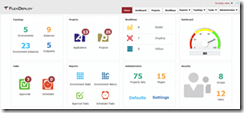
clip_image002We are happy to announce the availability of FlexDeploy 2.1, extending an already robust DevOps solution for automating the build, deploy, test, and release lifecycle for Oracle and non-Oracle software.  This new release offers additional features which help speed the delivery of high quality software, including Cloud, Continuous Integration, and Dashboards. 

FlexDeploy 2.1 Summary of Enhancements

Video: Setting Up Your Raspberry Pi for Iot by Luc Bors


clip_image002The Raspberry Pi isn’t pastry! It’s a tiny, fully programmable computer you can use in all manner of IoT projects. In his second 2 Minute Tech Tip Oracle ACE Director Luc Bors gives a quickie introduction to setting up this remarkable little device. Luc’s tip is a precursor to the IoT Hackathon in Utrecht, NL on September 15–16, 2015. Click here for more information. If you want a more in-depth introduction to setting up your Raspberry Pi, check out Luc’s blog post: IoT Hackathon Part I : Setting up your Raspberry Pi. For up to date information on hackathons and design jams, make sure you visit the APPS UX Innovation Events blog.

Want more 2 Minute Tech Tips? Click here. Have an idea for a 2 Minute Tech Tip? Contact me: @OTNArchBeat

Watch the video here.

SOA & BPM Partner Community

For regular information on Oracle SOA Suite become a member in the SOA & BPM Partner Community for registration please visit www.oracle.com/goto/emea/soa (OPN account required) If you need support with your account please contact the Oracle Partner Business Center.

Blog Twitter LinkedIn image[7][2][2][2] Facebook clip_image002[8][4][2][2][2] Wiki

Create a SOA Application in JDeveloper 12c Using Maven SOA Plug-In by Daniel Rodriguez


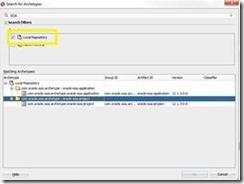
clip_image002Maven is a commonly used build system for java projects. It provide benefits ranging from standardizing project layouts, to automated dependency fetching, to automated builds and Maven.  Oracle provides a pretty comprehensive document outlining how to build and create Oracle SOA and BPM projects using Maven. See this article that documents some simple steps to get up and running using Maven. However, when running my first Maven project I encountered some unexpected errors. Maven could not find any SOA archetypes and was also unable to load every dependency. As I found, being able to create, build, and deploy SOA and BPM projects using Maven requires some initial pre-work. Once the set-up is done, the Oracle doc mentioned above will make more sense and will execute successfully.

Why Maven in SOA Applications?

Unlike Ant, Maven does not require developers to specify every command to achieve a goal. Moreover, Maven’s structure in the form of a POM file allows dependencies to be managed easily. However, the biggest benefit is that Maven in JDeveloper provides complete a life-cycle process. Each goal incorporates the previous one and adds functionality. For example, if we run the mvn test command, it will execute the compile, package and deploy commands before running each test on the composite. The idea is to provide a foundation for continuous development and integration. A single command can compile, package, deploy and run all test cases: saving you time.

Gradle provides much of the same functionality of Maven but on a different format. It is implemented using Groovy and, as a result, some of its scripts are much shorter than Maven’s. Unfortunately, Gradle is not native to JDeveloper at this moment.

Maven Goals

Documentation lists five goals for the SOA Maven Plug-in. However, The plug-in itself lists six goals.

  1. compile: Compiles the Application
  2. package: Creates a SAR file of the composite
  3. deploy: Deploys the SOA composite
  4. test: Runs all test created for the SOA composite
  5. undeploy: Removes the composite
  6. help: Provides a list of goals and their corresponding commands.

The help goal is the only goal not listed in the actual Oracle document but displayed on the plug-in itself. While the “help” command may not be a “Goal”, It provides useful information regarding goals, commands, and what each command tries to achieve. Read the complete article here.

SOA & BPM Partner Community

For regular information on Oracle SOA Suite become a member in the SOA & BPM Partner Community for registration please visit www.oracle.com/goto/emea/soa (OPN account required) If you need support with your account please contact the Oracle Partner Business Center.

Blog Twitter LinkedIn image[7][2][2][2] Facebook clip_image002[8][4][2][2][2] Wiki

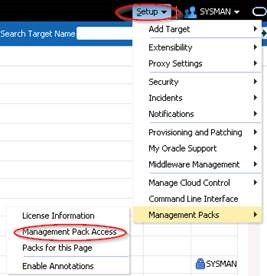
SOA Suite 12c monitoring with EM 12c Cloud Control by Michel Schildmeijer


clip_image002Good monitoring is knowing how your systems and application are doing at past, present and future time. There are many  monitoring tools & solutions at the market, all with pro’s and cons. Building monitoring takes time and effort but in the end gives you the benefit of less disturbance and more guarantee of business continuity.

At the customers I work for, I often implemented Oracle’s Enterprise manager 12c Cloud Control to build a monitoring framework. In this blog I will tell about what needs to be done to build such a framework.

Pre Requirements

Before start building a solution, make sure you have:

  • The proper monitoring pack licenses; for SOA Suite that will be:
    • The WebLogic Diagnostics & Monitoring Pack
    • The SOA Suite Diagnostics & Montitoring Pack
  • Agents installed on every physical (or virtual ) host where WebLogic / SOA is running

Building Steps

Deploying Agents to Targets

If not already done so, agents need to be deployed to the hostst were middleware is running. I will not discuss this any further because this is more Enterprise Manager generic.

Discover Middleware Targets

Discovering Middleware Targets is just as it is as with other Targets. Read the complete article here.

SOA & BPM Partner Community

For regular information on Oracle SOA Suite become a member in the SOA & BPM Partner Community for registration please visit www.oracle.com/goto/emea/soa (OPN account required) If you need support with your account please contact the Oracle Partner Business Center.

Blog Twitter LinkedIn image[7][2][2][2] Facebook clip_image002[8][4][2][2][2] Wiki

MTOM using SoapUI and OSB by Martien van den Akker


clip_image001MTOM (Message Transmission Optimization Mechanism) is incredibly hard… to find practical information about, on SoapUI and OSB. There are loads of articles. Like:

But I need to process documents that are send using MTOM to my service. And to be able to test it, I need to create a working example of a SoapUI project to do exactly that. Also about SoapUI and MTOM there are loads of examples, and it is quite simple really. But I had a more complex wsdl that I was able to use for Soap with Attachments (SwA) wich is also simple really. But how to connect those two in a simple working example? Well, actually, it turns out not so hard either… So bottom-line, MTOM with SoapUI and OSB is not so hard. If you know how, that is.
So let’s work this out on a step-by-step basis.

XSD/WSDL

I’ll start with a simple XSD: Read the complete article here.

SOA & BPM Partner Community

For regular information on Oracle SOA Suite become a member in the SOA & BPM Partner Community for registration please visit www.oracle.com/goto/emea/soa (OPN account required) If you need support with your account please contact the Oracle Partner Business Center.

Blog Twitter LinkedIn image[7][2][2][2] Facebook clip_image002[8][4][2][2][2] Wiki

Why does DB-adapter return duplicate rows? by Jon Petter Hjulstad


clip_image002Here are some DB adapter tips regarding duplicate rows.

The DB Adapter has some nice features, but sometimes you can get fooled. One of my colleagues experiences this one day. The query returned the same row – just repeated many times.

The reason for this is because the primary key was not defined correctly.

The good thing is that the documentation describes this – and more: Oracle documentation

For tables where primary key is defined – this should not be a problem, but in cases where it is not defined or you are querying a view – you would need to specify a primary key yourself. A couple of relevant notes here:

  • If you do not provide a valid primary key, then the unique constraint is not guaranteed, and this could result in possible loss of messages at runtime. That is, rows with duplicate primary key values are likely to be lost.
  • You should ensure that you primary key is less than 100 bytes.
  • Oracle recommends that you use varchar instead of char for primary key columns

Read the complete article here.

SOA & BPM Partner Community

For regular information on Oracle SOA Suite become a member in the SOA & BPM Partner Community for registration please visit www.oracle.com/goto/emea/soa (OPN account required) If you need support with your account please contact the Oracle Partner Business Center.

Blog Twitter LinkedIn image[7][2][2][2] Facebook clip_image002[8][4][2][2][2] Wiki