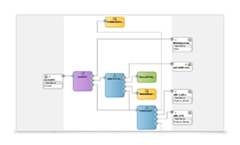
Oracle SOA Suite 12.2.1.4.0 QuickStart Download

image

This page consolidates the download links for evaluating Oracle SOA Suite and includes only the Quick Start install for all platforms.

Visit the Oracle Fusion Middleware Download, Installation, and Configuration Readme Files and Installation for Oracle SOA and BPM Suite for an overview of the installation process and the Oracle Fusion Middleware Supported System Configurations for platform-specific information.

Follow the steps outlined in Installing Oracle SOA Suite and Business Process Management Suite Quick Start for Developers guide to set up a development or evaluation environment for Oracle SOA Suite, including Oracle Service Bus. Get SOA Suite 12c here.

PaaS Partner Community

For regular information on Oracle PaaS become a member in the PaaS (Integration & Process) Partner Community please register here.

clip_image003 Blog clip_image005 Twitter clip_image004 LinkedIn image[7][2][2][2] Facebook clip_image002[8][4][2][2][2] Wiki

Technorati Tags: SOA Community,Oracle SOA,Oracle BPM,OPN,Jürgen Kress

OIC: How to Force Dehydration in Processes by Jan Kettenis

image

This article describes a trick how you can force a Structured Process instance in OIC to dehydrate.

OIC Process uses the database to store its state, which is called dehydration. In contrast, restoring that state from the database is called hydration. Dehydration automatically happens at points where the process may have to wait for a ‘longer’ period of time, for example at a Receive or User activity, or a Timer Catch event. Dehydration is also the point where the transaction of the process instance ends (and a new one starts).

Sometimes you may want to force dehydration. For example, you may have a Structured Process for which the operation to start it should synchronously return some value, while the process performs several other steps before it reaches the first dehydration point, and the transaction ends. The out-of-the-box behavior will be that the start operation will not return a response before it has ended the transaction, which may imply that the consumer has to wait for a relative long time

In the following process model some business data is stored synchronously, and then some other process is started synchronously, making that the transaction does not end before it has reached the End event: Read the complete article here.

PaaS Partner Community

For regular information on Oracle PaaS become a member in the PaaS (Integration & Process) Partner Community please register here.

clip_image003 Blog clip_image005 Twitter clip_image004 LinkedIn image[7][2][2][2] Facebook clip_image002[8][4][2][2][2] Wiki

Technorati Tags: SOA Community,Oracle SOA,Oracle BPM,OPN,Jürgen Kress

Free on-demand Webinar: Harness the Power of CI/CD for Oracle Integration and API Cloud by Dan Goerdt

image

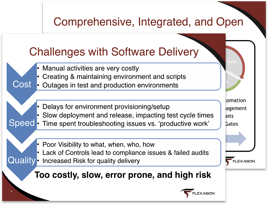
Eliminate the tedious manual processes of OIC and API.

Oracle Integration Cloud and API Platform are key to quickly and seamlessly integrate data, applications, and services. OIC and API management is essential to become effective and efficient during your digital transformation process.

However, OIC and API cloud services are not able to operate in full CI/CD themselves. Deploying integrations and APIs is a manual process, which means extra time, additional manpower, and management nightmares.

In this webinar, you will learn how FlexDeploy can eliminate these manual steps and reduce costs and risk by:

  • Automating the deployment of API and Gateway artifacts
  • Automating OIC Integrations, Connections, Lookups, and Libraries
  • Adopting Continuous Integration (CI) and release pipelines
  • Integrating tools like Git, SVN, Jira, SoapUI, and ServiceNow
  • Watch the on-demand webcast here.

PaaS Partner Community

For regular information on Oracle PaaS become a member in the PaaS (Integration & Process) Partner Community please register here.

clip_image003 Blog clip_image005 Twitter clip_image004 LinkedIn image[7][2][2][2] Facebook clip_image002[8][4][2][2][2] Wiki

Technorati Tags: SOA Community,Oracle SOA,Oracle BPM,OPN,Jürgen Kress
SOA Suite Composite Sensors: the why and how… by Martien van den Akker

image
Introduction

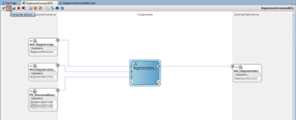
Long time ago BPEL PM was acquired by Oracle, and as part of the first release of SOA Suite (10g), it was a more or less standalone component. For initiated BPEL flow instances in the soa infrastructure database there were 2 tables:

  1. cube_instance: bpel flow instances
  2. ci_indexes: 6 indexes related to the bpel flow that can be set with an embedded java call

These 2 tables store the BPEL instances, along with a set of indexes that you could, and in 11g and 12c still can, set with a value that you determine during the flow. Yes, these tables still exist in the soa infra database. So, let’s say in your BPEL you have several string based variables that you fill with a value from the input message using an assing. Then within an Embedded Java activity, you can do something like: Read the complete article here.

PaaS Partner Community

For regular information on Oracle PaaS become a member in the PaaS (Integration & Process) Partner Community please register here.

clip_image003 Blog clip_image005 Twitter clip_image004 LinkedIn image[7][2][2][2] Facebook clip_image002[8][4][2][2][2] Wiki

Technorati Tags: SOA Community,Oracle SOA,Oracle BPM,OPN,Jürgen Kress
Oracle SOA Suite on Kubernetes by Michel Schildmeijer

image

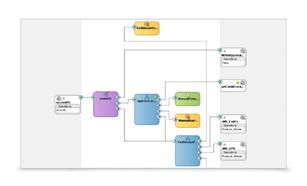
In the previous posts I wrote about how to transform a traditional application server such as WebLogic into a containerized platform, based on Docker containers managed by a Kubernetes Cluster. The basics are that there hasn’t been any effort yet in looking how a huge and complex environment such as Oracle SOA Suite could fit into a container based strategy, but it’s more or less lift and shift the current platform to run as Kubernetes managed containers.

There are ways to run a product such as Oracle SOA Suite in Kubernetes, here’s the way I did this.

Oracle SOA Suite on OKE

Other that the standard PaaS service Oracle provides, the SOA Cloud service, this implementation I did is based on IaaS, on the Oracle Cloud Infrastructure, where I configured this Kubernetes Cluster as I described in previous posts. However this also can be done on an on premises infrastructure.

Ingredients

The following parts are involved to set up a SOA Suite domain based on the version 12.2.1.3:

  • Docker Engine
  • Kubernetes base setup
  • Oracle Database Image
  • Oracle SOA Suite docker image ( either self build or from Oracle Container Registry
  • Github
  • A lot of patience

Set up the SOA Suite repository

A SOA Suite installation requires a repository which can be Oracle or some other flavours, to dehydrate SOA instance data and store metadata from composite deployments. I used a separate namespace to setup a database in Kubernetes. The database I created uses the image container-registry.oracle.com/database/enterprise:12.1.0.2, so I used the database yaml I obtained, where I had to add an ephemeral storage because after the first time of deploy I got this message in Kubernetes about exhausted ephemeral storage, so I solved it with this. Read the complete article here.

PaaS Partner Community

For regular information on Oracle PaaS become a member in the PaaS (Integration & Process) Partner Community please register here.

clip_image003 Blog clip_image005 Twitter clip_image004 LinkedIn image[7][2][2][2] Facebook clip_image002[8][4][2][2][2] Wiki

Technorati Tags: SOA Community,Oracle SOA,Oracle BPM,OPN,Jürgen Kress
Découvrons Oracle Cloud Platform for Integration – French article series by Sanae Bekkar

image

Thanks for the nice French article series:

Découvrons Oracle Cloud Platform for Integration (Part 1)

Implémentation de ‘TweetFlightsScheduleChanges’ via OIC (Part 2)

Implémentation de ‘TweetFlightsScheduleChanges’ via OIC (Part 3)

Implémentation de ‘TweetFlightsScheduleChanges’ via OIC (Part 4)

Implémentation de ‘TweetFlightsScheduleChanges’ via OIC Part (5)

PaaS Partner Community

For regular information on Oracle PaaS become a member in the PaaS (Integration & Process) Partner Community please register here.

clip_image003 Blog clip_image005 Twitter clip_image004 LinkedIn image[7][2][2][2] Facebook clip_image002[8][4][2][2][2] Wiki

Technorati Tags: SOA Community,Oracle SOA,Oracle BPM,OPN,Jürgen Kress
Bulk Recovery of Fault Instances by Viswanatha Basavalingappa

image

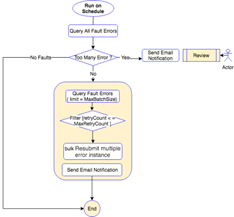
One of the most common requirements of enterprise integration is error management. It is critical for customers to manage recoverable errors in a seamless and automated fashion.

What are Recoverable Fault Errors?

All faulted instances in asynchronous flows in Oracle Integration Cloud Service are recoverable and can be resubmitted. Synchronous flows cannot be resubmitted. You can resubmit errors in the following ways:

  • Single failed message resubmissions
  • Bulk failed message resubmissions

Today operator can manually resubmit failed messages individually from the integration console monitor dashboard. In this blog we are going to focus on how to create an integration flow that can be used to auto resubmit faulted instances in bulk. Here are the High Level Steps Here are the steps to create an integration flow to implement the automated bulk recovery of errors. Note we also provide a sample that is available for download.

STEP 1: Create New Scheduled Orchestration Flow Read the complete article here.

PaaS Partner Community

For regular information on Oracle PaaS become a member in the PaaS (Integration & Process) Partner Community please register here.

clip_image003 Blog clip_image005 Twitter clip_image004 LinkedIn image[7][2][2][2] Facebook clip_image002[8][4][2][2][2] Wiki

Technorati Tags: SOA Community,Oracle SOA,Oracle BPM,OPN,Jürgen Kress
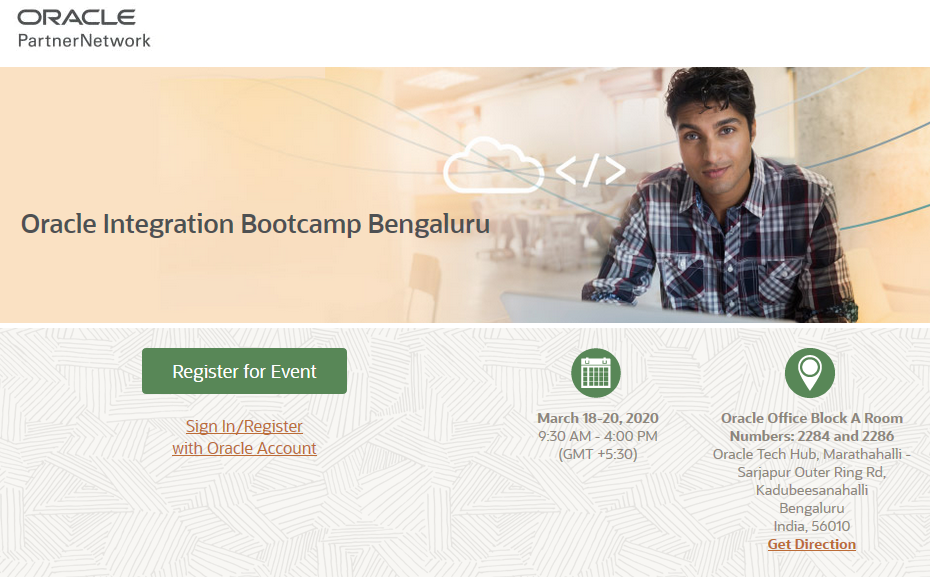
Integrate Oracle SaaS hands-on Bootcamp March 18th-20th 2020 Bangalore, India

Dimageo you want to find out why Gartner named Oracle as a Leader in Magic Quadrant for three years in row? Are you able to innovate quickly in the new digital world? Are you looking for ways to integrate systems and data faster using a modern cloud integration platform? Attend the Oracle Integration Bootcamp, a three days hands-on training for Oracle partners!

Schedule: March 18-20, 2020

Location: Oracle Tech Hub, Marathahalli – Sarjapur Outer Ring Rd, Kadubeesanahalli, Bengaluru, India

Oracle Product Management is pleased to invite Oracle Partners to attend a 3-days hands-on workshop on how to integrate with ERP & HCM applications using Oracle Integration Cloud. This Invite-Only hands-on workshop will be delivered at No-Fee to Partners. It will consist of presentations, demos, and hands-on labs.

Oracle Integration Cloud (OIC) offers Integration, Process Automation and Visual design capabilities that help business analysts and IT specialists to automate end to end business processes across departments. Oracle Integration Cloud offers a simple recipe to be successful in this application integration and process automation journey: Build, Integrate and Engage.

Workshop format:

  • In-person workshop with presentations, demos, and hands-on labs
  • Attendees will receive training environment login during the workshop

Audience:

  • Oracle SaaS partners who implement ERP, HCM and CX solutions
  • Oracle Tech Partners who are Specialized in SOA Suite
  • Consultants and Architects with technical background

For details please visit the registration page here.

For additional local training’s please visit the website here.

PaaS Partner Community

For regular information on Oracle PaaS become a member in the PaaS (Integration & Process) Partner Community please register here.

clip_image003 Blog clip_image005 Twitter clip_image004 LinkedIn image[7][2][2][2] Facebook clip_image002[8][4][2][2][2] Wiki

Technorati Tags: SOA Community,Oracle SOA,Oracle BPM,OPN,Jürgen Kress
Migrating from ICS4SaaS to OIC4SaaS by Michael Meiner

image

Introduction

Oracle Integration Cloud Service for Oracle SaaS (aka ICS4SaaS) is a version of Oracle’s Integration Cloud Service (ICS) targeted for use with Oracle SaaS products. The ICS4SaaS service has been sold with Oracle SaaS products and has appeared on the SaaS price list. As this service is not available on the Oracle’s OCI infrastructure, Oracle provides a migration path for ICS4SaaS customers to migrate their workloads to OCI.

Oracle introduced a new offering called Oracle Integration for Oracle SaaS (aka OIC4SaaS). This offering is based on the Oracle Integration (OIC) service, which runs exclusively on the OCI infrastructure. The migration path is similar (but not identical to) the migration path for the corresponding tech (PaaS) SKUs, namely migration of ICS to OIC.

SKUs for ICS for SaaS

The SKUs for ICS for SaaS, along with list prices, are given in the table below: Read the complete article here.

PaaS Partner Community

For regular information on Oracle PaaS become a member in the PaaS (Integration & Process) Partner Community please register here.

clip_image003 Blog clip_image005 Twitter clip_image004 LinkedIn image[7][2][2][2] Facebook clip_image002[8][4][2][2][2] Wiki

Technorati Tags: SOA Community,Oracle SOA,Oracle BPM,OPN,Jürgen Kress
OIC – Integrations leveraging Process for Error Handling Part 1 by Niall Commiskey

image

Here is a simple example of leverage Process for Human Intervention in Error Handling. I have an integration that uses the connectivity agent to write to an on-premise file. The use case is simple – json request contains customer details and these are simply written to a file.

CreateCustomer in the action that invokes the File Adapter.
The Global Fault Handler is configured as follows –

As you can see, the fault handler is calling a process. This process will display the Error and the Customer payload. The use case here – the person to whom this task is assigned views the error, and, if possible, takes corrective action.
In my simple example the connectivity agent is down. She restarts the agent and then res-submits the customer data to the integration. Read the complete article here.

PaaS Partner Community

For regular information on Oracle PaaS become a member in the PaaS (Integration & Process) Partner Community please register here.

clip_image003 Blog clip_image005 Twitter clip_image004 LinkedIn image[7][2][2][2] Facebook clip_image002[8][4][2][2][2] Wiki

Technorati Tags: SOA Community,Oracle SOA,Oracle BPM,OPN,Jürgen Kress