Documenting APIs on the Oracle API Platform by Phil Wilkins

image

The last week or two I have been working on a new API Platform utility to add to my existing tools (see here). This tool addresses the question of generating documentation.  Much as been said about API documentation and the quality of it, check out these articles :

If you look at these articles and others, there are some common themes, which are:

  • Document the URI / payload
  • Describe error handling
  • Describe contracts such as how many API calls
  • How the API is authenticated

Apiary covers the first theme to a first class standard,  and you will see Apiary called out for its ability to document APIs in a lot of articles. Well written API Blueprints will cover the bulk of the second bullet. But the other points tend to fall outside of a Blueprint and fit more the API Policies and their use.

Not everyone is so commited or enjoys writing documentation. The other driver for going beyond the use of Apiary is that some organizations feel the need to have a traditional word style document to capture/define an API’s contract in detail. With the API Platform the management portal enables an API to be published into the developer portal with the Apiary definition and a markdown file for further documentation.

As you can see some of the information about the policies should be incorporated into the documentation. So how, can the gap be addressed easily. Within the policy definition is the means to provide documentation, as illustrated below. This provides an opportunity to record a more general explanation as to what and how to address that policy. Read the complete article here.


PaaS Partner Community

For regular information on Oracle PaaS become a member in the SOA & BPM Partner Community for registration please visit www.oracle.com/goto/emea/soa (OPN account required) If you need support with your account please contact the Oracle Partner Business Center.

clip_image003 Blog clip_image005 Twitter clip_image004 LinkedIn image[7][2][2][2] Facebook clip_image002[8][4][2][2][2] Wiki

Technorati Tags: SOA Community,Oracle SOA,Oracle BPM,OPN,Jürgen Kress
API Platform Cloud Service article series by Ankur Jain

image

A great API Management solution supports agile API development, and also makes it easy to keep an eye on KPIs covering every aspect of the API lifecycle. True hybrid API deployment – in the Cloud or on-premises – means that your API solution is modern and adaptable, all while employing the most up-to-date security protocols.

Get started with API Platform Cloud Service:

Creating an Oracle API Platform Cloud Service (CS) Instance
Service Account in Oracle API Cloud Service(CS)
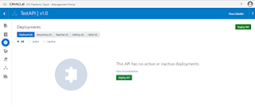
Creating an API in Oracle API Platform Cloud Service (API CS)
Oracle API Physical Gateway installation and register with Oracle API CS


PaaS Partner Community

For regular information on Oracle PaaS become a member in the SOA & BPM Partner Community for registration please visit www.oracle.com/goto/emea/soa (OPN account required) If you need support with your account please contact the Oracle Partner Business Center.

clip_image003 Blog clip_image005 Twitter clip_image004 LinkedIn image[7][2][2][2] Facebook clip_image002[8][4][2][2][2] Wiki

Technorati Tags: SOA Community,Oracle SOA,Oracle BPM,OPN,Jürgen Kress
Oracle API Platform Cloud Service: using the Management Portal and creating an API (including some policies) by Marc Lameriks

image

At the Oracle Partner PaaS Summer Camps VII 2017 in Lisbon last year, at the end of august, I attended the API Platform Cloud Service & Integration Cloud Service bootcamp.

In a series of article’s I will give a high level overview of what you can do with Oracle API Platform Cloud Service.

At the Summer Camp a pre-built Oracle VM VirtualBox APIPCS appliance (APIPCS_17_3_3.ova) was provided to us, to be used in VirtualBox. Everything needed to run a complete demo of API Platform Cloud Service is contained within Docker containers that are staged in that appliance. The version of Oracle API Platform CS, used within the appliance, is Release 17.3.3 — August 2017.

See https://docs.oracle.com/en/cloud/paas/api-platform-cloud/whats-new/index.html to learn about the new and changed features of Oracle API Platform CS in the latest release.

In this article in the series about Oracle API Platform CS, the focus will be on the Management Portal and creating an API (including some policies) .

Be aware that the screenshot’s in this article and the examples provided, are based on a demo environment of Oracle API Platform CS and were created by using the Oracle VM VirtualBox APIPCS appliance mentioned above.

This article only covers part of the functionality of Oracle API Platform CS. For more detail I refer you to the documentation: https://cloud.oracle.com/en_US/api-platform.

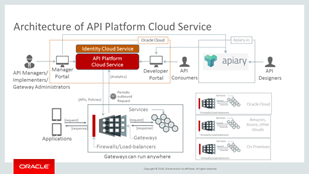
Short overview of Oracle API Platform Cloud Service

Oracle API Platform Cloud Service enables companies to thrive in the digital economy by comprehensively managing the full API lifecycle from design and standardization to documenting, publishing, testing and managing APIs. These tools provide API developers, managers, and users an end-to-end platform for designing, prototyping. Through the platform, users gain the agility needed to support changing business demands and opportunities, while having clear visibility into who is using APIs for better control, security and monetization of digital assets. Read the complete article here.


PaaS Partner Community

For regular information on Oracle PaaS become a member in the SOA & BPM Partner Community for registration please visit www.oracle.com/goto/emea/soa (OPN account required) If you need support with your account please contact the Oracle Partner Business Center.

clip_image003 Blog clip_image005 Twitter clip_image004 LinkedIn image[7][2][2][2] Facebook clip_image002[8][4][2][2][2] Wiki

Technorati Tags: SOA Community,Oracle SOA,Oracle BPM,OPN,Jürgen Kress
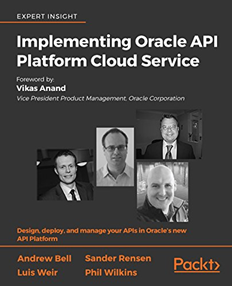
Implementing Oracle API Platform Cloud Service: Design, deploy, and manage your APIs in Oracle’s new API Platform book by Luis Weir, Phil Wilkins, Sander Rensen and Andrew Bell

image

Implementing Oracle API Platform Cloud Service moves from theory to practice using the newest Oracle API management platform. This critical new platform for Oracle developers allows you to interface the complex array of services your clients expect in the modern world.

First, you’ll learn about Oracle’s new platform and get an overview of it, then you’ll see a use case showing the functionality and use of this new platform for Oracle customers. Next, you’ll see the power of Apiary and begin designing your own APIs. From there, you’ll build and run microservices and set up the Oracle API gateways.

Moving on, you’ll discover how to customize the developer portal and publish your own APIs. You’ll spend time looking at configuration management on the new platform, and implementing the Oauth 2.0 policy, as well as custom policies. The latest finance modules from Oracle will be examined, with some of the third party alternatives in sight as well.

This broad-scoped book completes your journey with a clear examination of how to transition APIs from Oracle API Management 12c to the new Oracle API Platform, so that you can step into the future confidently.

What you will learn
  • Get an overview of the Oracle API Cloud Service Platform
  • See typical use cases of the Oracle API Cloud Service Platform
  • Design your own APIs using Apiary
  • Build and run microservices
  • Set up API gateways with the new API platform from Oracle
  • Customize developer portals
  • Configuration management
  • Implement Oauth 2.0 policies
  • Implement custom policies
  • Get a policy SDK overview
  • Transition from Oracle API Management 12c to the new Oracle API platform
Who this book is for

This book is for all Oracle developers who are working or plan to work with the Oracle API Platform Cloud Service. Get the book here.

Additional Integration books are listed in our community wiki here.

PaaS Partner Community

For regular information on Oracle PaaS become a member in the SOA & BPM Partner Community for registration please visit www.oracle.com/goto/emea/soa (OPN account required) If you need support with your account please contact the Oracle Partner Business Center.

clip_image003 Blog clip_image005 Twitter clip_image004 LinkedIn image[7][2][2][2] Facebook clip_image002[8][4][2][2][2] Wiki

Technorati Tags: SOA Community,Oracle SOA,Oracle BPM,OPN,Jürgen Kress

How API control ensures integration success by Joost Volker

image

A connected enterprise drives innovation and enables organisations to deliver the superior experience that customers demand. With streamlined cloud platforms and APIs enabling simpler and faster connections at scale, businesses of all sizes can connect and extend their services while staying in total control throughout the integration lifecycle.

Previously, we’ve talked about how integration and innovation are linked. Truly innovative ideas aren’t necessarily about bringing new solutions or tools to your organisation—it’s about connecting existing systems, touchpoints, and data in new ways.

But the way businesses create and manage integration points is also going through a period of transformational innovation. Platforms have evolved to speed innovation, leverage existing investments and deliver rapid business decisions with 360-degree view.

Integration starts in the cloud

Integration has been an important part of on-premise development for some time. But in today’s business world, the cloud is taking integration to completely new levels.

In the cloud, integration tools are easier to acquire, simpler to experiment with, and can connect far more disparate services (with far less effort). Cloud platforms offer visual extension tools that can help you:

  • Get LOB professionals involved in the integration journey with intuitive user interfaces
  • Add Machine Learning and Artificial Intelligence capabilities to broaden business process automation
  • Provide multi-channel options to facilitate all possible interactions with users, process owners, and administrators.

In the cloud, it’s easier than ever to join customer-facing portals with back-end payment systems, connect HR performance data with financial reports, or perform any other common integrations across the enterprise.

Not only are cloud platforms simplifying integration and putting powerful capabilities in the hands of more organisations, they’re also helping businesses develop more advanced, truly unified integration strategies to monetise their data, services, and the connections between them.

Enter the API

In a world dominated by the fast-paced digital economy, APIs have become a popular technology to connect and extend applications. By abstracting underlying information and only exposing the information relevant to an integration, APIs have made creating secure new integrations faster and simpler, allowing disparate services to interact with each other and extend their reach.

For example, successful cloud native architectures require a strong API design to tie back into the app as a whole. Read the complete article here.


PaaS Partner Community

For regular information on Oracle PaaS become a member in the SOA & BPM Partner Community for registration please visit www.oracle.com/goto/emea/soa (OPN account required) If you need support with your account please contact the Oracle Partner Business Center.

clip_image003 Blog clip_image005 Twitter clip_image004 LinkedIn image[7][2][2][2] Facebook clip_image002[8][4][2][2][2] Wiki

Technorati Tags: SOA Community,Oracle SOA,Oracle BPM,OPN,Jürgen Kress
Integration Cloud – the Value Add by Niall Commiskey

image

The next iteration of our cloud based integration platform has been released recently.
Are we going to get another acronym – AIC? Let’s wait and see.

But firstly, what are the deltas between the customer managed OIC and AIC?
OIC customer managed, means what it says – you are responsible for the environment, provisioning pre-requisites etc. You are responsible for patching, DB backup/recovery etc. AIC is more like a SaaS experience, you just log in and use the stuff.

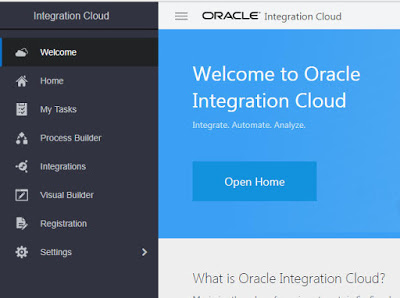
The screenshot above shows the context menu for my AIC instance. As you can see, all I can do is use it; no weblogic console login, no enterprise manager login, no ssh. I just use it, sure isn’t that why I bought it? I don’t want to manage underlying infrastructure, I just need to integration my SaaS and on-prem apps. Read the complete article here.


PaaS Partner Community

For regular information on Oracle PaaS become a member in the SOA & BPM Partner Community for registration please visit www.oracle.com/goto/emea/soa (OPN account required) If you need support with your account please contact the Oracle Partner Business Center.

clip_image003 Blog clip_image005 Twitter clip_image004 LinkedIn image[7][2][2][2] Facebook clip_image002[8][4][2][2][2] Wiki

Technorati Tags: SOA Community,Oracle SOA,Oracle BPM,OPN,Jürgen Kress

Why there’s no innovation without integration by Barry O’Reilly & Joost Volker

image


Innovation isn’t just about creating entirely new apps and services. It happens when organisations have the freedom to look beyond the constraints of new and old services, and use technology to connect and extend them together.

Every business that wants to succeed needs to innovate. For some, that’s going to mean creating new applications and services from the ground up, but innovation isn’t just about the “net new”—it’s as much about what you connect as it is about what you create.

Few companies can execute the same green-field approach to innovation used by start-ups, nor would they want to. Instead, true innovation for most organisations is about the way you connect the old with the new—extending and enhancing the existing brand. 

Modern tools and capabilities can help you connect existing investments to new services to deliver rapid innovation that helps you make use of both old and new applications, while generating greater value from both.

The different kinds of change

It’s easy to think of innovation as an entirely customer-facing concept. Some of the best-known examples of modern innovation are incredibly customer-focussed, from hyper-convenient new consumer experiences such as those delivered by Amazon Go, to the customer-focused UI experience built into Tesla cars that uses apps and APIs to connect drivers to the outside world.

The most powerful and transformational innovations are not mere gimmicks. They bring the strength and power of an organization to a new channel, to a new service offering, or to a new engagement platform. The approach and engagement with customers is new and innovative, but the existing strength and reliability of the brand is maintained through innovation. This is how established businesses are outmanoeuvring their start-up competitors.

By leveraging new integration tools, established businesses can create new integration points between existing investments to improve efficiency, reduce waste – and ultimately build innovation into both internal and external processes and channels while continuing to drive value from existing investments.

Enabling Innovation

In today’s fast paced market, every company, large or small, understands that innovation is a top priority. Across all industries and companies of all sizes, we are witnessing the adoption of start-up type models and approaches to innovate rapidly and innovate at low-cost. Just like start-ups every company needs to try new things. Many may not work but those that do could be revolutionary. Read the complete article here.

PaaS Partner Community

For regular information on Oracle PaaS become a member in the SOA & BPM Partner Community for registration please visit www.oracle.com/goto/emea/soa (OPN account required) If you need support with your account please contact the Oracle Partner Business Center.

clip_image003 Blog clip_image005 Twitter clip_image004 LinkedIn image[7][2][2][2] Facebook clip_image002[8][4][2][2][2] Wiki

Technorati Tags: SOA Community,Oracle SOA,Oracle BPM,OPN,Jürgen Kress
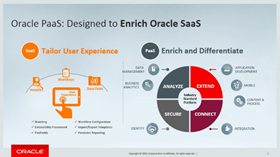
Innovate, extend and integrate SaaS hands-on trainings for SaaS partners in Utrecht, Espoo and Palma

imageAre you working on Oracle SaaS implementations and want to integrate and extend them using PaaS?

Attend our 2 days hands-on training to understand how use Oracle PaaS service like Oracle Integration Cloud, Oracle Mobile Cloud Enterprise & Oracle Visual Builder Cloud Service in combination with Oracle SaaS solutions like Oracle ERP Cloud & Oracle Engagement Cloud. This session goes through extending SaaS services with PaaS.

The training is most suitable for developer and consultants who are trying to use SaaS and PaaS together. Though the example use case uses some basic banking services, methodology used in the use case is applicable to any domain having similar requirements.

We offer an all new innovate, extend and integrate SaaS hands-on training for partners. For details please visit the registration pages:

For additional information please see the integrate SaaS partner resource kit here.


PaaS Partner Community

For regular information on Oracle PaaS become a member in the SOA & BPM Partner Community for registration please visit www.oracle.com/goto/emea/soa (OPN account required) If you need support with your account please contact the Oracle Partner Business Center.

clip_image003 Blog clip_image005 Twitter clip_image004 LinkedIn image[7][2][2][2] Facebook clip_image002[8][4][2][2][2] Wiki

Technorati Tags: SOA Community,Oracle SOA,Oracle BPM,OPN,Jürgen Kress
How to install the Oracle Integration Cloud on premises connectivity agent (18.1.3) by Jacco Cijsouw

image

Recapitulation on how to install the Oracle Integration Cloud on premises connectivity agent

Recently (april 2018) I gained access to the new Oracle Integration Cloud (OIC), version 18.1.3.180112.1616-762,  and wanted to make an integration connection to an on-premise database. For this purpose, an on premise connectivity agent needs to be installed, as is thoroughly explained by my colleague Robert van Mölken in his blog prepraring-to-use-the-ics-on-premises-connectivity-agent.

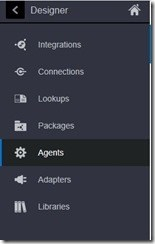
With the (new) Oracle Integration Cloud environment the installation of the connectivity agent has slightly changed though, as shown below. It gave me some effort to get the new connectivity agent working. Therefore I decided to recapture the steps needed in this blog. Hopefully, this will give you a headstart to get the connectivity agent up and running.

Prerequisites

Access to an Oracle Integration Cloud Service instance.

Rights to do some installation on a local / on-premise environment, Linux based (eg. SOA virtual box appliance). Read the complete article here.


PaaS Partner Community

For regular information on Oracle PaaS become a member in the SOA & BPM Partner Community for registration please visit www.oracle.com/goto/emea/soa (OPN account required) If you need support with your account please contact the Oracle Partner Business Center.

clip_image003 Blog clip_image005 Twitter clip_image004 LinkedIn image[7][2][2][2] Facebook clip_image002[8][4][2][2][2] Wiki

Technorati Tags: SOA Community,Oracle SOA,Oracle BPM,OPN,Jürgen Kress

Oracle Integration Cloud: New! The Data Mapper Activity by Jan Kettenis

image 

In a previous blog I discussed a work-around for not having a Script activity in Oracle Integration Cloud’s Process Builder. In this blog I will discuss another work-around which is actually not a work-around, but the real thing: the Data Mapper!
As you can read in a previous blog about the matter, not having the equivalent of the Script activity of the on-premise BPM Suite, was an omission that we often had to find a work-around for. The one I used was the Business Rule activity. However, some weeks ago the Business Rule activity got deprecated (you could clearly see that).

With the latest release of OIC (which may not yet be public available when you read this) the Business Rule activity has vanished. At the same time the Data Mapper activity has been added.

The Data Mapper activity has no properties other than that you can put it in draft mode. Read the complete article here.

PaaS Partner Community

For regular information on Oracle PaaS become a member in the SOA & BPM Partner Community for registration please visit www.oracle.com/goto/emea/soa (OPN account required) If you need support with your account please contact the Oracle Partner Business Center.

clip_image003 Blog clip_image005 Twitter clip_image004 LinkedIn image[7][2][2][2] Facebook clip_image002[8][4][2][2][2] Wiki

Technorati Tags: SOA Community,Oracle SOA,Oracle BPM,OPN,Jürgen Kress