FAQ: Integrating E-Business Suite using Integration Cloud Service by Naveen Nahata

image 

1. Is the connectivity agent necessary for the EBS Adapter even when my services are deployed inside DMZ and publically accessible.

No. The connectivity agent is only required when EBS REST services are not available on public internet.

2. Can I connect to EBS database from ICS and invoke PL/SQL procedures?

Yes, you can use DB adapter. However, JDBC connections are not allowed by ICS so the connectivity agent is required to connect to EBS database

3. Is it required for the connectivity agent to be accessible from ICS?

No. ICS does not call the connectivity agent. Instead the connectivity agent calls ICS. Since it is a HTTPS call over port 443, most organizations do not restrict it.

4. Our organization requires a proxy to connect to internet. How do I handle it?

The connectivity agent allows the use of proxy. You can provide proxy details such as proxy host/port and optional username/password as parameters to the startup script.

-ph=<PROXY_HOST> -pp=<PROXY_PORT> -pu=<PROXY_USERNAME> -ppw=<PROXY_PASSWORD>

5. How does ICS invoke EBS web services or PL/SQL procedures when it can connect to neither the database/web server nor the connectivity agent.

Whenever ICS needs to communicate with EBS or its database, it posts a message in a queue. Connectivity agent periodically polls this queue and retrieves the messages. It then invokes EBS web services or makes a database call.

6. I’ve created an integration which is triggered on an EBS Business Event. How does connectivity agent handle this?

The connectivity agent is only required during the intial activation of the integration. Once the integration is activated, its endpoint is registered with EBS Workflow Business Event System. EBS directly invokes ICS integration when the event fires.

You can check this by opening the Business Event and looking at the subscription ICS creates. Read the complete article here.

Custom functions to extend ICS transformations – ICS Definitive Guide by Robert van Mölken

image

In the second release of 2017 (17.2.5) ICS will introduce the capability of importing and using custom functions. These functions are created using JavaScript and can be used in transformations, expressions and as a action in Orchestrations. In this definitive guide I will go through all ins and outs of this new capability.

Custom functions – a new pillar of ICS

In our book we talked about the pillars of ICS; Connections, Integrations, Lookups, Agents, Adapters and Packages. This release introduced Libraries. A library is a set of Javascript functions. Keep in mind that the JavaScript functions are running server-side so some browser/client-side capabilities/APIs are not available. Functions can’t be created within ICS, but can be uploaded as part of a library in both JS and JAR file (collection of JS files) formats.

For this guide we have created two library files; string-utils and date-utils. The string-utils library contains seven functions and the date-utils library contains only two functions. Below is the contents of the latter library, where the first function calculates the duration between to two dates by returning a dayTimeDuration string as result. The second function is used for parsing ISO dates since the javascript engine ICS uses does not support ISO date when creating new Dates in javascript. Read the complete article here.


ICS roles by Niall Commiskey

image

I get quite a lot of questions about the user roles available in ICS. Some of the questions relate to user access to data. For example, how do I prevent developers seeing payload values, such as credit card number.
The starting place for eliciting such information should be the ORCL docs – here I read

Read the complete article here.

Top tweets SOA Partner Community – April 2018

image

April 2018  top tweets by soaCommunity

Send your tweets @soacommunity #PaaSCommunity and follow us at http://twitter.com/soacommunity. Make sure you share your content with the community!

SOA & BPM Partner Community

For regular information on Oracle SOA Suite become a member in the SOA & BPM Partner Community for registration please visit www.oracle.com/goto/emea/soa (OPN account required) If you need support with your account please contact the Oracle Partner Business Center.

Blog Twitter LinkedIn image[7][2][2][2] Facebook clip_image002[8][4][2][2][2] Wiki

Technorati Tags: twitter,SOA Community,Oracle SOA,Oracle BPM,OPN,Jürgen Kress,SOA Community twitter

Oracle Mobile Cloud Service (MCS) and Integration Cloud Service (ICS): How secure is your TLS connection? By Maarten Smeets

image

In a previous blog I have explained which what cipher suites are, the role they play in establishing SSL connections and have provided some suggestions on how you can determine which cipher suite is a strong cipher suite. In this blog post I’ll apply this knowledge to look at incoming connections to Oracle Mobile Cloud Service and Integration Cloud Service. Outgoing connections are a different story altogether. These two cloud services do not allow you control of cipher suites to the extend as for example Oracle Java Cloud Service and you are thus forced to use the cipher suites Oracle has chosen for you.

Why should you be interested in TLS? Well, ‘normal’ application authentication uses tokens (like SAML, JWT, OAuth). Once an attacker obtains such a token (and no additional client authentication is in place), it is more or less free game for the attacker. An important mechanism which prevents the attacker from obtaining the token is TLS (Transport Layer Security). The strength of the provided security depends on the choice of cipher suite. The cipher suite is chosen by negotiation between client and server. The client provides options and the server chooses the one which has its preference.

Disclaimer: my knowledge is not at the level that I can personally exploit the liabilities in different cipher suites. I’ve used several posts I found online as references. I have used the OWASP TLS Cheat Sheet extensively which provides many references for further investigation should you wish.

Method

Cipher suites

The supported cipher suites for the Oracle Cloud Services appear to be (on first glance) host specific and not URL specific. The APIs and exposed services use the same cipher suites. Also the specific configuration of the service is irrelevant we are testing the connection, not the message. Using tools described here (for public URL’s https://www.ssllabs.com/ssltest/ is easiest) you can check if the SSL connection is secure. You can also check yourself with a command like: nmap –script ssl-enum-ciphers -p 443 hostname. Also there are various scripts available. Read the complete article here.

Open Banking based on API Platform Cloud Service – support Payment Services Directive (PSD2) EU Regulation

image

Revised Directive on Payment Services or PSD2 is aimed at further developing an EU-wide market for electronic payments. Member states have to transpose the directive into their national laws till January 2018.

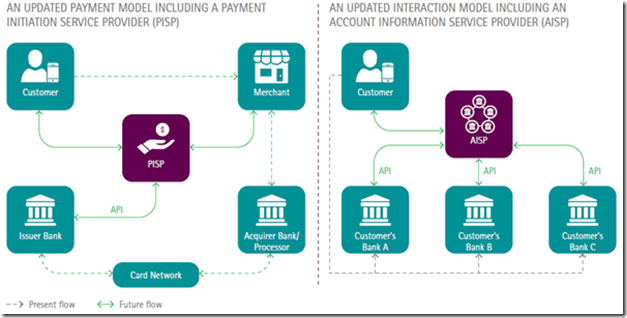
Payment service user must have an overview of financial situation at any given moment and have aggregated online information on payment accounts held with other payment service providers, particularly payment account transaction and balance data, all within a secure environment, with strong customer authentication, via application programming interfaces (APIs).

PSD2 contemplates a simplified payments value chain in which the card network can be fully disintermediated. In addition to the dramatic erosion of their payments revenues, banks are also set to see their interest-based revenue streams impacted by a loss of ‘customer ownership’. Account-data aggregators aiming to pull account information from multiple banks into their application, are warning for banks, unless banks themselves also become aggregators of choice.

By offering ‘payment initiation provider’ and ‘account information provider’ services – a bank could significantly improve its ability to sell customer insights, due to the increased availability of customer data and touch points.

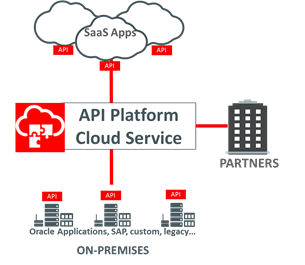
Oracle API Platform Cloud Service (APIPCS) simplifies and accelerates the process of delivering open banking and PSD2 compliance by enabling speedy and secure delivery of banking APIs. APIPCS increases level of comfort that businesses are gaining in having their applications and data outside the security of their on‐premises firewalls.
image

APIPCS offers full life cycle API management: planning, design, implementation, publication, operation, consumption, maintenance and retirement of APIs. It includes a developer’s portal to target, assist and govern the communities of developers who embed the APIs, as well as the runtime management and analytics.

APIPCS provides key features of API platform: (i) Building APIs – Creating an API on top of a service that, for example, accesses data formerly locked inside monolithic applications. Rapid API construction with run‐ready policies for controlling usage of APIs; (ii) Securing APIs – Assigning industry‐standard securities to APIs with no coding. Integration with existing enterprise identity management systems; (ii) Deploying APIs – Once the APIs are created, they’re deployed to an API gateway for usage with one‐click. Gateways can run in the Oracle Cloud or on‐premises, close to back‐end services; (iii) Publishing APIs – Documentation can be auto‐generated while the API is being developed; (iv) Consuming APIs – Centralized location for finding and learning about available APIs. Simple approach to register applications so they can utilize APIs; (v) Monitoring APIs – Instant visibility into operational metrics on usage and API business key performance indicators.

In API preparation phase value of APIPCS leads to increased consistency and improves the overall developer experience with formalization of domain semantics or architectural style. Using APIPCS it is possible design and prototype API without writing any code and enable quick iteration on API design change, it is allowed to start of a work on API client before API server is implemented and this way getting very fast feedback from API consumers and stakeholders and provide ready API product much sooner to the market.

The API implementation will be automatically tested against its design, monitoring the contract and implementation changes are made much easier, version control and collaboration comes seamless as well as reporting on any disparities and errors in the description against the results of locally run API, automatic test runs when anything changes.

General differentiators of APIPCS are : it is easy to use and not technically challenging solution; it has focus on ‘API design first’ approach; it has architecture with API management on the cloud (including main portal and developer portal) and only gateways (GWs) being weather on cloud or on-prem. An end customer needs to operate only the gateways (GWs) and APIPCS operates all complex parts of API management in Oracle cloud.

GWs themselves are very mature product with amount of advantages. Management console never goes directly to the GW, it is other way around that only GW goes to cloud – this way providing very elegant security solution. GWs will automatically pull down all new policies. In case of APIPCS, most policies will work with existing versions of the GW, so GW upgrades are minimal and if they are required it will anyway happen through the cloud service. APIPCS pulls down the deployments of GWs extremely fast, as they are done by the cloud service, without need to export a zip or manually deploy GWs. There is no need end customer to perform data backups, no need for upgrades to get new policies, no need to configure clusters. All these brings down operational cost of operating API platform. APIPCS gives control which users have the right to deploy which GWs and what exactly is deployed on which GW, with full audit history.

Want to learn more? Contact Milomir Vojvodic
PaaS (Process & Integration) Partner Community Newsletter April 2018

Dear PaaS Partner Community,

Hands-on training material and presentations from the PaaS Partner Community Forum 2018 is available at the community workspace (membership required). Please use this material to update your team and customers on the latest Oracle PaaS services including blockchain, machine learning and the microservices architectures. Congratulations to all partners for your PaaS customer success, congratulations to the PaaS Partner Community Awards 2018 winners.

For SaaS partners who implement HCM, CX and ERP cloud services we offer free hands-on bootcamps in Utrecht and Warsaw. Or attend one of the upcoming Oracle developer meetups across Europe.

Oracle API Platform cloud service continues to evolve, the latest version supports plans. Setup Oracle API Gateway on OCI-Classic and get your fee trial here. Thanks to the community for sharing all the Integration articles: Teaching How to use Terraform to automate Provisioning of Oracle API Platform & Continuous Integration with Apiary, Dredd, and Wercker & Continued Evolution of OIC and this site & Oracle Integration Cloud: Customer Managed & Patching & AVIO Releases an ICS Maven Plugin & Extending analytics for Integration cloud using Elastic stack & Creating REST APIs with Oracle Service Bus & SOA Skills Have Value in a Microservice World & Automate SOA Installation Using FlexDeploy & Oracle SOA Suite 12c – Purge

Thanks to Richard Olrichs & Marcel van de Glind & Marc Kuijpers for the latest process cloud service article about the mobile app. And Jan Kettenis for the tips and work-around for no Script Activity.

In our innovation and architecture section Robert van Mölken describes how to build a practical blockchain. Besides the User Experience Updates we promote the Tech Experience 2018, June 2018 in the Netherlands.

For a short summery of our key monthly information watch the Fusion Middleware & PaaS Partner Updates on YouTube. The April edition highlights hands-on training material and presentations from the community forum, the annual community award winners and an OPN slack channel. This month’s community webcast will be an API Platform cloud service, please join our monthly PaaS Partner Community Webcast – April 17th 2018.

Want to publish your best practice article & news in the next community newsletter? Please feel free to send it via Twitter @soaCommunity #PaaSCommunity!

To read the newsletter please visit www.tinyurl.com/PaaSNewsApril2018 (OPN Account required)

Please like and share the newsletter at Twitter and LinkedIn

Jürgen Kress

Fusion Middleware Partner Adoption
Oracle EMEA
Tel. +49 89 1430 1479
E-Mail: juergen.kress@oracle.com
clip_image003Blog clip_image004LinkedIn clip_image005 Twitter

To become a member of the SOA Partner Community please register at http://www.oracle.com/goto/emea/soa (OPN account required) If you need support with your account please contact the Oracle Partner Business Center.

Newsletter Logo 2017

Blog Twitter LinkedIn image[7][2][2][2] Facebook

Technorati Tags: newsletter,SOA Community newsletter,SOA Community,Oracle,OPN,Jürgen Kress

API Platform Cloud Service REST API scripts and REPL using Python by Shreenidhi Raghuram

image 

Introduction

This blog introduces a few useful Python scripts written to repeatedly perform common administrative tasks and development operations on an API Platform Cloud Service instance.

The scripts are written in Python and can be executed on all Python 3.6+ supported platforms

Why

These scripts are written keeping in mind a few real life use cases, such as –

  • Migration of API Platform artifacts between different API server environments
  • Export of API Platform artifacts for source control

The scripts require familiarity with API Platform Cloud Service. Knowledge of Python programming language is not essential to execute the scripts and the interactive REPL, but will come in handy to customize or extend the functionality of the scripts to suite any specific needs.

Prerequisites

The scripts require Python version 3.6+ and ‘requests’ and ‘tabulate’ modules installed.

The API Platform Cloud Service (APIPCS) REST API documentation is available here http://docs.oracle.com/en/cloud/paas/api-platform-cloud

The python scripts zip pack can be downloaded FROM here.

Extract the zip archive. All python scripts are found within the apip-rest-python directory.

Usage information: Use ‘—help’ to get the usage of every script

For example, python listapis.py –help. Read the complete article here.

Tech Experience 2018, June 7 & 8 at the Rijtuigenloods – “The Cloud is Next”

image

Because of great success of last year’s conference, NL Oracle User Group has decided to organise the Tech Experience again in 2018; the one and only event covering the entire Oracle Technology Stack.

Previously, the conference existed as two separate events: Fusion Middleware Experience and DBA day. Last year Tech Experience was first organised which resulted in many positive reactions.

The program is available (subject to changes), and we present the already confirmed keynote speakers; Amit Zavery & Penny Avril.

Tech Experience 2018 will again take place at the industrial Rijtuigenloods (a former car workshop) in Amersfoort. The organisation comitee is, as we speak, looking at over 150 submitted papers, so a full program can be expected again combining client presentations and technical presentations by very interesting speakers, including ACEs & ACE Directors. The conference will cover many subjects, such as the Internet of Things, Database-as-a-Service, Chatbots, Javascript/Angular, Blockchain, Cloud Services, etc.

Each one of these subjects have sessions related to them, from DBA to Cloud and everything in between. Besides that, we are also planning to prepare a few hands on labs, in which you can try out the new Cloud products yourself! Like last year, the tickets are “all-inclusive”, meaning that besides participation in the conference a lunch will be included, you can participate in the evening program and parking is free. Make sure you’ll be there! For details please visit the registration page here.


For additional training please see the community training calendar (free membership required).

Integrate and Extend SaaS hands-on trainings May 2018 in Utrecht and Warsaw

image

For SaaS partners we offer two days hands-on trainings to extend and integrate SaaS with Oracle PaaS:

In case you can’t attend watch thee Partner Overview Webcast on-demand here and get the partner resource kit here.

PaaS Partner Community

For regular information on Oracle SOA Suite become a member in the SOA & BPM Partner Community for registration please visit www.oracle.com/goto/emea/soa (OPN account required) If you need support with your account please contact the Oracle Partner Business Center.

Blog Twitter LinkedIn image[7][2][2][2] Facebook clip_image002[8][4][2][2][2] Wiki

Technorati Tags: YouTube,SOA Community,Oracle SOA,Oracle BPM,Jürgen Kress,Middleware Update,Partner Update