Integrating the Chatbot by Léon Smiers

image

In this blog we look at the specific aspects of Chatbots and elaborate on its four integration parts. Read our previous blogs in this series: Why Chatbots, Maturity levels and Intelligence.

Chatbots are like any other application; they have a need for integration. In basic form the Chatbot integrates with the Channels, the Intelligence Providing systems, Backend systems  and it offloads Usage information for later improvements and intelligence determination.

All four integration parts have their usage patterns and (non functional) requirements for usage in the Chatbot solution.

Here we go through the details of each integration parts and considerations that need to be made during the design of a Chatbot solution.

Channel integration
Integration with channels firstly is about the job of acting as a funnel for many devices all communicating with the bot engine. As human interaction is a fraction of the speed of the ability for the engine to process the dialogue we need a more contemporary integration model that doesn’t tie up resources such as threads for each stream of interaction such as the models that Kafka and Node.js support. Read the complete article here.

SOA & BPM Partner Community

For regular information on Oracle SOA Suite become a member in the SOA & BPM Partner Community for registration please visit www.oracle.com/goto/emea/soa (OPN account required) If you need support with your account please contact the Oracle Partner Business Center.

Blog Twitter LinkedIn image[7][2][2][2] Facebook clip_image002[8][4][2][2][2] Wiki

Technorati Tags: SOA Community,Oracle SOA,Oracle BPM,OPN,Jürgen Kress
Interfacing with HCM (or other file source) via FTP – ICS Definitive Tip #8 By Phil Wilkins

image

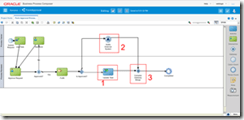
The techniques for integrating Oracle Human Capital Management (HCM) and several other Oracle SaaS solutions can require the use of Oracle Transactional Business Analysis (OTBI). The need for OTBI comes down to the fact that to  access to the relevant data an API is not available. OTBI can be configured to generate a report and then transfer the report using FTP. When the report needs to be consumed by ICS then an obvious FTP location is needed. One such option to hold a file for ICS to retrieve is the FTP server provided with the SaaS services (details here).

However,  it has come to light that the original intent for this FTP service was for holding bulk data intended to be used for ‘priming’ your HCM instance. As a place for staging data for ICS is in the mid to long term it isn’t recommended. The roadmap for the SaaS product team may result in removing the FTP server.

FTP Data Staging

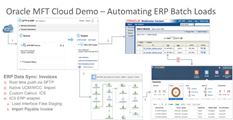
So the question begs, where should we put the data coming out of OTBI to be consumed elsewhere? Well the next option would be to use Oracle’s Managed File Transfer (MFT). Although historically listed with SOA Cloud Service (SOA CS), it is independently priced and has  become a 1st class citizen of the PaaS family more recently. For MFT to be an option it needs to include an FTP server which it does. But MFT also has the abilities for doing a number of orchestration processes, such as calling web services when files are ready. Read the complete article here.

SOA & BPM Partner Community

For regular information on Oracle SOA Suite become a member in the SOA & BPM Partner Community for registration please visit www.oracle.com/goto/emea/soa (OPN account required) If you need support with your account please contact the Oracle Partner Business Center.

Blog Twitter LinkedIn image[7][2][2][2] Facebook clip_image002[8][4][2][2][2] Wiki

Technorati Tags: SOA Community,Oracle SOA,Oracle BPM,OPN,Jürgen Kress

Oracle API Platform: Best practices for 3rd Generation API Management – Webcast April 17th 2018 16:00 CET

API webcastJoin this webcast to meet the 3rd Generation Oracle API Platform Cloud Service. In this short session, you will learn how a sleek, intuitive full lifecycle API Platform built on Oracle’s proven gateways will improve productivity and effectiveness in your business.
Learn how you can leverage this true hybrid offering to:

  • Focus on the full API lifecycle, starting with Design & Governance, all the way through Security, Discovery & Consumption, Monetization, and Analysis, to develop APIs and create modern applications and user experiences.
  • Develop an API-First strategy to accelerate digital transformation, safely extend the reach of intellectual property, and create new revenue streams.
  • Leverage an open, heterogeneous environment with an easy-to-use platform that is compatible with open standards
  • Best practices API management

Speakers:

clip_image002
Luis Weir

CTO Oracle DU

Capgemini UK

clip_image004

Robert Wunderlich

Oracle HQ

Director Product Management

clip_image006

Jürgen Kress

Oracle EMEA

PaaS Partner Adoption

Schedule: April 17th 16:00 CET 2018

Please register here: www.tinyurl.com/API3rdGeneration


SOA & BPM Partner Community

For regular information on Oracle SOA Suite become a member in the SOA & BPM Partner Community for registration please visit www.oracle.com/goto/emea/soa (OPN account required) If you need support with your account please contact the Oracle Partner Business Center.

Blog Twitter LinkedIn image[7][2][2][2] Facebook clip_image002[8][4][2][2][2] Wiki

Technorati Tags: SOA Community,Oracle SOA,Oracle BPM,OPN,Jürgen Kress

Top tweets SOA Partner Community – March 2018

image

March 2018  top tweets by soaCommunity

Send your tweets @soacommunity #PaaSCommunity and follow us at http://twitter.com/soacommunity. Make sure you share your content with the community!

SOA & BPM Partner Community

For regular information on Oracle SOA Suite become a member in the SOA & BPM Partner Community for registration please visit www.oracle.com/goto/emea/soa (OPN account required) If you need support with your account please contact the Oracle Partner Business Center.

Blog Twitter LinkedIn image[7][2][2][2] Facebook clip_image002[8][4][2][2][2] Wiki

Technorati Tags: twitter,SOA Community,Oracle SOA,Oracle BPM,OPN,Jürgen Kress,SOA Community twitter

ICS Pricing – ICS Definitive Tip #9 by Phil Wilkins

image

ICS pricing is based on two aspects – the number of connections and the number of messages processed.  But what constitutes a connection?  What happens if I exceed the number of messages or connections?

Number of Connections

The overall model for ICS pricing is on page 34 of Oracle Platform as a Service and Infrastructure as a Service – Public Cloud Service Descriptions-Metered & Non-Metered. The key definition for a Hosted Connection is on Page 9 of this document.  The critical wording for the connections is:

A Connection is counted per unique application, data source, third party software, Oracle software, Web Service or REST end point to which the Oracle Integration Cloud Service is connected. SOAP or REST Web Services that have the same base URI (combination of host and port) are counted as one Connection.

So you can define for example two ICS connections (one in and one out for example, or one per operation) to the same service aslong as the basic part of the URL e.g. icsallpurpose-xxxxxx.integration.us2.oraclecloud.com  is the same. The ports will typically only become a countable to the same URL if you use different protocols e.g. HTTP, HTTPS, FTP. This simply comes down to the fact different protocols typically use different ports.  But, if I daisy chained integrations within the same ICS instance; then assuming they are all HTTPS calls they would only consume 1 connection. This is regardless of how many different connections created to provide the full path.  This is also important as when transitioning versions of end points you may need the current and previous endpoints available, which within this model would count as the same connection as typically the version identifier is in the subsequent path. Read the complete article here.

PaaS (Process & Integration) Partner Community Newsletter March 2018

Dear PaaS Partner Community,

Thanks to all attendees, presenters and trainers to make the Oracle PaaS Partner Community Forum 2018 a superb success. With 232 attendees from 40 countries and a long waiting list the conference was booked out a month in advance. Watch Amit Zavery’s community welcome briefing here. In case you could not attend in Budapest presentations and training material will become available at our community workspace (membership required)

The next series of Integrate and Extend SaaS free hands-on bootcamps are schedules for Istanbul, Utrecht and Warsaw. Registration for the April edition of the free on-demand SOA Suite 12c and BPM Suite 12c bootcamps is open here. Or attend one of the upcoming Oracle developer meetups across Europe.

API Management played a key role in Budapest as adoption is souring. Thanks for sharing the best practices on API policy versioning, tracing execution and gateway installation.

Thanks to the community for sharing all the Integration articles: Oracle PaaS – the Whole Platform Story by Ian Reed & Ed Zou & Teaching how Oracle Integration Cloud (OIC) simplifies Application Integration, Process Automation and API Management & Teaching How to Design and Secure an API with Oracle API Platform & Connect the Cloud free eBook& Teaching How to Recover Errored Instances with Oracle Integration Cloud & Integration Cloud Service (ICS) – Lets POC and get our feet wet & Provision Oracle Integration Cloud Using Stack Templates & Rubicon Red Uses Oracle Cloud to Grow Green Business & Pre-built Virtual Machine for SOA Suite 12.2.1.3.0.

BPM was a prominent theme across the PaaS Partner Community Forum. Form best practices to extend SaaS with processes, dynamic processes, joint present by UiPath and Oracle about robotics process automation, all the way to hands-on labs. Including an excellent discussion on the role of BPM in a microservices architecture. Thanks to Richard, Marcel and Marc for the next series of articles: Jarvis Pizzeria: Setting up the Dynamic Process & Jarvis Pizzeria: The logic underneath the Dynamic Process & Jarvis Pizzeria: Activating activities and attaining milestones & Jarvis Pizzeria: The various Decisions of a Decision Model & Jarvis Pizzeria: Fourth step in Implementing the Order Processing, Decision Model.

In our last innovation and architecture section blockchain continues to be a prominent topic. During the PaaS Partner Community Forum partners had the opportunity to try the cloud service hands-on. Get started listen the blockchain podcast.

For a short summery of our key monthly information watch the Fusion Middleware & PaaS Partner Updates on YouTube. The March edition highlights free on-demand training, Oracle Developer meetups and Oracle OpenWorld call for papers. . This month’s community webcast will be an update on Oracle JET, please join our monthly PaaS Partner Community Webcast – March 27th 2018.

Want to publish your best practice article & news in the next community newsletter? Please feel free to send it via Twitter @soaCommunity #PaaSCommunity!

To read the newsletter please visit www.tinyurl.com/PaaSNewsMarch2018 (OPN Account required)

Please like and share the newsletter at Twitter and LinkedIn


Jürgen Kress

Fusion Middleware Partner Adoption
Oracle EMEA
Tel. +49 89 1430 1479
E-Mail: juergen.kress@oracle.com
clip_image003Blog clip_image004LinkedIn clip_image005 Twitter

To become a member of the SOA Partner Community please register at http://www.oracle.com/goto/emea/soa (OPN account required) If you need support with your account please contact the Oracle Partner Business Center.

Newsletter Logo 2017

Blog Twitter LinkedIn image[7][2][2][2] Facebook

Technorati Tags: newsletter,SOA Community newsletter,SOA Community,Oracle,OPN,Jürgen Kress

Building an Oracle Integration Cloud Service Integration in 2 Minutes by Robert van Molken and ACE Associate Phil Wilkins

image

Oracle ACE Robert van Molken and ACE Associate Phil Wilkins, authors of "Implementing Oracle Integration Cloud Service," (2017, Packt Publishing) demonstrate how to create an OICS integration in just 2 minutes. Watch the video here.


Registries: Use Cases for API Management and Microservices by Phil Wilkins

image

Microservices and new 3rd-generation API Management capabilities are very natural technical partners. A (micro)service provides the execution logic for a single capability and 3rd generation API Management provides the means to control the exposure of each service to the outside world, and potentially between the (micro)services as well. Luis Weir’s article, 3rd-Generation API Management, explains the evolution of the API Management capability, and what the 3rd generation offers that makes API Management mesh well with (micro)services. For this article, though, we are going to explore the role of registries in a (micro)services environment and ultimately their relationship to API Management. We aren’t going to dive deeply into any specific solution, although we will reference some of the better known options, and provide links to where you can dig in further.

You’ll note I have referred to microservices as (micro)services. This is very deliberate, and possibly contentious.Microservices are typically associated with certain technologies such as Docker and lightweight app containers such as Tomcat, but from my view point if you’re going to be a purist about microservices, then (as with SOA) you need to think about the design paradigm and the principles—NOT the technologies. It is with this view point we often have to work as, unless you’re fortunate to be working in a services organization that is very enlightened or just plain fortunate, the decisions and constraints you have to work with will mean you need to make some pragmatic decisions. An organization that has made heavy investment in WebLogic licensing isn’t likely to be comfortable in giving it up—but this doesn’t mean you can’t adopt a microservices approach, although certainly you need to mitigate risks that using WebLogic can create when adopting the architecture. Secondly, the concept of registries isn’t unique to microservices; in fact, some of these solutions have origins in solutions such as Big Data/Hadoop offerings, for example.

To underline my point, Gartner has started to talk about mini- or micro-apps as a flavor of microservices. The essence of this is the application of microservice principles but in a more pragmatic manner—not every organization needs hyperscaling and super elasticity like the poster children of microservices (e.g., Netflix and Uber). But we all do need the means to easily manage the addressing of services.

To understand the role of a registry, we need to step back and understand some of the ideas underpinning microservices. So let’s just recap: Read the complete article here.

Additional new material WebLogic & Developer Community

image

· Automate Test Pipeline and Infrastructure Lifecycle with Oracle Developer Cloud Abhishek Gupta takes you step-by-step through an example of how to use Oracle Developer Cloud to create a pipeline that incorporates unit and integration testing. Read the article.

· Podcast: Zombie Devices and the Moons of Jupiter In this two-part program Mastering Lambdas: Java Programming in a Multicore World author Maurice Naftalin shares his thoughts on the impact of the Internet of Things, chatbots, and other technologies. Then Sean Phillips, principal software engineer with A.I. Solutions, talks about his work with JavaFX and the development of the Deep Space Trajectory Explorer (DSTE) software designed for NASA. Listen to the podcast.

· Video: Microservices and Modern Software Development Where is Oracle with regard to microservices? Mark Cavage and Chad Arimura from Oracle’s software development organization offer an update, hint at things to come, and chat about Werker, Kubernetes, and more in this interview recorded at Oracle Code Atlanta. Watch the video.

· Video: Think in a Functional Style to Produce Concise Code The addition of lambda and Streams to Java 8 made it much easier for developers to think in a functional style to produce concise, readable code. Josh Backfield, a senior software engineer at Booz Allen Hamilton, digs into the details. Watch the video.

· Three New Open Source Container Utilities Three tools developed by Oracle to help with building and operating containers have been open-sourced and are now available. You’ll find Smith, Crashcart, and Railcar on the Oracle Github page. Read the article.

· Introducing Application Cache Client Java SDK for Oracle Cloud Oracle Application Container Cloud’s Application Cache provides caching for applications. You simply specify the amount of memory you want to cache and whether you need basic non-HA cache for DevTest, or reliable caching for production, and the appropriate infrastructure is automatically provisioned. Read the article.

· Oracle to ‘Earn Our Spot’ In Kubernetes Community As two Oracle technologists took the stage to announce Oracle�s support for the Kubernetes open source software initiative, they were clearly aware of one fact: Open source folks aren�t much impressed with announcements. Read the article.

· Oracle Code Online Session Replays The complete list of session videos from the Oracle Code Online event in June is now available. Choose from among 17 complete sessions in 5 tracks: Full Stack, Mobile, Server-side, Database, and DevOps/Systems. Wiew the complete session playlist

· Oracle OpenWorld 2017 It’s back! The big event for those in the Oracle universe returns to San Francisco, October 1-5, 2017. Registration is now open, as is the conference call for speakers.. Learn more.

· JavaOne 2017 Be there as JavaOne returns to San Francisco, October 1-5, 2017, featuring hundreds of in-depth technical sessions acrosss eight tracks. Registration is open, and you can now submit your session proposals Learn more.

WebLogic Partner Community

For regular information become a member in the WebLogic Partner Community please visit: http://www.oracle.com/partners/goto/wls-emea ( OPN account required). If you need support with your account please contact the Oracle Partner Business Center.

Blog Twitter LinkedIn Forum Wiki

Technorati Tags: PaaS,Cloud,Middleware Update,WebLogic, WebLogic Community,Oracle,OPN,Jürgen Kress

How Capgemini can enable the new Oracle API Management platform by Mark Albon

image

As the tendency continues for organisations to adopt not one but multiple cloud vendors, information has never been more federated. Real time access to such assets via APIs has therefore become a priority for our customers. Oracle API Platform Cloud Service delivers a pure-play 3rd generation API solution capable of creating and managing APIs that run in any vendor’s cloud and/or on-premises –whilst keeping the entire platform operations and API lifecycle central in the Oracle Cloud.

This flexible architecture means that we can create robust solutions for our customers that really puts them in the driving sit when it comes to managing access to information via APIs –regardless of where they are. The incorporation of Apiary into the platform, only makes it better as developers also get the tools they need to ensure that those APIs are well designed, documented and are easy to consume. Read the complete article here.