Video – How to build a Process Cloud Service Application (Business Travel Requests) in 40 minutes – Final Part – Wrapping it Up! by Jose Rodrigues

clip_image002


Welcome to Red Maverick’s sixth video, the third of the Business Travel Request Management Series. In this series we’ll guide you on how to build a complete, working BPM application using  Oracle’s Process Cloud Service. For this part, the focus is on doing the final configurations and connecting all the dots, making the application fully functional. This scenario and video was first prepared by me for Link Consulting‘s Process Cloud event, that was held in July 2015. Watch the video here.

SOA & BPM Partner Community

For regular information on Oracle SOA Suite become a member in the SOA & BPM Partner Community for registration please visit www.oracle.com/goto/emea/soa (OPN account required) If you need support with your account please contact the Oracle Partner Business Center.

Blog Twitter LinkedIn image[7][2][2][2] Facebook clip_image002[8][4][2][2][2] Wiki

PaaS free trial accounts ICS and PCS, IoT and PaaS for SaaS

image

As part of our communities we do offer free PaaS accounts (only for partners in Europe, Middle East and Africa. In case you are not part of EMEA please contact your local partner manager):

· Integration Cloud Service & Process Cloud Service & SOA Cloud & IoT & PaaS for SaaS Service PaaS Demo Accounts  (Community membership required)

· Java Cloud Service & Application Cloud Container Service & Mobile Cloud Service PaaS Demo Accounts (Community membership required)

Watch the GSE Overview Video! Get an overview of what GSE is and how you can use GSE to help you sell. You can also get long running dedicated PaaS instances, therefore please send us details about your use cases. For instant access please request a sandbox demo

SOA & BPM Partner Community

For regular information on Oracle SOA Suite become a member in the SOA & BPM Partner Community for registration please visit www.oracle.com/goto/emea/soa (OPN account required) If you need support with your account please contact the Oracle Partner Business Center.

Blog Twitter LinkedIn image[7][2][2][2] Facebook clip_image002[8][4][2][2][2] Wiki

Technorati Tags: PaaS,Cloud,ICS,PCS,PaaS4SaaS,SOA Community,Oracle SOA,Oracle BPM,OPN,Jürgen Kress

Autumn SOA Suite 12c and BPM Suite 12c free on-demand Bootcamps October 2016

image

Training On-Demand: Oracle Business Process Management 12c

This boot camp is an ideal starting point for an implementer who is planning to learn Oracle BPM Suite 12c and use it on BPM projects. The course provides a combination of lecture segments that present conceptual and feature background and hands-on labs that provide practice with the tooling.

It introduces process developers to Oracle BPM Suite 12c. It covers the key concepts, features and processes needed to begin using the design-time and run-time capabilities on BPM projects. Throughout the training, you will benefit from hands-on exercises based upon two case studies. At the conclusion of the course, you should feel comfortable to start using BPM Suite 12c for process modeling, simulation, analytics, business rules and human workflow.

For details please visit the registration page here.

Training On-demand: Oracle SOA Suite 12c Implementation Specialists

Oracle SOA Suite 12c is the latest version of the industry’s most complete and unified application integration and SOA solution. With simplified cloud, mobile, on premises and Internet of Things (IoT) integration capabilities, all within a single platform, Oracle SOA Suite 12c delivers faster time to integration, increased productivity and lower TCO.

The Oracle SOA Suite 12c Implementation Boot Camp provides relevant insight to current and prospective SOA implementers and for those companies interested on becoming Oracle SOA Suite 12c Specialized. Participants will learn how to develop and implement solutions using SOA Suite 12c that will drive their customer organizations run more effectively and efficiently.

For details please visit the registration page here.

SOA & BPM Partner Community

For regular information on Oracle SOA Suite become a member in the SOA & BPM Partner Community for registration please visit www.oracle.com/goto/emea/soa (OPN account required) If you need support with your account please contact the Oracle Partner Business Center.

Blog Twitter LinkedIn image[7][2][2][2] Facebook clip_image002[8][4][2][2][2] Wiki

BPM Suite 12c Server using Ansible by Christos Vezalis

clip_image001

This article describes a way to automate the installation of Oracle BPM 12.2.1 on Linux 7 server. I’m using Ansible to automate the configuration of Linux server and install the software. I’m also using Vagrant with Oracle Virtual Box to automatically provision a Linux 7 server and run the Ansible playbook on the virtual machine automatically for testing.
You can download the sample code in my GitHub account: https://github.com/cvezalis/ansible.oracle.bpm.12c

The sample source code contains an Ansible playbook and configuration for Vagrant. Before you run it you need to download the supported JDK 8 installation file (for example jdk-8u66-linux-x64.tar.gz) and put it on roles/linux-jdk/files folder, Fusion Middleware Infrastructure 12.2.1 installation file and put it on roles/fmw-software/files folder and Oracle BPM suite 12.2.1 installation and put it on roles/soa-software/files from Oracle support.
You need to have an Oracle Database up and running. If you do not have one or you want to create one with Ansible you can use my playbook for Oracle Database. Links are at the end of this article.
For run it you need to have installed Ansible, Vagrant and Virtual Box and then just do:
$ vagrant up
Playbook is idempotent so you can run it again in the same server several times to have your server in the expected status.
You can configure your infrastructure parameters on infra-vars.yml. As minimum (if you do not use my ansible playbook for create the database) you need to configure the database connection settings.
You can also set custom passwords on secrets.yml file. For oracle Linux user you need to set the password encrypted. On a Linux system use the following to create the encrypted password: Read the complete article here.

SOA & BPM Partner Community

For regular information on Oracle SOA Suite become a member in the SOA & BPM Partner Community for registration please visit www.oracle.com/goto/emea/soa (OPN account required) If you need support with your account please contact the Oracle Partner Business Center.

Blog Twitter LinkedIn image[7][2][2][2] Facebook clip_image002[8][4][2][2][2] Wiki

How to debug a BPM Process in BPM 12c by Fusion Applied


This video is an excerpt from one of our BPM Training courses that shows you how to use the new BPM process debugger in JDeveloper 12c
clip_image001
If you like our videos and blogs, be sure to subscribe to this channel. You can also sign up for Free Lessons and Training Discounts at https://training.fusionapplied.com. Watch the video here.

SOA & BPM Partner Community

For regular information on Oracle SOA Suite become a member in the SOA & BPM Partner Community for registration please visit www.oracle.com/goto/emea/soa (OPN account required) If you need support with your account please contact the Oracle Partner Business Center.

Blog Twitter LinkedIn image[7][2][2][2] Facebook clip_image002[8][4][2][2][2] Wiki

Talk to your UI from your BPM process by Fernando

clip_image002

A few weeks back we had the opportunity to participante in an 12c challenge which had lots of different flavours (BPM, Coherence, ADF, etc.) and some very strict performance requirements.

Scenario

In this solution, an operator would be logged on to an ADF application showing different regions, with one particular region that would update as the BPM instance progressed through the different human tasks in the process. The team had opted for a simple solution to find out when a BPM instance had reached a human task: to poll the engine until a task was found.

The problem

Polling the engine could be a solution if the instance load was low but the objective was to handle thousands of short-lived instances in parallel, which would overload the engine with queries. In addition, there was the issue of having to wait an interval which resulted in additional time loss.

As with most push/pull cases, the ideal would be to approach the problem from the other side of the fence: instead of polling for events, pushing them from the BPMN process and reacting to these from the UI side.

For the first part, emitting events when the BPM tasks arrives at a human task would be straight-forward: the Human Workflow API provides a series of callback events that can be used, with the onAssigned event being the one to use. Therefore, the remaining question was how to receive and process events on the ADF side.

The solution

From the requirements, we needed a way to react when an event was received. This immediately lead to using JavaScript, as it is well supported in ADF. The only question left was what type of event to receive.

The answer lies in a new Weblogic 12c "native" feature: web-sockets (we can use web-sockets in 11g using Jersey as well). JavaScript can handle opening new sockets and listening for messages.

We developed a Web Socket application that would enable a server endpoint for every BPM instance (remember these are short-lived instances, thus there is no risk of running out of resources).

As the ADF app was responsible for creating BPM instances with a correlation key, it connected to the server endpoint using that very same key, effectively establishing a direct connection to the endpoint with its own channel.

On the server side, every onAssigned event that would be received by the human task callback class would publish a new message to the endpoint (using the same correlation key, in this case exposed as a public attribute in the human task) which in turn would be relayed by the server to the ADF UI. Read the complete article here.

SOA & BPM Partner Community

For regular information on Oracle SOA Suite become a member in the SOA & BPM Partner Community for registration please visit www.oracle.com/goto/emea/soa (OPN account required) If you need support with your account please contact the Oracle Partner Business Center.

Blog Twitter LinkedIn image[7][2][2][2] Facebook clip_image002[8][4][2][2][2] Wiki

BPM and BPMN: A Concise Explanation by Mark Hearon

clip_image002

If you are reading this blog post, chances are you noticed the title and thought, “At last, a concise explanation of BPM and BPMN.  This is going to be great!”  It is not likely (however possible) that we may both be sorry by the end of our time together.  Consuming my reader’s digest explanation of BPM and BPMN may be as challenging as distilling the subject into short form!

Am I crazy?  Absolutely.  Are you crazy?  That all depends on whether you just answered that question aloud for others in the office to hear.  Regardless, fear not; this former public educator has your back.  Also, if you happen to be researching BPM and BPMN for the first time, consider this post a primer for further exploration.  To delve deeper, feel free to drop your questions and comments below.  I would be happy to reply.

What is BPM?

Business process mapping exists as a way of visually representing the processes of an enterprise for analysis.  Such analysis can reveal patterns of inefficiency that cost corporations a fortune in lost time and opportunity.  BPM is a codified method for improving business processes leading to greater efficacy and profit.

The bottom line: business process mapping pictorially delineates how work is accomplished in an organization. 

What is BPMN?

Business process modeling notation (which when complete can appear as anything from a benign diagram to a Tim Burton impression of Charlotte’s Web) is the pictographic language utilized to achieve the aforementioned BPM task.  Although a process map may delineate a highly-sophisticated business procedure, it can also be used to reflect simple processes.  This requires that BPMN be a flexible method of notating business processes.  The end result is a language that is relatively limited in scope and easy to apprehend.  The following may be considered the four (4) basic “words” of the BPMN language. Read the complete article here.

SOA & BPM Partner Community

For regular information on Oracle SOA Suite become a member in the SOA & BPM Partner Community for registration please visit www.oracle.com/goto/emea/soa (OPN account required) If you need support with your account please contact the Oracle Partner Business Center.

Blog Twitter LinkedIn image[7][2][2][2] Facebook clip_image002[8][4][2][2][2] Wiki

Using Oracle Process Mobile Application by Waslley Souza

clip_image001


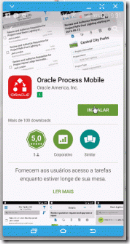
When you are using the Oracle Process Cloud Service, you can use the Oracle Process Mobile Application on your mobile device to start a new process or access the task list to approve or reject the tasks assigned to you.

In this post, we will start a new process through the Oracle Process Mobile Application, approve the task assigned to a user and see the history of the process in Oracle Process Cloud Service from a web browser on a desktop computer.

First of all, download and install the application on your mobile device.

Configure the application.
In the Host field, I used the URL for my Oracle Process Cloud Service Workspace. Read the complete article here.

To request a free OCS trial service please visit our SOA Partner Community Workspace here (SOA Community membership required)

SOA & BPM Partner Community

For regular information on Oracle SOA Suite become a member in the SOA & BPM Partner Community for registration please visit www.oracle.com/goto/emea/soa (OPN account required) If you need support with your account please contact the Oracle Partner Business Center.

Blog Twitter LinkedIn image[7][2][2][2] Facebook clip_image002[8][4][2][2][2] Wiki

Video – How to build a Process Cloud Service Application (Business Travel Requests) in 40 minutes – Part III – Business Rules Setup by Jose Rodrigues

clip_image002

Welcome to Red Maverick’s fifth video, the third of the Business Travel Request Management Series.

In this series we’ll guide you on how to build a complete, working BPM application using  Oracle’s Process Cloud Service.

For this part, the focus is on setting Business Rules using Oracle’s PCS, to fine tune the process flow path, depending on process data.

This scenario and video was first prepared by me for Link Consulting‘s Process Cloud event, that was held in July 2015. Watch the video here.

SOA & BPM Partner Community

For regular information on Oracle SOA Suite become a member in the SOA & BPM Partner Community for registration please visit www.oracle.com/goto/emea/soa (OPN account required) If you need support with your account please contact the Oracle Partner Business Center.

Blog Twitter LinkedIn image[7][2][2][2] Facebook clip_image002[8][4][2][2][2] Wiki

Basic integration of Process Cloud Service with Document Cloud Service by Lykle Thijssen

clip_image001


Recently, Oracle had released a new version of Process Cloud Service. It mainly contains some minor improvements, but also has one major update: Oracle Process Cloud Service can now use Oracle Document Cloud Service for working with documents in business processes. This blog will show you how to make it happen.

Establishing the connection

In the main page of Oracle Process Cloud Service, click on your user in the right-top corner and select “Administration”. On the Administration page, you click “Settings” under Configuration, which will get you where you want to be. Here you can fill in the URL of your Document Cloud Service, as well as username and password of the admin user. You can test the configuration immediately and click “Save” in the upper right corner when the integration was successful.

Once the connection has been established, we can proceed to using documents in our processes immediately!

Developing the process

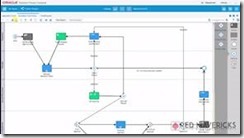
For this blog, I have created a small sample process for insurance claims. An employee of an insurance company will enter some details through a web form and attach a bill sent by a client. Then, if the bill is over $1000, a manager needs to approve or reject the claim. After this, the process will end. The small sample process looks as follows:

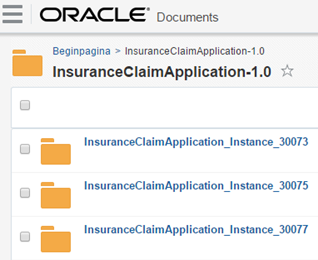
During development of the process, I have done nothing related to documents, this comes automatically! Of course, it is possible to work on document settings: for example, you can set access rights while implementing the human task. You can also create document folders on the application level of Process Cloud, but for now, I have decided to go with the default setting of one folder for my application, which will automatically be created in Document Cloud. For every instance of the process, a subfolder is automatically created too, so from Document Cloud side, it looks as follows: Read the complete article here.

SOA & BPM Partner Community

For regular information on Oracle SOA Suite become a member in the SOA & BPM Partner Community for registration please visit www.oracle.com/goto/emea/soa (OPN account required) If you need support with your account please contact the Oracle Partner Business Center.

Blog Twitter LinkedIn image[7][2][2][2] Facebook clip_image002[8][4][2][2][2] Wiki