Registries: Use Cases for API Management and Microservices by Phil Wilkins

image

Microservices and new 3rd-generation API Management capabilities are very natural technical partners. A (micro)service provides the execution logic for a single capability and 3rd generation API Management provides the means to control the exposure of each service to the outside world, and potentially between the (micro)services as well. Luis Weir’s article, 3rd-Generation API Management, explains the evolution of the API Management capability, and what the 3rd generation offers that makes API Management mesh well with (micro)services. For this article, though, we are going to explore the role of registries in a (micro)services environment and ultimately their relationship to API Management. We aren’t going to dive deeply into any specific solution, although we will reference some of the better known options, and provide links to where you can dig in further.

You’ll note I have referred to microservices as (micro)services. This is very deliberate, and possibly contentious.Microservices are typically associated with certain technologies such as Docker and lightweight app containers such as Tomcat, but from my view point if you’re going to be a purist about microservices, then (as with SOA) you need to think about the design paradigm and the principles—NOT the technologies. It is with this view point we often have to work as, unless you’re fortunate to be working in a services organization that is very enlightened or just plain fortunate, the decisions and constraints you have to work with will mean you need to make some pragmatic decisions. An organization that has made heavy investment in WebLogic licensing isn’t likely to be comfortable in giving it up—but this doesn’t mean you can’t adopt a microservices approach, although certainly you need to mitigate risks that using WebLogic can create when adopting the architecture. Secondly, the concept of registries isn’t unique to microservices; in fact, some of these solutions have origins in solutions such as Big Data/Hadoop offerings, for example.

To underline my point, Gartner has started to talk about mini- or micro-apps as a flavor of microservices. The essence of this is the application of microservice principles but in a more pragmatic manner—not every organization needs hyperscaling and super elasticity like the poster children of microservices (e.g., Netflix and Uber). But we all do need the means to easily manage the addressing of services.

To understand the role of a registry, we need to step back and understand some of the ideas underpinning microservices. So let’s just recap: Read the complete article here.

How Capgemini can enable the new Oracle API Management platform by Mark Albon

image

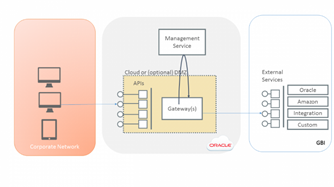
As the tendency continues for organisations to adopt not one but multiple cloud vendors, information has never been more federated. Real time access to such assets via APIs has therefore become a priority for our customers. Oracle API Platform Cloud Service delivers a pure-play 3rd generation API solution capable of creating and managing APIs that run in any vendor’s cloud and/or on-premises –whilst keeping the entire platform operations and API lifecycle central in the Oracle Cloud.

This flexible architecture means that we can create robust solutions for our customers that really puts them in the driving sit when it comes to managing access to information via APIs –regardless of where they are. The incorporation of Apiary into the platform, only makes it better as developers also get the tools they need to ensure that those APIs are well designed, documented and are easy to consume. Read the complete article here.

Integrate and Extend SaaS hands-on trainings in Istanbul, Utrecht and Warsaw

imageFor SaaS partners we offer two days hands-on trainings to extend and integrate SaaS with Oracle PaaS:

In case you can’t attend watch thee Partner Overview Webcast on-demand here and get the partner resource kit here.

My first experience with Oracle API Platform Cloud Service – part 1 by Milco Numan

image

In the first part of this two part blog post, I will describe the use case for which we used Oracle API Platform Cloud Service (shortened to APIPCS from now on) as an outbound API Gateway, offering lookup services and centralizing outbound access. This part will also describe a simple Node.js microservice we deployed to Oracle’s Application Container Cloud Service to perform the translation of an internal identification into the API key required by the external API.

The second part of this blog will elaborate on the actual creation of the API definition in APIPCS, the invocation of the microservice using Groovy scripting and the testing of the external API using APIPCS.

Introduction

At a customer, for a proof of concept last year, I have been working with an exiting new Cloud Product from Oracle: API Platform Cloud Service, or APIPCS for short. In this blog, I will not go into architectural details on why you could, should or must use an API Manager of API Gateway. Nor will I be elaborating on all functionality or features of Oracle’s implementation of the product, since they’re perfectly capable of doing that themselves.

Basic Scenario

In the use case encountered at this specific customer, the requirement existed to not use the API Gateway as an inbound Gateway, but rather to use the API Management solution as an outbound gateway. The rationale for this setup is to provide a single outbound gateway through which REST services can be invoked where internal identifications can be translated into different kinds of external identifications, known to the outside world. The former may be thought of as (internal) applications, or perhaps even customer identifications stored in an internal system. The latter category then may relate to API-keys required by the external partner, or even OAuth2 tokens. Read the complete article here.

Everything you Should Know about the API Platform Groovy Policy by Ricardo Ferreira

image

Introduction

Developers using the API Platform Cloud Service often make use of the built-in policies that comes with the platform; to implement any logic that needs to be executed before delivering the actual message to the backend service. One common policy used is the Groovy policy, which allows API developers to write Groovy scripts that can be executed either within the request or the response pipeline. These scripts can be used to inspect and even modify the message content (payload, queries, headers) therefore a very powerful tool to have at their disposal.

Because Groovy is a programming language, there are no boundaries of what can be implemented other than what is supported by its specification. Moreover; Groovy will accept any code that is valid in Java, bringing even more powerfulness to your APIs. However, this power comes with a high price to be paid.

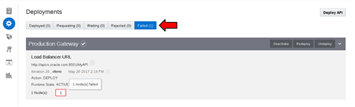
The biggest challenge with the Groovy policy is that you have no way to verify if the code written is correct until it is deployed into the gateways. During deployment; the Groovy script will be transformed into a Java class that uses the code written as part of its implementation. If something in the script is wrong, there will be compilation errors that will cause the deployment of the API to fail, as shown in Figure 1.

This whole situation can be quite frustrating if complex Groovy code is being used or if one API accesses multiple instances of the Groovy policy, each one carrying different scripts. Hours can be spent trying to troubleshoot the root-cause of the deployment issue, which is a situation that the Oracle A-Team has been experiencing quite often with different customers. Thus, this blog will discuss the most important details about the Groovy policy, its common pitfalls and which situations must be avoided to ensure a smooth API deployment.

The Basics: Groovy Policy Under-the-Hood

Given the simplicity of the Groovy policy UI, you may be thinking that its internal implementation is also quite simplistic. After all, how complex should be getting a script that contains Groovy code and executing it in a JVM right? the truth is that it is way more complex than what may appear, and properly understanding what happens under-the-hood may give you a better perspective about what to expect from this policy. Read the complete article here.

Oracle API Platform Cloud Service – The Next-Gen API Management Platform by Sven Bernhardt

image

Nowadays APIs are omnipresent. In a world of intelligent Virtual assistants (a.k.a. Chatbots), like Google’s Alexa, and a “Connect everything”-mentality this is not surprising. In addition, APIs are essential building blocks of modern software applications build on top of new architectural patterns like Microservices. That’s the technical side.

From a corporate perspective, APIs provide the chance to create new digital business models and economies by exposing services and data to business partners and customers. The challenge: How to ensure Usability, Security, Transparency and Discoverability for the exposed APIs?

Design-Driven API Management

With API Platform Cloud Service (APIP CS), Oracle launched the next big thing today making their Platform as a Service (PaaS) offering even more complete.

APIP CS is a lightweight, cloud-native platform that is capable for covering the complete API Lifecycle from Planning to Retirement.

Having an integration with Apiary.io, which was acquired by Oracle in the beginning of this year, the platform comes with a powerful API Design component and thus supports an API First approach, where API designers, API developers, architects and API consumer developers respectively App developers can consistently work collaboratively to create an appropriate API definition. This results in a consistent, intuitive API, driven by design. Read the complete article here.

My private Corner it’s a wrap


With 232 attendees from 40 countries the PaaS Partner Community Forum was a super success. Thanks to all partners investing a week to get the latest PaaS updates including machine learning and blockchain. Please share the knowledge via twitter, publish a blog post and demo a PaaS services at your next Oracle practice meeting. Presentations and training materials are available at the community workspace (membership required). It’s very impressive and inspiring to see the community come together to share, learn and network. Thanks to meet new and old friends in Budapest! Watch the short wrap-up video here.

paasforum2018

SOA & BPM Partner Community

For regular information on Oracle SOA Suite become a member in the SOA & BPM Partner Community for registration please visit www.oracle.com/goto/emea/soa (OPN account required) If you need support with your account please contact the Oracle Partner Business Center.

Blog Twitter LinkedIn image[7][2][2][2] Facebook clip_image002[8][4][2][2][2] Wiki

Technorati Tags: SOA Community,Oracle SOA,Oracle BPM,OPN,Jürgen Kress

Thanks for attending the Oracle PaaS Partner Community Forum 2018

Thanks for your huge investment to spend a week attending the PaaS Partner Community Forum 2018 in Budapest. Partners are key for Oracle’s PaaS & Fusion Middleware growth – Thanks for your Specialization & Contribution. Special thanks to all presenters and trainers your content rocks!

During the community day partners and ACEs presented best practices and customer success stories. The Oracle product management team updated you on the latest PaaS innovations like blockchain, machine learning, IoT, and chatbots. On Wednesday you could choose between the breakout tracks: Enterprise Process & Integration or Mobile & Chatbot & Content or Application Development or the Innovation track  to drill down on the technical details. Within the last two days you had the opportunity to attend hands-on trainings about Oracle Integration Cloud Service (OIC), API Platform Cloud Service (API CS), Process Cloud Service (PCS), Mobile & Chatbot Cloud Service (MCS), Internet of Things Cloud Service (IoT CS), Java Cloud Service (JCS) & Application Container Cloud Service (ACCs), Visual Builder Cloud Service (ABCs) and Content Cloud Service.

In case you could not attend in Budapest all presentations and training material will become available at our community workspace (membership required)

Thanks for attending the conference & labs and a good trip home.

Jürgen Kress

image

PaaS Partner Community Awards 2018

Thanks to all partners for their excellent contribution! You are the key for the joint PaaS success. It becomes every year harder to choose the winners, due to all the excellent work and contributions. The awarded partners have proven cutting edge projects with the latest Oracle cloud technology and most important their contribution to the community like blogs, newsletters, conferences, papers, twitter, LinkedIn and hosted Oracle Developer Meetups. THANKS to the whole community and congratulation to the winners!

Oracle PaaS Partner Community Awardsimage

Outstanding ICS Contribution 2018

primeone

Outstanding API Contribution 2018

Luis Weir


Outstanding PCS Contribution 2018

Jarvis Pizzeria


Outstanding SOA CS Contribution 2018

certus solutions & eProseed

Outstanding JCS Contribution 2018

Silbury


Outstanding Integrate & Extend SaaS Contribution 2018

AppsPro


Outstanding Management Cloud Contribution 2018

FORS


Outstanding Mobile Contribution 2018

avanttic


Outstanding PaaS Contribution 2018

Capgemini


Outstanding Meetup Contribution 2018

AMIS

Outstanding Community Support 2018

Steve Snook & UK Studio

SOA & BPM Partner Community

For regular information on Oracle SOA Suite become a member in the SOA & BPM Partner Community for registration please visit www.oracle.com/goto/emea/soa (OPN account required) If you need support with your account please contact the Oracle Partner Business Center.

Blog Twitter LinkedIn image[7][2][2][2] Facebook clip_image002[8][4][2][2][2] Wiki

Technorati Tags: Award,Community Award,SOA Community,Oracle SOA,Oracle BPM,OPN,Jürgen Kress,Cloud,PaaS

Welcome to the PaaS Partner Community Forum 2018

PaaSForum2018When you read this you arrived safely in Budapest and we would like to thank you and your management for investing the time to attend the PaaS Partner Community Forum 2018. On March 15th Hungary celebrates their Memorial Day. Like the Hungarian revolution from 1848, our economy is changed by digitalization. Disrupting technologies like cloud computing, blockchain and machine learning are changing our business and society. To reflect this changes we offer an innovation track.

There will be more than 200 delegates from more than 45 countries, which will give you the opportunity to learn from other cloud minded partners and network with partners from Europe and different regions as we also have representation from Africa, Asia, North America, South America and the Middle-East. Many Oracle employees will attend and we would like to invite you to challenge them how we can support you to grow your business and maintain profitability on your investment with Oracle.

Scale innovation blockchain and machine learning

Cloud Computing is leading on all service levels. SaaS solutions became a standard model for enterprise customers. Infrastructure as a Service is used to deploy all kind of workload flexible in the cloud. This year’s conference introduces innovations to the Oracle Platform as a Services (PaaS) platform. Blockchain cloud service is launched and machine learning is used within the platform which becomes autonomous. Self-driving, self-securing and self-repairing capabilities demonstrates advances in autonomous Oracle Cloud.

During this event you will see presentations from Product Management, Pre-Sales Consultants and Partners, that will share their real life experiences with you how to implement Oracle PaaS solutions and to see the business drivers behind these projects.

The Partner Community Forum is one of the best opportunities to get details and hands-on trainings about Oracle Integration Cloud Service (OIC), API Platform Cloud Service (API CS), Process Cloud Service (PCS), Mobile & Chatbot Cloud Service (MCS), Internet of Things Cloud Service (IoT CS), Java Cloud Service (JCS) & Application Container Cloud Service (ACCs), Visual Builder Cloud Service (ABCs) and Content Cloud Service.

Oracle PaaS Services create many new opportunities for partners to build, customize and integrate applications in a public cloud environment. Our joint customers will benefit from this new cloud offering by faster time to market, higher availability and flexibility, lower project cost an risks. With the introduction of universal cloud credits (UCCs) partners can deploy customer projects agile. With hybrid cloud computing Oracle offers a unique value proposition for customer and partners. You can choose where to host your cloud solutions in the data center of your choice. Cloud marketplace gives you as a partner new opportunities to build, deploy and promote and market offerings on the Oracle PaaS Cloud. The Oracle Cloud Excellence Implementer (CIE) and Oracle Cloud Managed Service Provider (MSP) Program reflect the focus on cloud computing.

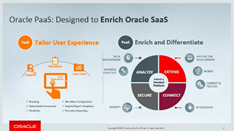
The Enrich SaaS with PaaS initiative is designed for Oracle SaaS applications partners. The underlying PaaS platform enables customers to enrich and differentiate SaaS solutions. Connect SaaS solutions with other SaaS solutions and on-premises, analyze data, secure and extend applications. As part of the conference multiple session and a two days hands-on training are offered specifically for SaaS partners to Enrich SaaS solutions with PaaS.

Each conference attendee was granted access to free PaaS demo service before and during the conferences. As an Oracle partner you can request free PaaS demo services via demo.oracle.com or our partner communities any time – make use of it!

Last year in Split we introduced the community day to present success stories and best practice. Based on the excellent feedback Lucas Jellema and myself selected 7 presentation for the first conference day.

We are excited to welcome again Ed Zou at the conference who will highlight in his keynote how to Drive Digital Transformation on Oracle Cloud Platform including live demos of machine learning and blockchain. Digital is changing the economy, our joint customers face this challenge, PaaS is the platform you can build new digital solutions either in the Cloud. Thanks to our product management team you will get updates and roadmap details including demos for our PaaS solutions.

We would like to congratulate the annual winners of the PaaS Partner Community Awards. You will have the opportunity to learn direct from them why they have won the awards. On Tuesday evening during our social event you will have plenty of chance for deep discussion within the community and speakers.

On the third day you can choose between different four breakout tracks: Enterprise Process & Integration or Mobile & Chatbot & Content or Application Development or the Innovation track. We will keep our tradition to wrap up the conference with the legendary ACE demo – special thanks to Lucas Jellema and team!

Thursday and Friday four different hands-on trainings take place. A two days Integrate and Extend SaaS workshop. Or 12 different half day labs, you can build your own agenda by choosing each session

During the conference we host run multiple information points. Please take the opportunity to talk to the product management teams and business development teams. Three partners will exhibit their solutions. APIMatic API tools for API developers , Felxagon a devops tool and UiPath for robotics process automation (RPA). The Oracle User Experience team invites you participate in usability tests.

We also want to give a special thank you to our Specialized partners that have been able to differentiate themselves in their local markets by showing their experience and commitment in Oracle PaaS & Fusion Middleware solutions. To continue your road to success please ensure that you align with our local cloud sales teams and use our marketing services including the marketing campaigns kits.

From previous conferences we received the feedback that networking is key, it is always a challenge to keep the balance between more exiting live demos and networking breaks. Take the opportunity to connect via twitter and Facebook. Also most of the conference speakers arrive on Monday and are available for 1:1 meetings!

We would like to encourage you to network within the community using our web2.0 features. For twitter please use the event hashtag #PaaSForum:

http://www.twitter.com/soacommunity @soacommunity

http://www.twitter.com/wlscommunity @wlscommunity

Like our Facebook pages and post comments and pictures at: http://www.facebook.com/WebLogicCommunity & http://www.facebook.com/soacommunity

Three years ago we hosted a PaaS Partner Community Forum at the Boscolo hotel in Budapest. We are excited to be back in this wonderful hotel & conference venue and city. Take the opportunity to visit the historic center, the buda castle part of the world heritage and visit a thermal bath. Plan to celebrate again your community success in one of the ruin bars!

The conference, Oracle OpenWorld and the Summer Camps are part of the annual community highlights. It’s exciting to see the community to get together full of energy and to develop new ideas. We opened the conference registration 100 days in advance, with more than 350 registrations and more than 200 attendees the conference is sold out! Special thanks to my management for the trust and freedom to host this conference and assigning additional budget to allow us to host additional attendees – thank you!

Thank you for attending the conference and your Oracle PaaS & Middleware Partner business.

Jürgen Kress