PCS Travel Request Management – Process Form Creation by Red Mavericks

clip_image001


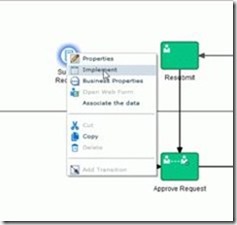
The fourth video by Red Mavericks (http://www.redmavericks.com) addresses the use of Oracle’s Process Cloud Service to build and deploy a full working Business Travel Request application in 40 minutes.
This is the first of a series of 4 videos that will guide you through the application creation process of a BPM application, using near zero code, which makes it particularly suitable for Business Analysts to also be engaged.

For this part, the focus is on Process Form Design using Oracle’s PCS Web Form builder, i.e. the process diagram that will guide the application’s general behavior. The use case was made for Link Consulting’s (http://www.linkconsulting.com/oracle) Process Cloud Event, held on July 2015. Watch the video here.

SOA & BPM Partner Community

For regular information on Oracle SOA Suite become a member in the SOA & BPM Partner Community for registration please visit www.oracle.com/goto/emea/soa (OPN account required) If you need support with your account please contact the Oracle Partner Business Center.

Blog Twitter LinkedIn image[7][2][2][2] Facebook clip_image002[8][4][2][2][2] Wiki

HCL Predictive Maintenance Solution based on IoT Cloud Service

clip_image002


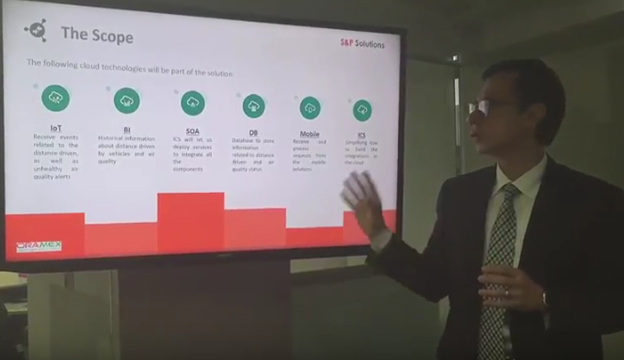
Luis Weir and the HCL team build an excellent PaaS showcase for predictive maintenance.

Predictive Maintenance HCL PaaS Showcase

• Industry value proposition solving a business problem

• PaaS services: IoT, MCS, PCS, ICS

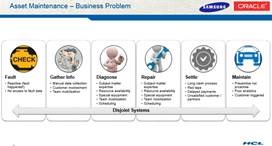
Industries such as aeronautics, automotive, manufacturing, high-tech and even healthcare always deal with the management of thousands of assets. This activity is complex in very costly. Even more so due to manual business processes and disconnected systems (many of them legacy). HCL’s ServiSmart solution reduces costs by connecting assets into a streamlined and pre-built end-to-end digital business process to automate tasks such as fault recognition and diagnosis, work allocation, repairs tracking and ongoing maintenance. Watch the video here.

SOA & BPM Partner Community

For regular information on Oracle SOA Suite become a member in the SOA & BPM Partner Community for registration please visit www.oracle.com/goto/emea/soa (OPN account required) If you need support with your account please contact the Oracle Partner Business Center.

Blog Twitter LinkedIn image[7][2][2][2] Facebook clip_image002[8][4][2][2][2] Wiki

Internet of Things (IoT) Cloud Service available

clip_image001The News

Oracle Internet of Things Cloud Service is now available!  Oracle IoT Cloud Service is a secure and scalable platform to help organizations quickly build and deploy IoT applications. This new offering allows customers to gain new data-driven insights and drive actions from IoT by connecting, analyzing and integrating device data into business processes and applications like remote equipment monitoring and asset tracking.

Value Proposition

The three core elements of IoT Cloud Service are – connect, analyze and integrate

         Connect –  Using IoT Cloud Service, users can collect data from any device in any market—reliably and securely. It abstracts away the technical challenges of connecting to devices/gateways and accelerates your time to market with an open, secure, and scalable platform.

         Analyze –  Gathering IoT data is pointless if customers can’t get value from it. IoT Cloud Service performs real-time analytics and enables big data and predictive analytics to deliver the enriched enterprise data that enables you to identify new services and improve customer satisfaction.

         Integrate –  IoT Cloud Service extends enterprise applications using open interfaces and pre-integrations with Oracle’s platform-as-a-service (PaaS), software-as-a-service (SaaS) and on-premise applications to reduce total cost of ownership for IoT data-enriched applications and processes.

Need to Know

Here are some assets and information to help you effectively sell Oracle IoT Cloud Service into your accounts:

         Sales Tools and Collateral:  Customer-facing content available on cloud.oracle.com/iot

1.      Create opportunities using IoT Discovery Workshop: contact us for more information

2.      Access all IoT presentations from Open World 2015 here. (SOA Community membership required)

3.      Access customer facing e-book & solution brief

         Publicity: Oracle Internet of Things was announced in a press release at Oracle OpenWorld 2015 and is included in ongoing social media activities.

         Pricing and Availability:  Oracle IoT Cloud Service is now orderable and pricing for Metered and non-Metered (Subscription) is now available in the Price Book.  Pricing will be available at cloud.oracle.com shortly.

Who to target

         Customers interested in remote monitoring of their industrial equipments to drive proactive and predictive maintenance

         Customers interested in tracking assets to optimize their logistics operations or for safety and policy adherence

         Customers in industries such as industrial manufacturing, construction, utilities, agriculture and transportation/logistics

         Existing Oracle e-Business Suite, JD Edwards E1, Oracle Service Cloud, Oracle Transportation Management customers

Key features

         Device Virtualization – IoT Cloud Service exposes every connected device as a set of resources. This abstracts any complexity associated with device connectivity and standardizes the integration of devices with the enterprise

         Flexible Topology – Devices can connect to the Oracle IoT Cloud Service using different types of network topologies – using client library, gateway software or directly using REST API. This offers customers flexibility to integrate their devices with IoT Cloud Service.

         Stream processing – IoT Cloud Service performs real time analysis of incoming data streams with event aggregation, filtering and correlation. With a business-friendly interface, customers can quickly identify key events and exceptions at real-time

         Event Store – Analyzed data streams can be sent to integrated cloud services or enterprise applications for further processing and driving business workflows. Customers can query and visualize massive amounts of data with integrated Oracle Business Intelligence Cloud Service support and enable Big Data Analysis.

         Enterprise Integration –IoT Cloud Service enables API based integration with Oracle enterprise applications such as E-Business Suite, JD Edwards Enterprise One, Oracle Transportation Management, Oracle Service Cloud as well as PaaS services like Oracle Mobile Cloud Service and Oracle Integration Cloud Service

         Command & Control – Users can send messages to devices from enterprise & mobile applications, independent of device connectivity. Enterprise applications can also use the Oracle IoT Cloud Service REST API to issue commands and make queries to devices, providing customized, intelligent orchestration for business.

Key Benefits

         Faster Time to Market –  Extend manufacturing processes & logistics operations by leveraging connected devices

         Real-Time Insight –  Optimize asset tracking by analyzing and acting on in-flight IoT data

         Integrated –  Drive predictive maintenance using pre-built integrations with applications, analytics & mobile services

         Secure & Scalable –  Enterprise-grade platform for mission critical IoT applications


Want to try IoT Cloud Service? See the blog post here

SOA & BPM Partner Community

For regular information on Oracle SOA Suite become a member in the SOA & BPM Partner Community for registration please visit www.oracle.com/goto/emea/soa (OPN account required) If you need support with your account please contact the Oracle Partner Business Center.

Blog Twitter LinkedIn image[7][2][2][2] Facebook clip_image002[8][4][2][2][2] Wiki

Introducing the Oracle IoT Cloud by Attila Németh


clip_image002Oracle released its newest cloud product, the Oracle Internet of Things (IoT) Cloud Service, a couple of days ago. We have shared our experience with the product at the DOAG 2015 conference where we have also shown a showcase demonstrating the capabilities of the IoT Cloud Service. With this article we are starting a series of posts showing some key aspects of the product.

First of all, a brief introduction: what is IoT and what does the Oracle IoT Cloud Service provide?

More than a year has passed since we have built our first IoT demo. The article gives a good overview about what the Internet of Things is, how the architecture can be set up, etc. The retrospective at the end of our pilot project back then shows the key aspects for a successful adoption.

The high level view of the Oracle IoT Cloud Service is shown in the picture below.

Data from “things” – devices somewhere around the world – is sent to the Oracle IoT Cloud Service. This can be a direct connection if the device supports it or an indirect one in which case the device communicates with a gateway (possibly even over a proprietary protocol) and the gateway forwards the data to the IoT Cloud Service.

All these devices and their connections are managed by the product. Metadata attributes like device category or location can be added to devices to help find devices quickly (for example to locate a faulty device).

Data sent to the cloud can be either forwarded directly to backend systems (which can be either in the cloud or on premise) or it can be analysed in the cloud and the result of the analysis can be forwarded to other systems – for example to a BI System for producing more detailed reports or to an ERP system to keep track of the assets. Read part I here, part II here, part III here, part IV here and part V here.

SOA & BPM Partner Community

For regular information on Oracle SOA Suite become a member in the SOA & BPM Partner Community for registration please visit www.oracle.com/goto/emea/soa (OPN account required) If you need support with your account please contact the Oracle Partner Business Center.

Blog Twitter LinkedIn image[7][2][2][2] Facebook clip_image002[8][4][2][2][2] Wiki

Integration with new Oracle Integration Cloud Service (ICS) by ec4u


clip_image002Since a few years cloud computing has become more and more popular. The main types of cloud computing are Infrastructure as a Service (IaaS), Platform as a Service (PaaS) and Software as a Service (SaaS). In the past, several subareas have been established in the market and pushed by research companies. One subarea is Integration PaaS (IPaaS)  and a variety of vendors have provided solutions. One advantage of IPaaS solutions is the simplified integration. Furthermore, IPaaS provides the capability to integrate cloud- and on-premise applications. Oracle announced Integration Cloud Service (ICS) as an IPaaS solution in June.
This article describes a first impression and the key components of ICS.

First experience with ICS

After the login to ICS, you will get greated with an organized and clean overview. The page provides an overview on the three main functional areas. Figure 1 shows the areas and the simple and tablet-friendly user interface. The functional areas are divided into Connections, Integrations and Dashboard.

Figure 1: ICS Start Page (click on the picture to see an enlarged version of the picture)

The Connections-area provides the capabilities to define configurations to specific application endpoints. These configurations are based on technology adapters such as SOAP, application adapters for on premise application e.g. eBusiness Suite and cloud adapters for cloud applications e.g. Oracle Sales Cloud. The connection could be used for several integrations and one of the main benefits is the reusability of the configuration. In addition, the integration developer does not need to know details about the service or application when using the preconfigured adapter.
The most important functional area is Integrations. It provides the functions to develop the integration flows and lookups. The overview page shows all integrations with the possibility to filter by status. The user interface to develop the integration is kept as simple as possible.
Figure 2 shows the integration development and the clean interface you will already know from the overview. Target, source and transformation are the key elements of an integration scenario. The source and target can be defined with preconfigured connections or technology adapters such as Rest or SOAP. The transformation for request and response messages is placed in the middle of the screen. Read the complete article here.

SOA & BPM Partner Community

For regular information on Oracle SOA Suite become a member in the SOA & BPM Partner Community for registration please visit www.oracle.com/goto/emea/soa (OPN account required) If you need support with your account please contact the Oracle Partner Business Center.

Blog Twitter LinkedIn image[7][2][2][2] Facebook clip_image002[8][4][2][2][2] Wiki

ICS Integration Patterns (Part 1 of 3): Map My Data by Antonis Antoniou

clip_image001

Oracle Integration Cloud Service (ICS) is another powerful yet simple Cloud platform offering by Oracle that simplifies the development of cloud and hybrid integrations (applications in the cloud and on premises).
The entire integration development and operational lifecycle is managed through a web based service console offering a point and click integration and monitoring experience without having to write a single line of code.
Furthermore Oracle ICS supports various industry standards like SOAP and REST and comes with a set of cloud adapters providing pre-integration capabilities with several SaaS applications (such as Oracle ERP Cloud, Oracle HCM Cloud, Oracle Sales Cloud, Oracle RightNow, Eloqua, NetSuite and Salesforce) shortening the time-to-market in integration projects.
The concepts in Oracle ICS are really simple; you create connections (using the pre-defined offered adapters) and leverage those connections to create integrations which you can then dashboard monitor to track the current state of your running integrations and fix any errors that might occur. Read the complete article here.

SOA & BPM Partner Community

For regular information on Oracle SOA Suite become a member in the SOA & BPM Partner Community for registration please visit www.oracle.com/goto/emea/soa (OPN account required) If you need support with your account please contact the Oracle Partner Business Center.

Blog Twitter LinkedIn image[7][2][2][2] Facebook clip_image002[8][4][2][2][2] Wiki

SOA CS –> API Manager Flavour by Niall Commiskey


clip_image002This is essentially a revamp of a previous post on API Manager,
albeit for the SOA CS environment.
You can read the original post here
I created an API Manager instance on SOA CS –

Let’s look at the Fusion Middleware Control –
Here we can create API Manager users.
I have covered this is a previous API Manager post, but to save you time,
here are the screenshots – Read the complete article here.

To request a free SOA CS trial service please visit our SOA Partner Community Workspace here (SOA Community membership required)

SOA & BPM Partner Community

For regular information on Oracle SOA Suite become a member in the SOA & BPM Partner Community for registration please visit www.oracle.com/goto/emea/soa (OPN account required) If you need support with your account please contact the Oracle Partner Business Center.

Blog Twitter LinkedIn image[7][2][2][2] Facebook clip_image002[8][4][2][2][2] Wiki

Five Ways Cloud-Based Integration Is Driving Innovation – Whitepaper


clip_image001With businesses adopting more and more cloud applications, mobile apps, and devices, integration has never been more important. Integrating these apps and tools with the rest of the systems is the key to a connected enterprise— one that supports real-time responsiveness, instant collaboration, and streamlined innovation. To keep up with these new integration demands, a new breed of solution has emerged—cloud-based integration platforms (also called integration platform as a service, or iPaaS for short). For businesses looking to gain all of the benefits of a connected enterprise, while also simplifying administration and accelerating time to market, they’re a game-changer. They’re fueling a hybrid approach to integration—one that combines on-premises integration with iPaaS

to respond to business requirements faster—but that’s just the start. Read on and discover five key ways cloud-based integration platforms are transforming the way organizations integrate, making innovation simpler than ever before. Get the whitepaper here.

SOA & BPM Partner Community

For regular information on Oracle SOA Suite become a member in the SOA & BPM Partner Community for registration please visit www.oracle.com/goto/emea/soa (OPN account required) If you need support with your account please contact the Oracle Partner Business Center.

Blog Twitter LinkedIn image[7][2][2][2] Facebook clip_image002[8][4][2][2][2] Wiki

Public PaaS free eBook

clip_image002


Innovate Quickly and Confidently with Public Platform as a Service

See how Platform as a Service solutions can help you:

  • Accelerate business innovation
  • Improve business agility and insight
  • Reduce IT cost and complexity
  • Increase productivity and collaboration

Get the free eBook here.

SOA & BPM Partner Community

For regular information on Oracle SOA Suite become a member in the SOA & BPM Partner Community for registration please visit www.oracle.com/goto/emea/soa (OPN account required) If you need support with your account please contact the Oracle Partner Business Center.

Blog Twitter LinkedIn image[7][2][2][2] Facebook clip_image002[8][4][2][2][2] Wiki

ServiceCloud Rightnow Integration, XSLT Transformations! By Fabio Persico


clip_image002I’ve just roll out to a live environment, a SOA Integration project with Oracle Service Cloud Rightnow.

The customer needed to migrate from a in-house CRM to Oracle Service Cloud and with my company Infomentum we have helped them in taking this big step. Since that I have made lots of experience with OSC WebServices.

Here I just want to share the complex XSLT Transformation which we have implemented to communicate with the OSC WebServices, hopefully these can speed up any other SC integration projects.

There are 6 transformation in the ZIP package (we have implemented more):

XSLT Name

SC Object

Out of the box Object?

Operation Type

xsltContact2Update

CONTACT

Yes

UPDATE

xsltOrganisationToUpdate

ORGANIZATION

Yes

UPDATE

xsltProgrammeToUpdate

CO.PROGRAMME

No

UPDATE

xsltProgrammeTypeToUpdate

CO.PROGRAMMETYPE

No

UPDATE

xsltCourseToUpdate2

CO.COURSE

No

UPDATE

xsltSessionToUpdate

CO.SESSION

No

UPDATE

In the XSLTs you’ll find all the details about the TARGET columns (Oracle Service Cloud ones). Here are some important concepts I want to highlight:

  • SC Columns in the XSLT are sometimes out of the box column, in some other cases they are custom ones. In the XSLT the latter will be identified with the tag GenericFields. Read the complete article here.

SOA & BPM Partner Community

For regular information on Oracle SOA Suite become a member in the SOA & BPM Partner Community for registration please visit www.oracle.com/goto/emea/soa (OPN account required) If you need support with your account please contact the Oracle Partner Business Center.

Blog Twitter LinkedIn image[7][2][2][2] Facebook clip_image002[8][4][2][2][2] Wiki