Marketing Plan & Services from OPN

clip_image002Oracle’s Partner Network team offers a wide variety of free marketing services for your as a partner. Please make sure that you use them! Additional we offer complete campaign kits to run joint activities. Key services include:

Event Publishing Service – promote your events at oracle.com!

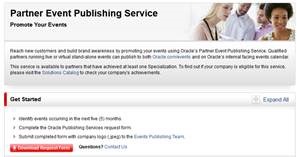
Reach new customers and build brand awareness by promoting your events using Oracle’s Partner Event Publishing Service. Qualified partners running live or virtual stand-alone events can publish to both Oracle.com/events and on Oracle’s internal facing events calendar.

This service is available to partners that have achieved at least one Specialization. To find out if your company is eligible for this service, please visit the Solutions Catalog to check your company’s achievements. Start to promote your event here.

Promote your solutions & services at our:

Advertise from Oracle Solutions Catalog

Advertise from Oracle Cloud Marketplace

Use Oracle Trademark for Google AdWords

Solutions Catalog – promote your services & offerings at oracle.com

Solutions Catalog is a marketing tool which allows Oracle partners to showcase their specializations, distribution rights, solutions, services, and other areas of expertise to customers worldwide. The mobile responsive site is used by customers, partners and Oracle employees to search for the partner or solution that meets their needs. Presence on the catalog is free of charge to OPN partners Silver level or higher.

  • Market your company to over 30K visitors per month, many of whom come from major search engines such as Google.
  • Showcase your achievements to customers, prospects, partners and Oracle sales reps worldwide.
  • Promote your offerings and solutions and reach new customers and prospects.

Solutions Catalog offers a robust account management area with enhanced profile creation capabilities and a streamlined publication process to make managing your profile simple.

Manage Your Profile Update Your Profile: Best Practices Guide

Cloud Market Place – promote your solutions & extensions!

Oracle Cloud Marketplace is an online store dedicated to marketing cloud business apps and professional services offered by Oracle partners. Partners can publish to a dedicated distribution channel to market innovative solutions directly to Oracle’s +400,000 worldwide customer base.

Guide: Oracle Cloud Marketplace – Market Your Apps & Services

Marketing Campaign material

At our SOA & BPM and WebLogic & ADF Partner Community Workspaces we host marketing campaign material for the EMEA OFM ACTon marketing campaigns. To become a community member please register at www.oracle.com/goto/emea/soa. Marketing Kits include complete material like agenda, invite, confirmation, presentations, demos, feedback form, speakers, Rooms at Oracle conference centers….

For marketing material please visit:

SOA & BPM Partner Community Workspace

WebLogic & ADF Partner Community Workpace

Hosted Demo Systems at Oracle Cloud

Oracle Demonstration Services is a free service for Oracle Gold partners or above!

Allowing partners to leverage the competitive advantages of Oracle’s technology and applications products. Environments are offered for the purpose of delivering demonstrations and training on Oracle’s technology, applications, and cloud products. E.g. Demos include SOA 12c, BPM Suite 12c or Oracle Applications Integration and Mobile Integration. Some of the demos are also available for download as an virtual box image. If you have already been approved, please proceed to Access Oracle Demonstration Services. If you like to request access please visit Demonstration Services

Additional Marketing Resources

SOA & BPM Partner Community

For regular information on Oracle SOA Suite become a member in the SOA & BPM Partner Community for registration please visit www.oracle.com/goto/emea/soa (OPN account required) If you need support with your account please contact the Oracle Partner Business Center.

Blog Twitter LinkedIn image[7][2][2][2] Facebook clip_image002[8][4][2][2][2] Wiki

Fusion Middleware for SAP customers


clip_image002

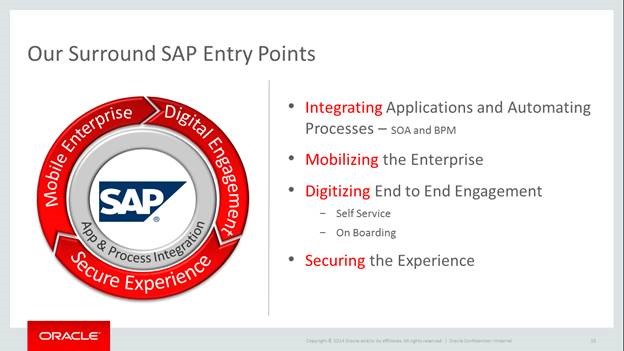
At the SOA Community Workspace (SOA Community membership required) we posted the presentation

Fusion Middleware for SAP.pptx. Integration, Mobilizing, Digitizing and Security are great entry points for SAP customers.

SOA & BPM Partner Community

For regular information on Oracle SOA Suite become a member in the SOA & BPM Partner Community for registration please visit www.oracle.com/goto/emea/soa (OPN account required) If you need support with your account please contact the Oracle Partner Business Center.

Blog Twitter LinkedIn image[7][2][2][2] Facebook clip_image002[8][4][2][2][2] Wiki

Maven Repository – Index now available – more to come by Mark Nelson


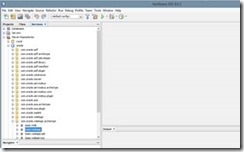
clip_image002I am happy to announce that we now have an index available for the Oracle Maven Repository.  This is a standard Maven index, built with the Maven Core Indexer code (donated by Sonatype to Maven – thanks!) and is available at https://maven.oracle.com/.index/nexus-maven-repository-index.properties and https://maven.oracle.com/.index/nexus-maven-repository-index.gz.

The easiest way to view it is to use an IDE like NetBeans, as shown below:

We are actively working with Maven Repository Manager and IDE teams to make this work for you across a variety of common tools you may use. Read the complete article here.

SOA & BPM Partner Community

For regular information on Oracle SOA Suite become a member in the SOA & BPM Partner Community for registration please visit www.oracle.com/goto/emea/soa (OPN account required) If you need support with your account please contact the Oracle Partner Business Center.

Blog Twitter LinkedIn image[7][2][2][2] Facebook clip_image002[8][4][2][2][2] Wiki

last chance call for presentations Oracle OpenWorld & JavaOne 2014

You’ve been successful in making your organization run smoother, faster, more cost-effectively. You’ve come up with the perfect solution to increase your staff retention, speed up your lead to sales pipeline, or minimize your supply management costs. We want to hear your story. Submit your proposal today and share your success at Oracle OpenWorld.

Tips for your presentation:

  • Include customer references
  • Choose a cool title which catches attention
  • Cloud, mobile and big & fast data are key trends in middleware
  • Inform us and product management about your paper
  • Visit last years conference page to see which presentations have been selected

Oracle OpenWorld 2014, will take place from September 28th until October 2nd in San Francisco. Call for papers is open until April 15th 2014 here:


SOA & BPM Partner Community

For regular information on Oracle SOA Suite become a member in the SOA & BPM Partner Community for registration please visit www.oracle.com/goto/emea/soa (OPN account required) If you need support with your account please contact the Oracle Partner Business Center.

Blog Twitter LinkedIn image[7][2][2][2] Facebook clip_image002[8][4][2][2][2] Wiki

Oracle OpenWorld 2013 – Wrap up by Sven Bernhardt

OOW 2013 is over and we’re heading home, so it is time to lean back and reflecting about the impressions we have from the conference.

First of all: OOW was great! It was a pleasure to be a part of it. As already mentioned in our last blog article: It was the biggest OOW ever. Parallel to the conference the America’s Cup took place in San Francisco and the Oracle Team America won. Amazing job by the team and again congratulations from our side

Back to the conference. The main topics for us are:

  • Oracle SOA / BPM Suite 12c
  • Adaptive Case management (ACM)
  • Big Data
  • Fast Data
  • Cloud
  • Mobile

Below we will go a little more into detail, what are the key takeaways regarding the mentioned points:

Oracle SOA / BPM Suite 12c
During the five days at OOW, first details of the upcoming major release of Oracle SOA Suite 12c and Oracle BPM Suite 12c have been introduced. Some new key features are:

  • Managed File Transfer (MFT) for transferring big files from a source to a target location
  • Enhanced REST support by introducing a new REST binding
  • Introduction of a generic cloud adapter, which can be used to connect to different cloud providers, like Salesforce
  • Enhanced analytics with BAM, which has been totally reengineered (BAM Console now also runs in Firefox!)
  • Introduction of templates (OSB pipelines, component templates, BPEL activities templates)
  • EM as a single monitoring console
  • OSB design-time integration into JDeveloper (Really great!)
  • Enterprise modeling capabilities in BPM Composer

These are only a few points from what is coming with 12c. We are really looking forward for the new realese to come out, because this seems to be really great stuff. The suite becomes more and more integrated. From 10g to 11g it was an evolution in terms of developing SOA-based applications. With 12c, Oracle continues it’s way – very impressive.

Adaptive Case Management
Another fantastic topic was Adaptive Case Management (ACM). The Oracle PMs did a great job especially at the demo grounds in showing the upcoming Case Management UI (will be available in 11g with the next BPM Suite MLR Patch), the roadmap and the differences between traditional business process modeling. They have been very busy during the conference because a lot of partners and customers have been interested :-)

Big Data
Big Data is one of the current hype themes. Because of huge data amounts from different internal or external sources, the handling of these data becomes more and more challenging. Companies have a need for analyzing the data to optimize their business. The challenge is here: the amount of data is growing daily! To store and analyze the data efficiently, it is necessary to have a scalable and flexible infrastructure. Here it is important that hardware and software are engineered to work together. Therefore several new features of the Oracle Database 12c, like the new in-memory option, have been presented by Larry Ellison himself.

From a hardware side new server machines like Fujitsu M10 or new processors, such as Oracle’s new M6-32 have been announced. The performance improvements, when using one of these hardware components in connection with the improved software solutions were really impressive. For more details about this, please take look at our previous blog post.

Regarding Big Data, Oracle also introduced their Big Data architecture, which consists of:

  • Oracle Big Data Appliance that is preconfigured with Hadoop
  • Oracle Exdata which stores a huge amount of data efficently, to achieve optimal query performance
  • Oracle Exalytics as a fast and scalable Business analytics system

Analysis of the stored data can be performed using SQL, by streaming the data directly from Hadoop to an Oracle Database 12c. Alternatively the analysis can be directly implemented in Hadoop using “R”. In addition Oracle BI Tools can be used to analyze the data.

Fast Data
Fast Data is a complementary approach to Big Data. A huge amount of mostly unstructured data comes in via different channels with a high frequency. The analysis of these data streams is also important for companies, because the incoming data has to be analyzed regarding business-relevant patterns in real-time. Therefore these patterns must be identified efficiently and performant. To do so, in-memory grid solutions in combination with Oracle Coherence and Oracle Event Processing demonstrated very impressive how efficient real-time data processing can be.

One example for Fast Data solutions that was shown during the OOW was the analysis of twitter streams regarding customer satisfaction. The feeds with negative words like “bad” or “worse” have been filtered and after a defined treshold has been reached in a certain timeframe, a business event was triggered.

Cloud
Another key trend in the IT market is of course Cloud Computing and what it means for companies and their businesses. Oracle announced their Cloud strategy and vision – companies can focus on their real business while all of the applications are available via Cloud. This also includes Oracle Database or Oracle Weblogic, so that companies can also build, deploy and run their own applications within the cloud. Three different approaches have been introduced:

  • Infrastructure as a Service (IaaS)
  • Platform as a Service (PaaS)
  • Software as a Service (SaaS)

Using the IaaS approach only the infrastructure components will be managed in the Cloud. Customers will be very flexible regarding memory, storage or number of CPUs because those parameters can be adjusted elastically. The PaaS approach means that besides the infrastructure also the platforms (such as databases or application servers) necessary for running applications will be provided within the Cloud. Here customers can also decide, if installation and management of these infrastructure components should be done by Oracle. The SaaS approach describes the most complete one, hence all applications a company uses are managed in the Cloud. Oracle is planning to provide all of their applications, like ERP systems or HR applications, as Cloud services.

In conclusion this seems to be a very forward-thinking strategy, which opens up new possibilities for customers to manage their infrastructure and applications in a flexible, scalable and future-oriented manner.

As you can see, our OOW days have been very very interresting. We collected many helpful informations for our projects. The new innovations presented at the confernce are great and being part of this was even greater! We are looking forward to next years’ conference!
Links:

SOA & BPM Partner Community

For regular information on Oracle SOA Suite become a member in the SOA & BPM Partner Community for registration please visit www.oracle.com/goto/emea/soa (OPN account required) If you need support with your account please contact the Oracle Partner Business Center.

Blog Twitter LinkedIn image[7][2][2][2] Facebook clip_image002[8][4][2][2][2] Wiki Mix Forum

Oracle OpenWorld 2013 Summary

Have you missed Oracle OpernWorld 2013? – here are the key information from Thomas Kurian’s middleware presentation, our partners presentations and the first impressions on SOA Suite 12c. Thanks to all partners for the excellent presentations and the product management team for their superb demo ground!

Oracle OpenWorld General Session 2013: Middleware
Watch Full-Length Keynote

At our SOA Community Workspace (SOA Community membership required) you can download the presentation slides from Thomas Kurian’s presentation FMWGeneralSessionTKv22.pptx.

To download all session slides, please click here.

Here are my personal OOW 2013 highlights:

Community Reception

BAM 12c Dashboard

SOA Suite 12c Managed file transfer

Adaptive Case Management (ACM)

SOA & BPM Partner Community

For regular information on Oracle SOA Suite become a member in the SOA & BPM Partner Community for registration please visit www.oracle.com/goto/emea/soa (OPN account required) If you need support with your account please contact the Oracle Partner Business Center.

Blog Twitter LinkedIn image[7][2][2][2] Facebook clip_image002[8][4][2][2][2] Wiki Mix Forum

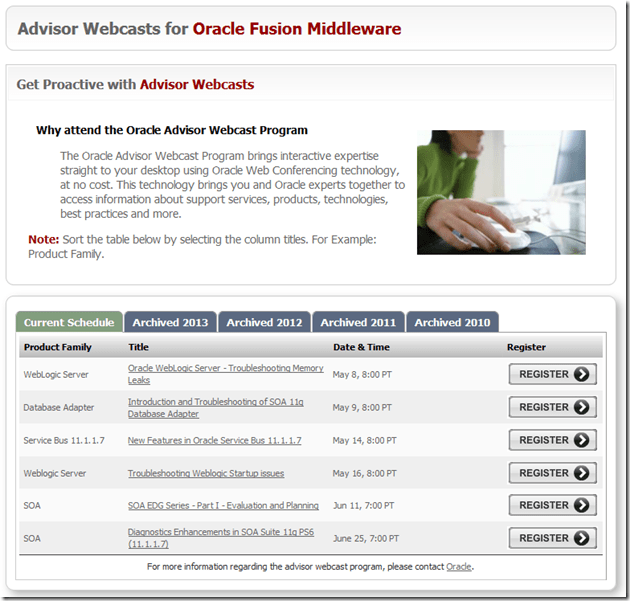
Advisor Webcasts for Fusion Middleware–Troubleshooting SOA–May 9th & New Features OSB 11.1.1.7 May 14th 2013

Attend our Oracle Support Fusion Middleware Advisor Webcasts.

To access the webcasts you need to login to support.oracle.com. If you don’t know your partner credentials contact our OPN team!

image

SOA & BPM Partner Community

For regular information on Oracle SOA Suite become a member in the SOA & BPM Partner Community for registration please visit www.oracle.com/goto/emea/soa (OPN account required) If you need support with your account please contact the Oracle Partner Business Center.

Blog Twitter LinkedIn image[7][2][2][2] Facebook clip_image002[8][4][2][2][2] Wiki Mix Forum

SOA and Oracle Fusion Middleware for the Busy IT Professional by Frank Munz

Not everybody is starting up JDeveloper first thing in the morning in order to work with Oracle SOA Suite. Let’s face it: Instead of being an SOA expert, any given IT specialist is more likely a certified DB admin, a Java developer or somebody who was just told by his manager to take care of that Oracle Service Bus installation. In case you are one of them and looking into SOA and the related Oracle products this posting is written for you.

Technology and Oracle

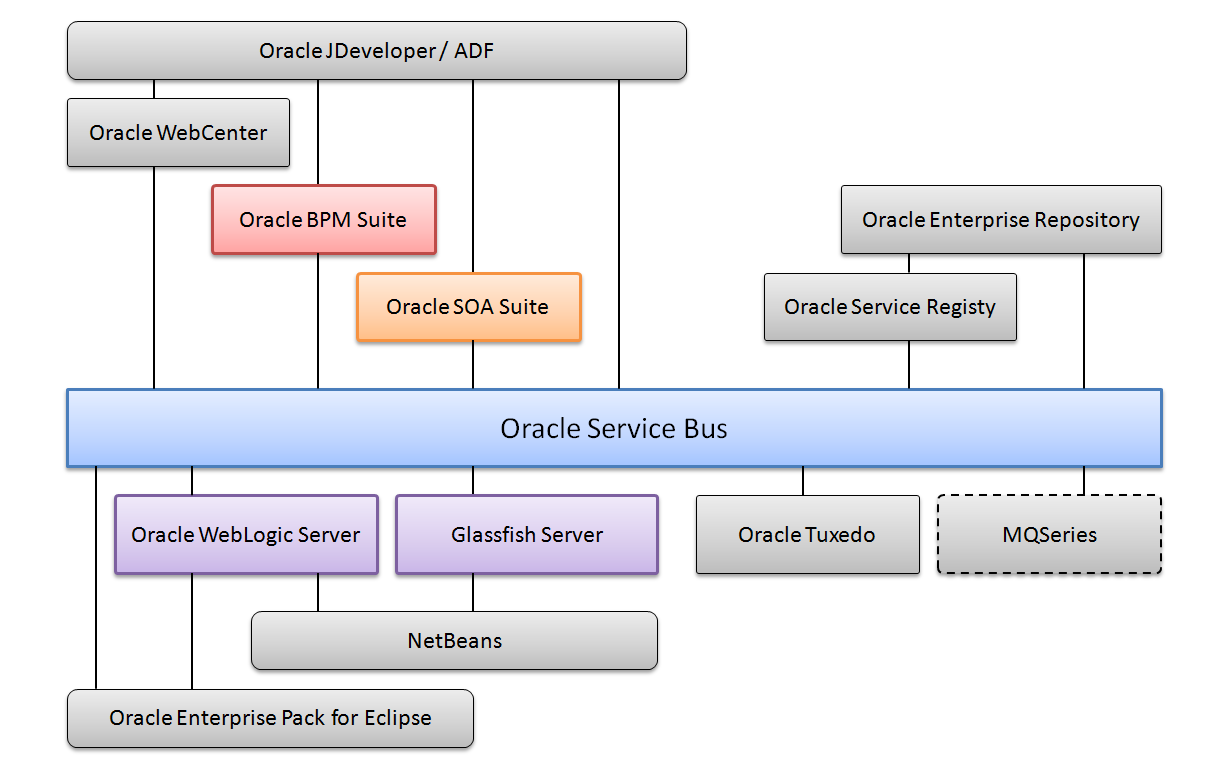
The following two recipes provide firstly a no-nonsense explanation of Service Oriented Architecture (the first part is not related to Oracle at all !) and secondly an overview of Oracle’s Fusion Middleware (OFM) product stack.

ofm stack

The description is deliberately easy to read and I intentionally didn’t reuse any fancy marketing slides since they are often too generic and contain too many buzzwords. Read the full article here.

SOA & BPM Partner Community

For regular information on Oracle SOA Suite become a member in the SOA & BPM Partner Community for registration please visit www.oracle.com/goto/emea/soa (OPN account required) If you need support with your account please contact the Oracle Partner Business Center.

Blog Twitter LinkedIn image[7][2][2][2][2][2][2][2] Facebook clip_image002[8][4][2][2][2][2][2][2][2] Wiki Mix Forum

SOA Blueprint: A Toolbox for Architects – article at OTN and Service Technology Magazine

image32

this article introduces the foundations that need to be established in order to implement functional SOA processes. Rather than presenting specific tools, we will define a broadly applicable SOA blueprint whose individual modules can be topped up with commercial products or increasingly available open
source offerings.

A Company Blueprint

Upon examination of Figure 1, the vision of adaptive enterprise computing is illustrated as a meta-blueprint for the overall company with three differentiated levels:

  • Infrastructure Level – This level is formed by databases, storage systems, application servers, and all other IT resources that are required to run IT systems.
  • Application System Level – This level houses entire applications, both individual applications and standard software, as well as services relating to SOA, workflow and BPM systems.
  • Process Management Level – Functional requirements are manifested in the process design and then implemented at the lower levels.

Figure 1An advanced service-oriented architecture is the most effective option for implementing the functional requirements at the application-system level. The more superior the mapping of existing business services to the functional steps in process models is, the more the business-IT gap shrinks.

Various back-coupling loops represent the actual added value of this meta-blueprint, meaning consistent usage of services and technical processes enables the measuring of KPIs. This in turn facilitates process control and ultimately the optimization of processes. The more progress a company makes in implementing their SOA, the greater and faster are the effects to be achieved for adaptive
enterprise computing. … read the full article here

The articles is published at OTN and the Service Technology Magazine.

Send us your feedback Twitter @twitter/soacommunity  #industrialSOA

Jürgen Kress  Hajo NormannClemens Utschig-UtschigTorsten WinterbergDanilo SchmiedelGuido SchmutzBernd TropsBerthold Maier

For further SOA publications please visit our wiki. Feel free to add your SOA & BPM publications!

SOA & BPM Partner Community

For regular information on Oracle SOA Suite become a member in the SOA & BPM Partner Community for registration please visit www.oracle.com/goto/emea/soa (OPN account required) If you need support with your account please contact the Oracle Partner Business Center.

Blog Twitter LinkedIn image[7][2][2][2] Facebook clip_image002[8][4][2][2][2] Wiki Mix Forum

Industrial SOA article at OTN and Service Technology Magazine

image3SOA and service-orientation have laid the foundation for a variety of emergent service technology innovations, while the original building blocks of SOA and service-orientation continue to evolve by embracing fundamental service technologies, concepts and practices. These new technology innovations do not replace service-orientation; they use it as their basis.

Service-orientation continues to evolve towards a factory approach, towards industrializing integrated platforms, such as BI, master data management (MDM), mobile front-ends, BPM, adaptive processes, Big Data and Cloud Computing – all of which add architectural layers upon SOA-based infrastructure. All of these technologies can interface via standardized data and functions, published as service contracts, in order to avoid redundancy – that’s service-orientation. Let’s take a closer look. The amount of data, which companies produce and store tends to grow on an on-going basis. This includes structured data (for example, from ERP systems or data warehouses), as well as unstructured data (for example, from e-mails). With the rise of social media services like twitter, Facebook, Pinterest and the emphasis on Customer Experience Management, the amount of data and data sources has increased dramatically. To integrate all of these data sources through an SOA-approach is essential. The models, principles and patterns behind SOA and service-orientation can be applied to formalize interoperability between… read the full article here

The articles are & will be published at OTN and the Service Technology Magazine.


Send us your feedback Twitter @twitter/soacommunity  #industrialSOA

Jürgen Kress  Hajo NormannClemens Utschig-UtschigTorsten WinterbergDanilo SchmiedelGuido SchmutzBernd TropsBerthold Maier

For further SOA publications please visit our wiki. Feel free to add your SOA & BPM publications!

SOA & BPM Partner Community

For regular information on Oracle SOA Suite become a member in the SOA & BPM Partner Community for registration please visit www.oracle.com/goto/emea/soa (OPN account required) If you need support with your account please contact the Oracle Partner Business Center.

Blog Twitter LinkedIn image[7][2][2][2] Facebook clip_image002[8][4][2][2][2] Wiki Mix Forum