Consume JSON based OData Service using SOA 12c by Krishna Hanumantharao

clip_image002

Please refer Consume OData using SOA 11g post for SOA 11g version.

As part of this post, we will see how to consume JSON based OData Service using SOA 12c.

OData

OData (Open Data Protocol), promoted by Microsoft, now an OASIS Standard,  helps service providers to expose their data using RESTful APIs. OData supports, exposing of data in two Formats, Atom and JSON. Please refer OData WebSite for information about OData.

Public OData Services

One of the publicly available OData Service can be accessed at Public OData Service

URI Notations

Let us create a SOA 12c composite to  consume the service for the following scenarios.

Following are the URI notations for

  • List All Categories in JSON Format

http://services.odata.org/V3/OData/OData.svc/Categories?$format=json

Integration Workload Statistics (IWS) on untyped JSON and JavaScript in Composites by Maarten Smeets


clip_image001SOA Suite 12.2.1 introduces Integration Workload Statistics. This is a powerful new feature which can be used to do performance measures. Oracle SOA Suite 12.2.1 also introduces untyped JSON support and JavaScript support in composites and Service Bus. What better way to take a good look at both features by doing some performance measures using IWS on composites using untyped JSON and JavaScript!

I created 4 HelloWorld BPEL processes. Two of them are SOAP services and two of them are JSON services (not REST since they do not conform to REST architecture style). Two of these processes contain an assign activity using a JavaScript expression and one of them uses XPATH. I used SOAPUI to fire lots of messages on all services and measured responses. At the same time I had IWS activated to collect data on my processes. The results are quite interesting!

IWS + SOAPUI vs untyped JSON and JavaScript support in SOA Suite 12.2.1

Integration Workload Statistics

Introduction

Integration Workload Statistics provides valuable performance related information on your SOA Suite environment. This ranges from JVM memory usage to duration of BPEL activities. It even provides insight in the functioning of the SOA Suite by providing information on the transfer of messages over composite wires. You can not use it on the integrated WebLogic server provided with the quickstart of JDeveloper though.

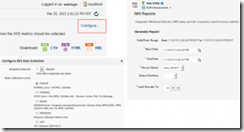
Using IWS is simple. First you have to activate it (it’s off by default) by right-clicking the soa-infra application, Monitoring, IWS Reports. Here you can click configure and set the level of detail. After you have applied this setting, you can run reports on the collected data. Report formats supported are CVS, XML and HTML. HTML provides a readable format which also contains some explanation on specific results. Read the complete article here.

SOA & BPM Partner Community

For regular information on Oracle SOA Suite become a member in the SOA & BPM Partner Community for registration please visit www.oracle.com/goto/emea/soa (OPN account required) If you need support with your account please contact the Oracle Partner Business Center.

Blog Twitter LinkedIn image[7][2][2][2] Facebook clip_image002[8][4][2][2][2] Wiki

New SOA Diagnostics Tool – IWS Reports – Overview by Malkit


clip_image002Introduction

Among many new features added for 12.2.1 version of Oracle Fusion Middleware (announcement link) and demoed at this year’s recently concluded Oracle Open World, I’m particularly excited about brand new diagnostics feature of Oracle SOA Suite called IWS Reports – being the lead designer and implementer of this project.

IWS stands for Integration Workload Statistics and is intended to provide Oracle DB AWR like diagnostics for SOA applications. At high level, IWS can help user with two common challenges faced in SOA:

1 – Scaling Issue

2 – Performance Bottlenecks

Diagnosing performance and scalability issues in SOA can be hard. Performance of a system depends on number of factors. SOA Systems pose particular challenge since large installations typically involves interactions between partners and services – internal and external, stateful and stateless components, synchronous and asynchronous communications, deployment over multi-domain clusters etc.

Main causes for performance/scalability issues:

  1. Insufficient resources – CPU/Memory/network bandwidth
  2. Improper configurations – thread pools/data-sources etc.
  3. Slow partners
  4. Slow database (back-end)
  5. Lower stack (such as application server or operating system) performance issues

The above causes can manifest in following:

  • Lower overall throughput
  • Large increase in response time
  • Backups in global queues
  • System stuck in extreme cases
  • Random errors/non-deterministic behavior (extreme low memory situations)

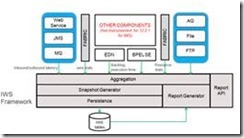
IWS Reports provide variety of statistics such as system resource usage, message flows at key points in the system, backlogs at various components and activity execution times which can diagnose performance/scaling issues.

IWS in nutshell

  • Helps in identifying bottlenecks and/or backups in the system
  • Useful for tuning for scaling or performance improvement
  • Snapshot based (configurable)/Automatic 
  • Central – collects stats from components and bindings/adapters in single output
  • Lends top-down/outside-in or direct analysis
  • Statistics maps to user application/project environment
  • Single point filtering based on Application/Composite/Component
  • Adds very little memory/processing overhead. Can be left always-on in production systems (off by default)
  • Snapshots persisted – for historical analysis/bench-marking/baseline and snapshot comparison

Note that there are two patents pending around concepts of diagnostics and backlog calculations as used in IWS Reports.  Read the complete article here & part 2 here & part 3 here & part 4 here & part 5 here

SOA & BPM Partner Community

For regular information on Oracle SOA Suite become a member in the SOA & BPM Partner Community for registration please visit www.oracle.com/goto/emea/soa (OPN account required) If you need support with your account please contact the Oracle Partner Business Center.

Blog Twitter LinkedIn image[7][2][2][2] Facebook clip_image002[8][4][2][2][2] Wiki

12c XSLT Editor – XSLT View Overview


clip_image002XSLT View is one of two graphical views provided by the new 12c XSLT Editor. 

(For a quick introduction to the graphical views in the 12c XSLT Editor see here.)

XSLT View provides the ability to edit any XSLT file graphically. It is intended for XSLT developers who have a general understanding of XSLT and have written XSLT source code in a text editor.

XSLT View is effectively a graphical source view. It has many advantages over editing XSLT source in a text editor.  Many of these are listed in the XSLT Editor Overview at the link above.  I think the best way to show these advantages is through specific examples.  In this post I will use an identity template to create a complex XSLT map.

For our example we will work with a PurchaseOrder to PurchaseOrder map.

Our goal for this map is to copy the source tree to the target tree, and while we are doing the copy, we want to copy the ShipTo CustomerName value into the BillTo Address, so that when we are done, the ShipTo and BillTo elements will both use the same CustomerName.

We could do this by explicitly mapping each node, however, we can also use an identity template to copy the source.  Identity templates are often used to copy an input document to the output document, but make some modification while the copy is being done. If the source input at runtime is small compared to the number of elements defined in the source schema, it can be significantly faster to copy the tree using an identity template, compared to creating explicit XSLT statements for every node in the schema. Read the complete article here.

SOA & BPM Partner Community

For regular information on Oracle SOA Suite become a member in the SOA & BPM Partner Community for registration please visit www.oracle.com/goto/emea/soa (OPN account required) If you need support with your account please contact the Oracle Partner Business Center.

Blog Twitter LinkedIn image[7][2][2][2] Facebook clip_image002[8][4][2][2][2] Wiki

Monitor SOA Suite service response times with Splunk by Maarten Smeets


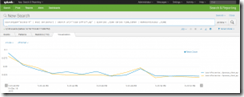
clip_image001Measuring performance of services can be done in various ways. In this blog article I will describe a method of measuring Oracle SOA service response times with Splunk a popular monitoring tool. In order to monitor service response times with Splunk, Splunk needs to obtain its data from somewhere. In this example I’ll use the HTTP access log which I expand with a time-taken field. Disclaimer; my experience with Splunk is something like 2 hours. This might also be an indication of what can quickly be achieved with Splunk with little knowledge.

Making service response times available

log_policy

At first I thought about using the OWSM policy oracle/log_policy. This policy can be applied to an endpoint. The policy logs request and response messages. There is however not (without alteration of the policy) a way to correlate the request with the response message. See the image below. An ECID is logged, but the ECID can differ for a request and response. The ECID can also be the same for different requests in a call chain. Several HTTP or SOAP headers could potentially be used for this, but they have to be present in the request and in the response. This can require some work, especially if you want to add them in the request, since all consumers need to use these headers.

Correlation of request and response messages is not possible OOTB with the log_policy

access.log

The access.log file stores by default some data on HTTP requests such as timestamp, HTTP status code, url and the size of the request. This can easily be expanded with the time which is required to process a request. You can configure this from the WebLogic Console. Go to your server, Logging, HTTP and click the Advanced button. Here you can add time-taken as a field to log in the Extended Logging Format Fields. Read the complete article here.

SOA & BPM Partner Community

For regular information on Oracle SOA Suite become a member in the SOA & BPM Partner Community for registration please visit www.oracle.com/goto/emea/soa (OPN account required) If you need support with your account please contact the Oracle Partner Business Center.

Blog Twitter LinkedIn image[7][2][2][2] Facebook clip_image002[8][4][2][2][2] Wiki

VirtualBox with SOA, BPM, OSB and BAM in 33 minutes by Peter van Nes

clip_image002

The Oracle Quick Start installers for Developers are great for probably many developers, but they are limited. Shutting down (or crashing of) JDeveloper will shutdown the domain and there are separate Quick Start installers for SOA and BPM suite. When installing a SOA or BPM environment for development or research purposes i prefer an environment which is more close to a production configuration. Setting up an new environment can take some time when you have to go through the wizards and remembering the options chosen the previous time you installed. Therefore i scripted the installation proces, the scripts are divided per product so that i a later stage easily can replace specific stages in the installation proces and am not bound to a specific virtualization product or installation tool.

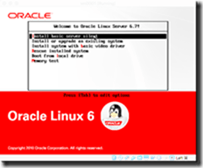
In this article i will show you how to configure a VirtualBox machine, install Oracle Linux 6U7, Oracle BPM (including SOA), OSB & BPM. And configure a Weblogic 12cR1 domain with separate managed servers forSOA/BPM, OSB and BAM in less than 33 minutes. Read the complete article here.

SOA & BPM Partner Community

For regular information on Oracle SOA Suite become a member in the SOA & BPM Partner Community for registration please visit www.oracle.com/goto/emea/soa (OPN account required) If you need support with your account please contact the Oracle Partner Business Center.

Blog Twitter LinkedIn image[7][2][2][2] Facebook clip_image002[8][4][2][2][2] Wiki

Integration with new Oracle Integration Cloud Service (ICS) by ec4u


clip_image002Since a few years cloud computing has become more and more popular. The main types of cloud computing are Infrastructure as a Service (IaaS), Platform as a Service (PaaS) and Software as a Service (SaaS). In the past, several subareas have been established in the market and pushed by research companies. One subarea is Integration PaaS (IPaaS)  and a variety of vendors have provided solutions. One advantage of IPaaS solutions is the simplified integration. Furthermore, IPaaS provides the capability to integrate cloud- and on-premise applications. Oracle announced Integration Cloud Service (ICS) as an IPaaS solution in June.
This article describes a first impression and the key components of ICS.

First experience with ICS

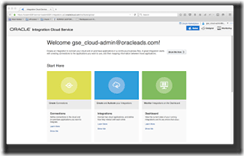
After the login to ICS, you will get greated with an organized and clean overview. The page provides an overview on the three main functional areas. Figure 1 shows the areas and the simple and tablet-friendly user interface. The functional areas are divided into Connections, Integrations and Dashboard.

Figure 1: ICS Start Page (click on the picture to see an enlarged version of the picture)

The Connections-area provides the capabilities to define configurations to specific application endpoints. These configurations are based on technology adapters such as SOAP, application adapters for on premise application e.g. eBusiness Suite and cloud adapters for cloud applications e.g. Oracle Sales Cloud. The connection could be used for several integrations and one of the main benefits is the reusability of the configuration. In addition, the integration developer does not need to know details about the service or application when using the preconfigured adapter.
The most important functional area is Integrations. It provides the functions to develop the integration flows and lookups. The overview page shows all integrations with the possibility to filter by status. The user interface to develop the integration is kept as simple as possible.
Figure 2 shows the integration development and the clean interface you will already know from the overview. Target, source and transformation are the key elements of an integration scenario. The source and target can be defined with preconfigured connections or technology adapters such as Rest or SOAP. The transformation for request and response messages is placed in the middle of the screen. Read the complete article here.

SOA & BPM Partner Community

For regular information on Oracle SOA Suite become a member in the SOA & BPM Partner Community for registration please visit www.oracle.com/goto/emea/soa (OPN account required) If you need support with your account please contact the Oracle Partner Business Center.

Blog Twitter LinkedIn image[7][2][2][2] Facebook clip_image002[8][4][2][2][2] Wiki

ICS Integration Patterns (Part 1 of 3): Map My Data by Antonis Antoniou

clip_image001

Oracle Integration Cloud Service (ICS) is another powerful yet simple Cloud platform offering by Oracle that simplifies the development of cloud and hybrid integrations (applications in the cloud and on premises).
The entire integration development and operational lifecycle is managed through a web based service console offering a point and click integration and monitoring experience without having to write a single line of code.
Furthermore Oracle ICS supports various industry standards like SOAP and REST and comes with a set of cloud adapters providing pre-integration capabilities with several SaaS applications (such as Oracle ERP Cloud, Oracle HCM Cloud, Oracle Sales Cloud, Oracle RightNow, Eloqua, NetSuite and Salesforce) shortening the time-to-market in integration projects.
The concepts in Oracle ICS are really simple; you create connections (using the pre-defined offered adapters) and leverage those connections to create integrations which you can then dashboard monitor to track the current state of your running integrations and fix any errors that might occur. Read the complete article here.

SOA & BPM Partner Community

For regular information on Oracle SOA Suite become a member in the SOA & BPM Partner Community for registration please visit www.oracle.com/goto/emea/soa (OPN account required) If you need support with your account please contact the Oracle Partner Business Center.

Blog Twitter LinkedIn image[7][2][2][2] Facebook clip_image002[8][4][2][2][2] Wiki

SOA CS –> API Manager Flavour by Niall Commiskey


clip_image002This is essentially a revamp of a previous post on API Manager,
albeit for the SOA CS environment.
You can read the original post here
I created an API Manager instance on SOA CS –

Let’s look at the Fusion Middleware Control –
Here we can create API Manager users.
I have covered this is a previous API Manager post, but to save you time,
here are the screenshots – Read the complete article here.

To request a free SOA CS trial service please visit our SOA Partner Community Workspace here (SOA Community membership required)

SOA & BPM Partner Community

For regular information on Oracle SOA Suite become a member in the SOA & BPM Partner Community for registration please visit www.oracle.com/goto/emea/soa (OPN account required) If you need support with your account please contact the Oracle Partner Business Center.

Blog Twitter LinkedIn image[7][2][2][2] Facebook clip_image002[8][4][2][2][2] Wiki

Five Ways Cloud-Based Integration Is Driving Innovation – Whitepaper


clip_image001With businesses adopting more and more cloud applications, mobile apps, and devices, integration has never been more important. Integrating these apps and tools with the rest of the systems is the key to a connected enterprise— one that supports real-time responsiveness, instant collaboration, and streamlined innovation. To keep up with these new integration demands, a new breed of solution has emerged—cloud-based integration platforms (also called integration platform as a service, or iPaaS for short). For businesses looking to gain all of the benefits of a connected enterprise, while also simplifying administration and accelerating time to market, they’re a game-changer. They’re fueling a hybrid approach to integration—one that combines on-premises integration with iPaaS

to respond to business requirements faster—but that’s just the start. Read on and discover five key ways cloud-based integration platforms are transforming the way organizations integrate, making innovation simpler than ever before. Get the whitepaper here.

SOA & BPM Partner Community

For regular information on Oracle SOA Suite become a member in the SOA & BPM Partner Community for registration please visit www.oracle.com/goto/emea/soa (OPN account required) If you need support with your account please contact the Oracle Partner Business Center.

Blog Twitter LinkedIn image[7][2][2][2] Facebook clip_image002[8][4][2][2][2] Wiki