Oracle Cloud Platform Test Drive March 22nd in Madrid and March 23rd in Barcelona

Avanttic - Oracle Cloud Plarform Test Drive (Madrid, 22-03-17 - Barcelona, 23-03-17)

Evento: Hands-on para explorar los nuevos servicios de Oracle en la nube

El Cloud ha llegado para quedarse y sabemos que su departamento de IT escogerá la manera más óptima de acceder a él. Nuestro objetivo es enseñarle cómo combinar las tecnologías on-premise con herramientas nacidas en Cloud, para conseguir una arquitectura híbrida que le proporcione lo mejor de ambos mundos.

Por este motivo avanttic y Oracle hemos organizado una sesión práctica, a través de la cual tendrá acceso a varios de los Servicios Cloud del PaaS de Oracle y dónde expertos profesionales le guiarán en esta inmersión en el cloud: definiendo procesos, configurando integraciones y desplegando aplicaciones.

Los escenarios propuestos no serán complejos y no se precisa experiencia previa. Utilizando su propio portátil podrá conocer cada servicio y cómo encajan en un ecosistema moderno e híbrido.

¡Le invitamos a disfrutar de esta experiencia o a compartir esta invitación con alguien del equipo de arquitectura o de desarrollo de su organización!

Avanttic - Oracle Cloud Plarform Test Drive (Madrid, 22-03-17) Madrid Miércoles, 22 Marzo 2017

Avanttic - Oracle Cloud Plarform Test Drive (Barcelona, 23-03-17) Barcelona Jueves, 23 Marzo 2017

For details please visit the registration page here.

SOA & BPM Partner Community

For regular information on Oracle SOA Suite become a member in the SOA & BPM Partner Community for registration please visit www.oracle.com/goto/emea/soa (OPN account required) If you need support with your account please contact the Oracle Partner Business Center.

Blog Twitter LinkedIn image[7][2][2][2] Facebook clip_image002[8][4][2][2][2] Wiki

SOA & BPM Community Newsletter February 2017

Dear SOA & BPM Partner Community,

Oracle acquired Apiary the leading solution for API Design and Governance. Together with Oracle API Cloud Service to secure, consume, monetize and analyze APIs, are a winning solution for the digital economy. During the PaaS Partner Community Forum you will learn more about latest updates on the API Cloud Platform including a hands-on training. In case you can not make it to Split, every months we offer free on-demand Bootcamps for SOA Suite 12c and BPM Suite 12c, for details please visit the community training calendar (membership required).

Special thanks to Robert and Phil, they just published the first book on Oracle Integration Cloud Service. You are interested to publish a book, read the authors journey and let us know we are happy to support! For additional Integration books visit our wiki here.

Thanks to the community for sharing all the SOA articles: For Each activity for processing batches & Scheduling Orchestration Integrations & Hybrid IT Integration Use Cases Poster & Integration OUGN SIG & Getting the best Oracle API information with Swagger and a pinch of NodeJS & API Management "Cool Apps" by Denver Metro RTD & Complex Composites Simplified & Building OSB 12c releases on resource level using Maven & Service Bus 12c QuickTip: Fix HTTP 403 on calling SOAP/REST Proxy Services.

To keep track with all the latest updates of Process Cloud Service make sure to follow the blog from Antonis Antoniou. To get a head start of Process Cloud Service read the introduction post from Andreas Chatziantoniou. Special thanks to Marcel for his article series on Business Activity Monitoring (BAM). BAM is key to show business value to the stakeholder and can be used in SOA Suite and BPM Suite scenarios: Impact of ACM Implementation on BAM & Filtering/grouping in BAM by ‘specific’ metrics & Fool BAM with database hack & Populating BAM using JMS & BAMCommand. Thanks to the community for sharing all the BPM articles: PCS Web Form Tips and Tricks – Part 1 & Actionable Email Templates in Oracle Process Cloud Service by Antonis Antoniou & ADF Autogeneration from Oracle BPM Human Tasks & WfMC Awards submission open for Excellence in Case Management

In our last section Architecture & PaaS4SaaS the UX team highlights the extension of HCM SaaS solutions with Application Builder Cloud Service.

For a short summery of our key monthly information watch the Fusion Middleware & PaaS Partner Updates on YouTube. The February edition of the PaaSPartner Update contains details about the community conference, developer gateway & code events and the upcoming community webcast about Mobile Cloud Service and Chat Bots on February 28th 2017. See you in Croatia!

Want to publish your best practice article & news in the next community newsletter? Please feel free to send it via Twitter @soaCommunity #soaCommunity!

My personal goal is to reach 10.000 partner community members, therefore I need your support! Please make sure that you invite your teams to join the SOA & BPM Partner Community and the WebLogic & Developer Partner Community.

To read the newsletter please visit http://tinyurl.com/PaaSNewsFebruary2017  (OPN Account required)

Please like and share the newsletter at Twitter and LinkedIn.

Jürgen Kress

Fusion Middleware Partner Adoption
Oracle EMEA
Tel. +49 89 1430 1479
E-Mail: juergen.kress@oracle.com
clip_image003Blog clip_image004LinkedIn clip_image005 Twitter

To become a member of the SOA Partner Community please register at http://www.oracle.com/goto/emea/soa (OPN account required) If you need support with your account please contact the Oracle Partner Business Center.

Newsletter Logo 2017

Blog Twitter LinkedIn image[7][2][2][2] Facebook

Technorati Tags: newsletter,SOA Community newsletter,SOA Community,Oracle,OPN,Jürgen Kress

FMW SOA Monitoring Module is released. (Supports 11g and 12c)

image

WLSDM SOA Monitoring, Diagnostics & Report Modules

  • SOA Smart Dashboards
    • Monitoring BPEL Engine (Only 11g)
    • BPEL Engine Dashboard (Historical – Only 11g)
    • Monitoring Composite Performance
    • Monitoring Callback and Invoke
    • Monitoring Composite Faults
    • Monitoring Deployed Composites Trend
    • Summarizing Composite List & Endpoint URIs
  • SOA Notifications and Alarms
    • BPEL Engine Notifications
    • Composite Performance Notifications
    • Callback and Invoke (DLV_MESSAGE) Notifications
    • Composite Faults and Errors Notifications
  • SOA Reports
    • Reporting SOA BPEL Engine
    • Reporting SOA Composite Performance
    • Reporting SOA Callback and Invoke (DLV_MESSAGE)
    • Reporting SOA Composite Faults and Errors

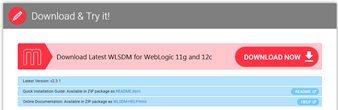
Get WLSDM here.

SOA & BPM Partner Community

For regular information on Oracle SOA Suite become a member in the SOA & BPM Partner Community for registration please visit www.oracle.com/goto/emea/soa (OPN account required) If you need support with your account please contact the Oracle Partner Business Center.

Blog Twitter LinkedIn image[7][2][2][2] Facebook clip_image002[8][4][2][2][2] Wiki

Deploying Oracle Service Bus (OSB) Projects with Configuration Files in FlexDeploy by Greg Draheim

image

OSB Configuration files allow the developer to manage environment specific values during deployment.  FlexDeploy supports the use of these configuration files and extends them to using tokens in the configuration file that will get replaced with configured properties from FlexDeploy.   This way we do not need to generate a customization file for every environment where we are going to deploy the project.  We can have one configuration file that will work across environments.

My example is built using JDeveloper and SOA 12.2.1.  I have an OSB project named ValidatePayment that is acting as a proxy service for a SOA service:

The ValidateBS when I run locally, refers to localhost:

When I deploy this to our shared development environment, I want to replace http://localhost.flexagon:7001/ with http://soalt05.flexagon:7001/.  When I deploy to production, I want the URL to be http://soa.flexagon.com/.  To accomplish this I add a property to my OSB Deploy workflow in FlexDeploy.  First, I will show the full workflow for the OSB deploy.  Since FlexDeploy has smart plugins, the deploy workflow is a simple 1 step process to import the OSB project: Read the complete article here.

SOA & BPM Partner Community

For regular information on Oracle SOA Suite become a member in the SOA & BPM Partner Community for registration please visit www.oracle.com/goto/emea/soa (OPN account required) If you need support with your account please contact the Oracle Partner Business Center.

Blog Twitter LinkedIn image[7][2][2][2] Facebook clip_image002[8][4][2][2][2] Wiki

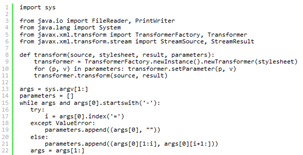
Seamless source “migration” from SOA Suite 12.1.3 to 12.2.1 using WLST and XSLT by Maarten Smeets

image

When you migrate sources from SOA Suite 12.1.3 to SOA Suite 12.2.1, the only change I’ve seen JDeveloper do to the (SCA and Service Bus) code is updating versions in the pom.xml files from 12.1.3 to 12.2.1 (and some changes to jws and jpr files). Service Bus 12.2.1 has some build difficulties when using Maven. See Oracle Support: “OSB 12.2.1 Maven plugin error, ‘Could not find artifact com.oracle.servicebus:sbar-project-common:pom’ (Doc ID 2100799.1)”. Oracle suggests updating the pom.xml of the project, changing the packaging type from sbar to jar and removing the reference to the parent project. This however will not help you because the created jar file does not have the structure required of Service Bus resources to be imported. To deploy Service Bus with Maven I’ve used the 12.1.3 plugin to create the sbar and a custom WLST file to do the actual deployment of this sbar to a 12.2.1 environment. A similar solution is described here.

Updates to the pom files can easily be automated as part of a build pipeline. This allows you to develop 12.1.3 code and automate the migration to 12.2.1. This can be useful if you want to avoid keeping separate 12.1.3 and 12.2.1 versions of your sources during a gradual migration. You can do bug fixes on the 12.1.3 sources and compile/deploy to production (usually production is the last environment to be upgraded) and use the same pipeline to compile and deploy the same sources (using altered pom files) to a 12.2.1 environment. Read the complete article here.

SOA & BPM Partner Community

For regular information on Oracle SOA Suite become a member in the SOA & BPM Partner Community for registration please visit www.oracle.com/goto/emea/soa (OPN account required) If you need support with your account please contact the Oracle Partner Business Center.

Blog Twitter LinkedIn image[7][2][2][2] Facebook clip_image002[8][4][2][2][2] Wiki

Converting ADLs to implement end to end JSON in SOA Suite 12.2.1 -PART I by Luis Augusto Weir

clip_image002


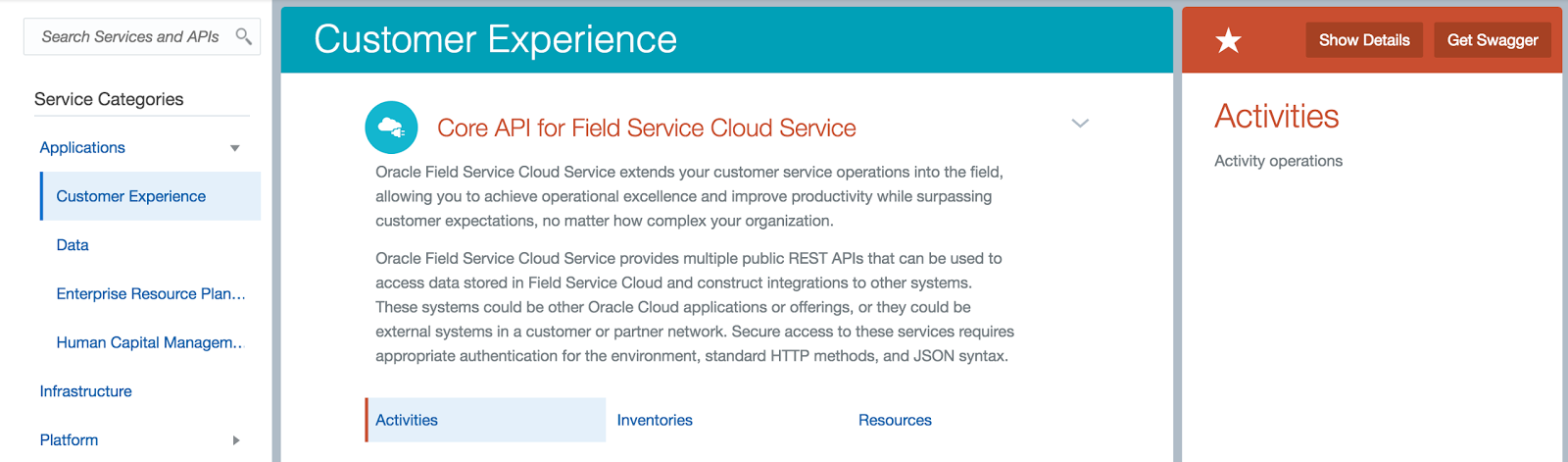
There is no doubt that web [Rest] APIs have become extremely popular and its usage has gone well beyond just building APIs in support of mobile apps. We can see the adoption of resource-oriented architectures (ROA) by probably all SaaS vendors who provide out-of-the-box APIs as the means to connect and interact with their cloud applications. Take for example the Oracle Cloud. To discover and consume publicly available Oracle SaaS APIs, all one need to do is browse the Oracle API Catalog Cloud Service (which is publicly accessible) and just select the Swagger definition for any given API.

But (as you probably already know) the adoption of web APIs hasn’t stopped there.  With the increased popularity of Microservice Architectures , initiatives such as Open Legacy ,  and node.js based frameworks like loopback and sails (to name a few), API-enabling system of records is becoming a lot easier.
This is putting a lot of pressure in software vendors to quickly modernise their integration suites to natively support the technology-stacks and patterns prevalent in these type of architectures. For example, if an organisations mobile application needs to interact with a system of record (on premise or the cloud) that already exposes a web API, the integration stack should be capable of supporting JSON over HTTP end-to-end without having to convert to XML back and forth. Not only is this impractical but introduces more processing burden to the core stack…
Luckily for many Oracle’s customers and Oracle Fusion Middleware / Oracle PaaS practitioners like myself, with the latest release of Oracle SOA Suite (12.2.1) , one of the many new features introduced is the support for handing JSON end-to-end.  I don’t want to understate the importance of this as with such feature it is possible to use BPEL for example to orchestrate several APIs (all in native JSON and also in-memory with the new SOA in-memory feature) and therefore deliver coarse grained business APIs that actually perform.
For me this represents an important milestone for Oracle SOA Suite as it shows the departure from traditional SOA tech-stack and into SOA 2.0 (as I like to call it) as the suite is now better suited to support the adoption of ROA, microservices, IoT, and so on. Having worked with SOA Suite since 10.1.3.1 this is very exiting. Read the complete article here.

SOA & BPM Partner Community

For regular information on Oracle SOA Suite become a member in the SOA & BPM Partner Community for registration please visit www.oracle.com/goto/emea/soa (OPN account required) If you need support with your account please contact the Oracle Partner Business Center.

Blog Twitter LinkedIn image[7][2][2][2] Facebook clip_image002[8][4][2][2][2] Wiki

How Dev/Test in the cloud is accelerating delivery of Oracle Middleware projects by Matt Wright

clip_image002


The source of competitive advantage and value that an organization delivers to its end customers is increasingly defined by the software “systems” that underpin them. As a result, organizations find themselves in a digital race, where the speed at which IT can reliably deliver new features and innovations is what sets them apart from their competition.

In an industrial company, avoid software at your own peril . . . a software company could disintermediate GE someday, and we’re better off being paranoid about that.”

Jeff Immelt, CEO, General Electric

These innovations are seldom delivered by pre-packaged business applications, whether running on-premise or delivered as Software as a Service (SaaS), but by custom solutions derived in-house. Yet, most organizations have neither the time nor funds to build these systems of innovation from the ground up. Instead, they are delivered by layering new capabilities on top of existing applications, an approach defined by Gartner as “Pace-Layered”.

Oracle Middleware, such as the Oracle BPM Suite and Oracle SOA Suite provides the application glue to rapidly and continually combine these business apps, like puzzle pieces, into a custom integrated solution in order to deliver a seamless and unified experience to the customer.

Yet even with this Pace-Layered approach, many IT projects are still failing to deliver either on-time or on-budget, with development teams often held back by their own IT organization. So how can you reduce the cost of the software you develop and decrease the time it takes to get it right?

Research shows moving development to the cloud can initially reduce development time by an order of 11 to 20 percent. Organizations that fully embrace the cloud for Dev and Test are experiencing 30%+ time savings upon maturing their DevOps capabilities. Read the complete article here.

SOA & BPM Partner Community

For regular information on Oracle SOA Suite become a member in the SOA & BPM Partner Community for registration please visit www.oracle.com/goto/emea/soa (OPN account required) If you need support with your account please contact the Oracle Partner Business Center.

Blog Twitter LinkedIn image[7][2][2][2] Facebook clip_image002[8][4][2][2][2] Wiki

Real-Time Integration Business Insight: External Dashboard


clip_image002

This video demonstrates how to include external dashboards in Oracle Real-Time Integration Business Insight. Watch the video here.

SOA & BPM Partner Community

For regular information on Oracle SOA Suite become a member in the SOA & BPM Partner Community for registration please visit www.oracle.com/goto/emea/soa (OPN account required) If you need support with your account please contact the Oracle Partner Business Center.

Blog Twitter LinkedIn image[7][2][2][2] Facebook clip_image002[8][4][2][2][2] Wiki

Tapping into life – An Introduction to Stream Analytics by Jose Rodrigues

clip_image001Welcome to a new stream (no pun intended) on Red Mavericks articles. This time, we’ll be doing an introduction on Oracle’s new Stream Analytics.

We’ll be guiding you through this new, and very cool, product showing what it is and what it can do to leverage this largely untapped resource which is event stream analysis. In fact, streams are everywhere and are becoming more and more open and accessible. If you “wiretap” these, listen to them and understand the behavioral patterns , you can build extremely valuable applications that will help you deliver more to your customers.

It’s a whole new ball game. I hope you find this interesting.

What is Oracle Stream Analytics?

Oracle Stream Analytics (previously Oracle Stream Explorer) is, in fact, an application builder platform, focused on applications that process events coming from the most various systems, internal or external to the organization, thus enabling Business Insight information and deriving relevant data from these events.

It works using an Event Processing Engine to perform Fast Data Analysis over a large number of events that typically appear in a given timeframe.

It also provides a run-time platform that will allow you to run and manage the applications you built.

It’s not a new Oracle Event Processor. It uses OEP as the underlying Event Processing Engine (you can also use Apache Spark as a processing engine, if you prefer. More on this in other articles)

The real power in Oracle Stream Analytics is, curiously, in its UI. As an application builder, it went to great lengths to keep the UI really easy to use. The result is, in my view, very well achieved, with enough simplicity to allow that Business Users, provided they have a bit of technical knowledge, can actually build  applications on their own or with little help from the IT. Read the complete article here.

SOA & BPM Partner Community

For regular information on Oracle SOA Suite become a member in the SOA & BPM Partner Community for registration please visit www.oracle.com/goto/emea/soa (OPN account required) If you need support with your account please contact the Oracle Partner Business Center.

Blog Twitter LinkedIn image[7][2][2][2] Facebook clip_image002[8][4][2][2][2] Wiki

Stream Analytics (OSA): the new Oracle Stream Explorer by Guido Schmutz

clip_image002

A few days ago, Oracle released the new version of Oracle Stream Explorer and renamed it to Oracle Stream Analytics (OSA). This new version is an impressive release with over 15 new major features! It really deserves the name change.

Enhanced Patterns Library

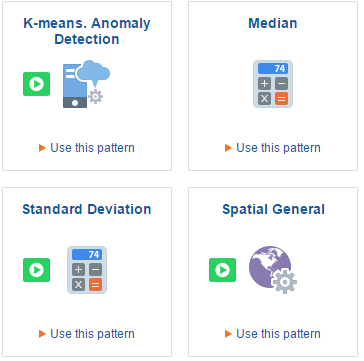
The existing patterns have been enhanced substantially  now including Spatial, Statistical, General industry and Anomaly detection through streaming machine learning.

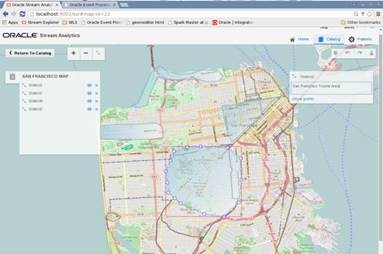
New Geo-spatial pattern

This pattern can be used to analyze streams containing geo-location data and determine how events relate to pre-defined geo-fences in your maps.

Integrated Expression Builder

The Expression Builder allows to add calculated/derived fields on the Live Output Stream of an exploration, an important step towards the “streaming Excel sheet” idea of Oracle Stream Analytics.

It provides the ability to apply and insert mathematical and statistical calculations into the active live output stream. Once a new expression has been defined and validated, a column will be added next to the column of relevance. This new column can then be used in subsequent filters and explorations. Read the complete article here.

SOA & BPM Partner Community

For regular information on Oracle SOA Suite become a member in the SOA & BPM Partner Community for registration please visit www.oracle.com/goto/emea/soa (OPN account required) If you need support with your account please contact the Oracle Partner Business Center.

Blog Twitter LinkedIn image[7][2][2][2] Facebook clip_image002[8][4][2][2][2] Wiki