Correlations in Oracle BPM 12c by Antonis Antoniou

clip_image001


Correlations in Oracle Business Process Management (BPM) is a special mechanism used to associate a message with a conversation between different partners in a business process.

There are two types of correlations:

  • Automatic: This is the default and out-of-the-box correlation used between two business partners which makes use of a special token called "Conversation Id" to uniquely associate a message with a conversation via Web Service Addressing (WS-Addressing) to correlate a callback message using the "Conversation Id".
  • Message Based: This type of correlation enables the definition and use of "business-friendly" information carried as part of the message payload to be used to uniquely identify and associate a message with a conversation (for example, OrderId, CustomerId, etc.). This type of correlation enables the definition of multiple attributes referred to as "Correlation Properties" into various correlation sets know as "Correlation Keys".

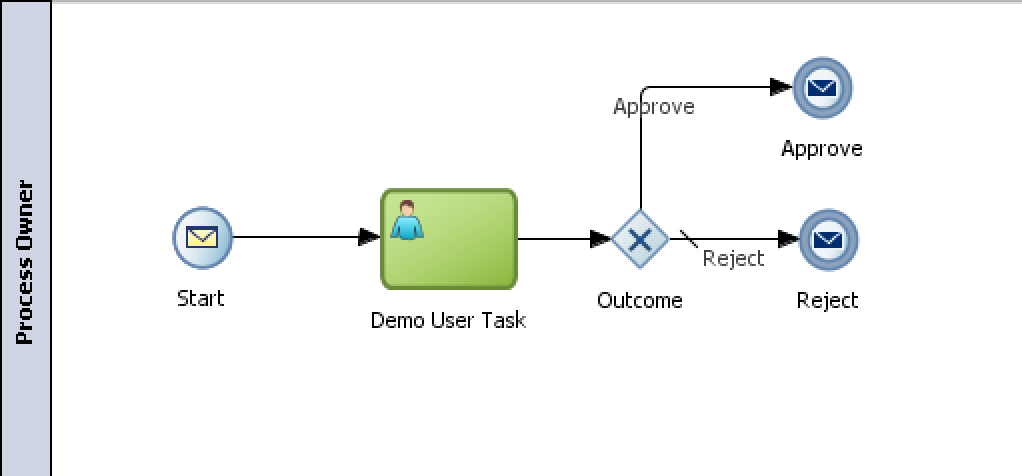
So let’s see how you to use the two correlation types in a demo scenario. The simulated process will invoke an asynchronous process first by using the default correlations and then by using message-based correlations.
Create the basic BPM application and BPM project (I named it OracleBPM12cCorrelationsDemoApp and OracleBPM12cCorrelationsDemo respectively) and choose "Composite with BPMN Process" in step 3 of the "Create BPM Application" and click “Finish”. Read the complete article here.

SOA & BPM Partner Community

For regular information on Oracle SOA Suite become a member in the SOA & BPM Partner Community for registration please visit www.oracle.com/goto/emea/soa (OPN account required) If you need support with your account please contact the Oracle Partner Business Center.

Blog Twitter LinkedIn image[7][2][2][2] Facebook clip_image002[8][4][2][2][2] Wiki

Rolling Up a BPM KPI into Business Architecture Models by Vikram

clip_image002


In BPM 12c, Key Performance Indicators (KPIs) can be used to measure the performance of the business process. You can use KPIs to improve the business process by identifying potential issues and addressing them. You can also roll up KPIs from an executable BPM process into a Business Architecture model.

To do this you need to publish your BPM project to the Process Asset Manager (PAM). You can add KPIs to the BPM Project in the Business Process Composer and then deploy the project. You can roll up this BPM KPI into a Business Architecture Model that links to it. This video walks through an example of how a KPI is rolled up into a Value Chain Model. It also does a quick walk through of the Process Criticality Report.

Video on Rolling up a BPM KPI into Business Architecture Models Watch the video here.

SOA & BPM Partner Community

For regular information on Oracle SOA Suite become a member in the SOA & BPM Partner Community for registration please visit www.oracle.com/goto/emea/soa (OPN account required) If you need support with your account please contact the Oracle Partner Business Center.

Blog Twitter LinkedIn image[7][2][2][2] Facebook clip_image002[8][4][2][2][2] Wiki

PaaS Podcast Series – The Oracle Process Cloud by Leon Smiers and Jeroen van Essen

clip_image002


In this series we will walk through different cloud products and how SaaS and PaaS can be combined together and their use in different projects.
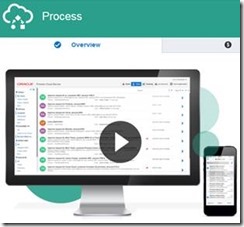
In this podcast we would like to introduce you to Oracle Process Cloud to a wider audience. Oracle Process Cloud is the part of Oracle PaaS Cloud and it focuses on delivering processes in Cloud.

This episode features Leon Smiers, Solution Architect in Capgemini and Oracle ACE and Jeroen van Essen, Capgemini BPM Specialist. Listen to the podcast here.

SOA & BPM Partner Community

For regular information on Oracle SOA Suite become a member in the SOA & BPM Partner Community for registration please visit www.oracle.com/goto/emea/soa (OPN account required) If you need support with your account please contact the Oracle Partner Business Center.

Blog Twitter LinkedIn image[7][2][2][2] Facebook clip_image002[8][4][2][2][2] Wiki

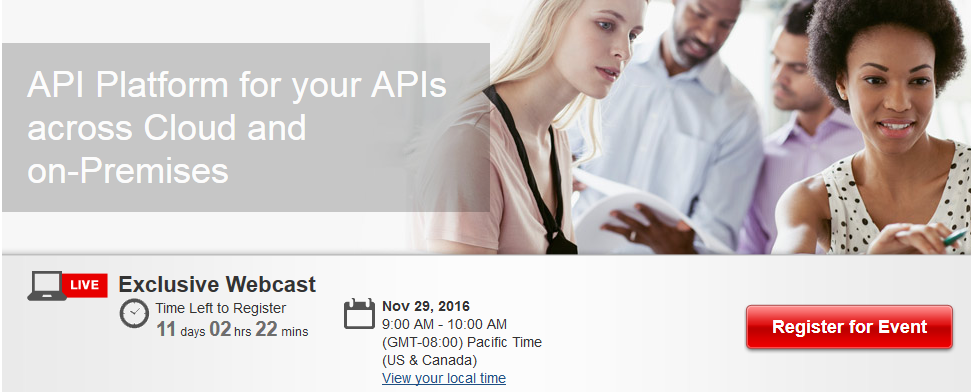
API Platform for your APIs across Cloud and on-Premises – Partner Webcast November 29th 2016

imageAPI Platform for your APIs across Cloud and on-Premises

Presenter: Robert Wunderlich, Oracle Senior Principal Product Manager

Webcast description

This is an introduction to API Platform due to release early 2017. API Platform allows you to design APIs in the cloud, and run them anywhere from Oracle Public Cloud, to Amazon, to Azure, or even on-premises. Come learn about how API Platform fits into a complete Integration Platform.

Presenter’s bio:

Robert is the outbound Product Manager for API Platform Cloud Service. Formerly the PM for Oracle Service Bus, his background is in Integration and Microservice Architectures.

Schedule:

November 29th 9:00 AM GMT

For details please visit the registration page here

SOA & BPM Partner Community

For regular information on Oracle SOA Suite become a member in the SOA & BPM Partner Community for registration please visit www.oracle.com/goto/emea/soa (OPN account required) If you need support with your account please contact the Oracle Partner Business Center.

Blog Twitter LinkedIn image[7][2][2][2] Facebook clip_image002[8][4][2][2][2] Wiki

Technorati Tags: SOA Community,Oracle SOA,Oracle BPM,OPN,Jürgen Kress

Error in getting XML input stream with Oracle Business Rules 12.2.1 by Jan van Zoggel

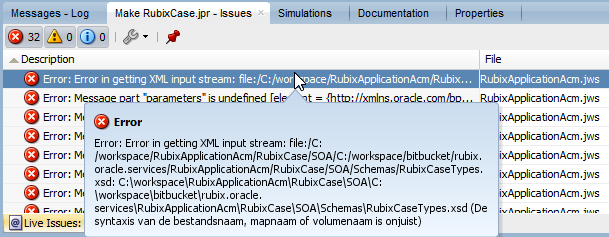
When trying to compile a Oracle ACM/BPM 12.2.1 project (with Oracle Business Rules) the following message throws up: “Error in getting XML input stream”

clip_image001

When Oracle Business Rules 12.2.1 generates it’s default XSD it uses the full system path instead of a relative path for it’s imports. So make sure to manually change the import configuration. Read the complete article here.

SOA & BPM Partner Community

For regular information on Oracle SOA Suite become a member in the SOA & BPM Partner Community for registration please visit www.oracle.com/goto/emea/soa (OPN account required) If you need support with your account please contact the Oracle Partner Business Center.

Blog Twitter LinkedIn image[7][2][2][2] Facebook clip_image002[8][4][2][2][2] Wiki

Process Cloud Service (PCS) – Release 16.1.3 (February) and Process Mobile App 2.0 is available

clip_image002


What’s New!

  • New Pricing Metrics
  • Sample Apps
  • Process Conversations
  • Enhanced Local and Remote App Deployment
  • New Tablet App
  • Start Process App from Mobile

New Pricing Metrics:

PCS pricing has moved to a 3-tier hosted named user model to accommodate varying levels of process service interaction from those who require full access to composition and management capabilities, to participants assigned review and approval tasks, to those whose interactions are limited to making service requests. This new pricing model helps maintain competitive pricing in use cases where there are large numbers of casual users. Below are the subscription pricing details. Metered pricing uses the same metrics at 2x the cost.

Oracle Process Cloud:

· $100 per Hosted Named User per Month

· Defined as a named user who can access analytics, compose applications and manage lifecycle

· Required minimum of 10 Users, 12-Months minimum contract

· Requires Oracle Process Cloud – Participant User

Oracle Process Cloud – Participant User:

· $30 per Hosted Named User per Month

· Defined as a named user who can participate in process approvals and tracking

· Required minimum of 10 Users, 12-Months minimum contract

· Requires Oracle Process Cloud

Oracle Process Cloud – Invocation User:

· $3 per Hosted Named User per Month

· Defined as a named user who can initiate a process and query status and notifications

· No minimum required – minimum of 100 Users if purchased, 12-Months minimum contract

· Requires Oracle Process Cloud

Sample Apps:

Sample Apps provide a quick and easy way to create and configure fully functional Process Apps with minimal technical knowhow. PCS includes a catalog of predefined ready to run Sample Apps that can be used both to provide first time designers a quick introduction to creating Process Apps and Business IT users easy to configure tailor made apps for a variety of use cases. IT and partners can publish their Process Apps as Sample Apps with specific pre-defined configurations allowing Business IT to quickly create, configure and deploy tailor made Process Apps.

Process Conversations:

Process Apps now support the addition of a process level conversation within the context of assigned tasks to allow stakeholders and participants to collaborate and streamline getting work done. Process Conversations also support various options to configure process activity stream messages that automatically update the conversation with process milestones.

Enhanced Local and Remote App Deployment:

Process App deployment has been enhanced to support complete segregation of test and production data. Test and Player functionality has been simplified to allow designers to either step through the Process App one activity at a time or run the Process App from the Workspace in Test Mode to experience the app from the perspective of an end-user. Production deployment has been enhanced to support deploying the Process App to the local environment or directly to remote environments.

New Tablet App:

A new universal Process Mobile App now supports native tablet form factors for both iOS and Android platforms. The tablet app takes advantage of the larger screen real-estate to provide an improved experience for managing tasks and initiating process requests.

Start Process App from Mobile:

Process participants can now remotely initiation process requests directly from their mobile App. Onboard camera support allows the user to capture pictures that are uploaded to Documents Cloud Service and displayed in context to downstream task participants.

Learn More:

Learn more about Oracle Process Cloud Service at https://cloud.oracle.com/process

SOA & BPM Partner Community

For regular information on Oracle SOA Suite become a member in the SOA & BPM Partner Community for registration please visit www.oracle.com/goto/emea/soa (OPN account required) If you need support with your account please contact the Oracle Partner Business Center.

Blog Twitter LinkedIn image[7][2][2][2] Facebook clip_image002[8][4][2][2][2] Wiki

M2M, the Other IoT by Noel Portugal

clip_image001


Before IoT became ‘The’ buzzword, there was M2M (machine to machine). Some industries still refer to IoT as M2M, but overall the term Internet of Things has become the norm. I like the term M2M because it describes better what IoT is meant to do: Machines talking to other machines.

This year our team once again participated in the AT&T Developer Summit 2016 hackathon. With M2M in our minds, we created a platform to allow machines and humans report extraordinary events in their neighborhood.  Whenever a new event was reported (by machine or human),  devices and people (notified by an app) connected to the platform could react accordingly.  We came with two possible use cases to showcase our idea.

Virtual Gated Community

Gated communities are a great commodity for those wanting to have privacy and security. The problem is that usually these communities come with a high price tag. So we came up with a turnkey solution for a virtual gate using M2M. We created a device using the Qualcomm DragonBoard 410c board with wifi and bluetooth capabilities. We used a common motion sensor and a camera to detect cars and people not belonging to the neighborhood. Then, we used Bluetooth beacons that could be placed in at the resident keychains. When a resident drove (or walked) by the virtual gate, it would not trigger the automated picture and report to the system, but if someone without the Bluetooth beacon drove by, the system will log and report it. Read the complete article here.

SOA & BPM Partner Community

For regular information on Oracle SOA Suite become a member in the SOA & BPM Partner Community for registration please visit www.oracle.com/goto/emea/soa (OPN account required) If you need support with your account please contact the Oracle Partner Business Center.

Blog Twitter LinkedIn image[7][2][2][2] Facebook clip_image002[8][4][2][2][2] Wiki

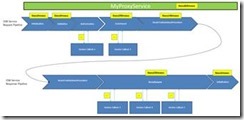
Doing performance measurements of an OSB Proxy Service by programmatically extracting performance metrics via the ServiceDomainMBean and presenting them as an image via a PowerPoint VBA module by Marc Lameriks

clip_image002


This article explains how the process of doing performance measurements of an OSB Proxy Service and presenting them in a “performance analysis document” was partly automated. After running a SoapUI based Test Step (sending a request to the service), extracting the service performance metrics was done by using the ServiceDomainMBean in the public API of the Oracle Service Bus. These service performance metrics can be seen in the Oracle Service Bus Console via the Service Monitoring Details. Furthermore this article explains how these service performance metrics are used by a PowerPoint VBA module and slide with placeholders, to generate an image, using injected service performance metric values. This image is used to present the measurements in a “performance analysis document”.

Performance issues

In a web application we had performance issues in a page where data was being shown that was loaded using a web service (deployed on Oracle Service Bus 11gR1). In the web page, an application user can fill in some search criteria and when a search button is pressed, data is being retrieved (from a database) , via the MyProxyService, and shown on the page in table format.

Performance analysis document

Based on knowledge about the data, the business owner of the application, put together a number of test cases that should be used to do performance measurements, in order to determine if the performance requirements are met. All in all there were 9 different test cases. For some of these test cases, data was being retrieved for example concerning a period of 2 weeks and for others a period of 2 months.

Because it was not certain what caused the lack of performance, besides the front-end, also the back-end OSB Proxy Service was to be investigated and performance measurement results were to be documented (in the “performance analysis document ”). It was known from the start that once the problem was pinpointed and a solution was chosen and put in place, again performance measurements should be carried out and the results were again to be documented. Read the complete article here.

SOA & BPM Partner Community

For regular information on Oracle SOA Suite become a member in the SOA & BPM Partner Community for registration please visit www.oracle.com/goto/emea/soa (OPN account required) If you need support with your account please contact the Oracle Partner Business Center.

Blog Twitter LinkedIn image[7][2][2][2] Facebook clip_image002[8][4][2][2][2] Wiki

Patching JDeveloper 12.1.3 for OSB and SOA by Jon Petter Hjulstad Keeping your JDeveloper SOA/OSB Quickstart environment up to date

clip_image002


Oracle released new patches some weeks ago, and to keep your JDeveloper updated for SOA Suite and Oracle Service Bus there are three products you should patch:

  • Oracle SOA Suite
  • Oracle Service Bus
  • Weblogic

When you search My Oracle Support (MOS) for patches – you can see which ones are the recommended ones. There are also notes in MOS which are updated regularly:

  • OSB 11g and 12c: Bundle Patch Reference (Doc ID 1499170.1)
  • SOA 11g and 12c: Bundle Patch Reference (Doc ID 1485949.1)
  • Master Note on WebLogic Server Patch Set Updates (PSUs) (Doc ID 1470197.1)

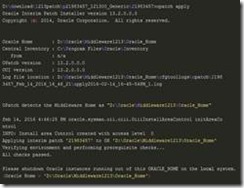
In the environment I used for this example. Patch 19707784: SOA Bundle Patch 12.1.3.0.1 was applied before. This will be detected by OPatch, and that patch will be rolled back.

The patching is simplified in the 12c-version, because now there is only one OPatch-folder to care about (in version 11 there were one per product). You can read more about it here: Oracle Documentation link

For each patch there is a README.txt, whick you should read. It contains Pre-Installation Instructions, Install and Post-Instructions. For the SOA-patch, you should look through the steps for the Post-steps

I use Windows environment in this example, so I set the environment variables first (run as Administrator): Read the complete article here.

SOA & BPM Partner Community

For regular information on Oracle SOA Suite become a member in the SOA & BPM Partner Community for registration please visit www.oracle.com/goto/emea/soa (OPN account required) If you need support with your account please contact the Oracle Partner Business Center.

Blog Twitter LinkedIn image[7][2][2][2] Facebook clip_image002[8][4][2][2][2] Wiki

UKOUG Technology Conference & Exhibition 2016 5th – 7th December, ICC Birmingham

image

This year’s conference keynote will be Neil Sholay, Oracle Vice President Digital Business, EMEA, who will be speaking on Data Driven Business. Also on the educational agenda will be further Oracle keynotes and the following SOA content.

Application Container Cloud Service: Backend Integration Using Node.js

Mr Maarten Smeets

How SOA CS is Being Used by an End User Organisation & the Lessons & Benefits Learnt

Mr Phil Wilkins

Handling Large File With Managed File Transfer & Oracle’s Cloud Services

Dr Robert van Mölken

Getting the Most Out of Oracle Service Bus – 10 Things you Should do & Shouldn’t do

Dr Paddy Spencer

Software Development Lifecycle Management for Cloud & On-premise FMW Applications

Mr Bruno Alves

Empower Your Business Owners With Integration Analytics and Real-Time Insight

Ms Simone Geib

Experiences at CIMA Implementing the UK’s 1st Production SOA Cloud Service

Mr Kiran Tailor

Help! What Integration Solution is Best for me?

Mr Ronald van Luttikhuizen

For details please visit the registration page here.

SOA & BPM Partner Community

For regular information on Oracle SOA Suite become a member in the SOA & BPM Partner Community for registration please visit www.oracle.com/goto/emea/soa (OPN account required) If you need support with your account please contact the Oracle Partner Business Center.

Blog Twitter LinkedIn image[7][2][2][2] Facebook clip_image002[8][4][2][2][2] Wiki