FMW SOA Monitoring Module is released. (Supports 11g and 12c)

image

WLSDM SOA Monitoring, Diagnostics & Report Modules

  • SOA Smart Dashboards
    • Monitoring BPEL Engine (Only 11g)
    • BPEL Engine Dashboard (Historical – Only 11g)
    • Monitoring Composite Performance
    • Monitoring Callback and Invoke
    • Monitoring Composite Faults
    • Monitoring Deployed Composites Trend
    • Summarizing Composite List & Endpoint URIs
  • SOA Notifications and Alarms
    • BPEL Engine Notifications
    • Composite Performance Notifications
    • Callback and Invoke (DLV_MESSAGE) Notifications
    • Composite Faults and Errors Notifications
  • SOA Reports
    • Reporting SOA BPEL Engine
    • Reporting SOA Composite Performance
    • Reporting SOA Callback and Invoke (DLV_MESSAGE)
    • Reporting SOA Composite Faults and Errors

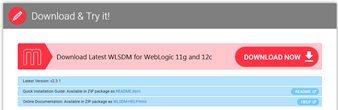
Get WLSDM here.

SOA & BPM Partner Community

For regular information on Oracle SOA Suite become a member in the SOA & BPM Partner Community for registration please visit www.oracle.com/goto/emea/soa (OPN account required) If you need support with your account please contact the Oracle Partner Business Center.

Blog Twitter LinkedIn image[7][2][2][2] Facebook clip_image002[8][4][2][2][2] Wiki

Deploying Oracle Service Bus (OSB) Projects with Configuration Files in FlexDeploy by Greg Draheim

image

OSB Configuration files allow the developer to manage environment specific values during deployment.  FlexDeploy supports the use of these configuration files and extends them to using tokens in the configuration file that will get replaced with configured properties from FlexDeploy.   This way we do not need to generate a customization file for every environment where we are going to deploy the project.  We can have one configuration file that will work across environments.

My example is built using JDeveloper and SOA 12.2.1.  I have an OSB project named ValidatePayment that is acting as a proxy service for a SOA service:

The ValidateBS when I run locally, refers to localhost:

When I deploy this to our shared development environment, I want to replace http://localhost.flexagon:7001/ with http://soalt05.flexagon:7001/.  When I deploy to production, I want the URL to be http://soa.flexagon.com/.  To accomplish this I add a property to my OSB Deploy workflow in FlexDeploy.  First, I will show the full workflow for the OSB deploy.  Since FlexDeploy has smart plugins, the deploy workflow is a simple 1 step process to import the OSB project: Read the complete article here.

SOA & BPM Partner Community

For regular information on Oracle SOA Suite become a member in the SOA & BPM Partner Community for registration please visit www.oracle.com/goto/emea/soa (OPN account required) If you need support with your account please contact the Oracle Partner Business Center.

Blog Twitter LinkedIn image[7][2][2][2] Facebook clip_image002[8][4][2][2][2] Wiki

Seamless source “migration” from SOA Suite 12.1.3 to 12.2.1 using WLST and XSLT by Maarten Smeets

image

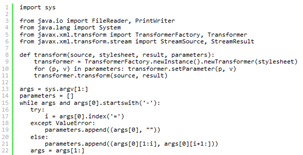
When you migrate sources from SOA Suite 12.1.3 to SOA Suite 12.2.1, the only change I’ve seen JDeveloper do to the (SCA and Service Bus) code is updating versions in the pom.xml files from 12.1.3 to 12.2.1 (and some changes to jws and jpr files). Service Bus 12.2.1 has some build difficulties when using Maven. See Oracle Support: “OSB 12.2.1 Maven plugin error, ‘Could not find artifact com.oracle.servicebus:sbar-project-common:pom’ (Doc ID 2100799.1)”. Oracle suggests updating the pom.xml of the project, changing the packaging type from sbar to jar and removing the reference to the parent project. This however will not help you because the created jar file does not have the structure required of Service Bus resources to be imported. To deploy Service Bus with Maven I’ve used the 12.1.3 plugin to create the sbar and a custom WLST file to do the actual deployment of this sbar to a 12.2.1 environment. A similar solution is described here.

Updates to the pom files can easily be automated as part of a build pipeline. This allows you to develop 12.1.3 code and automate the migration to 12.2.1. This can be useful if you want to avoid keeping separate 12.1.3 and 12.2.1 versions of your sources during a gradual migration. You can do bug fixes on the 12.1.3 sources and compile/deploy to production (usually production is the last environment to be upgraded) and use the same pipeline to compile and deploy the same sources (using altered pom files) to a 12.2.1 environment. Read the complete article here.

SOA & BPM Partner Community

For regular information on Oracle SOA Suite become a member in the SOA & BPM Partner Community for registration please visit www.oracle.com/goto/emea/soa (OPN account required) If you need support with your account please contact the Oracle Partner Business Center.

Blog Twitter LinkedIn image[7][2][2][2] Facebook clip_image002[8][4][2][2][2] Wiki

Converting ADLs to implement end to end JSON in SOA Suite 12.2.1 -PART I by Luis Augusto Weir

clip_image002


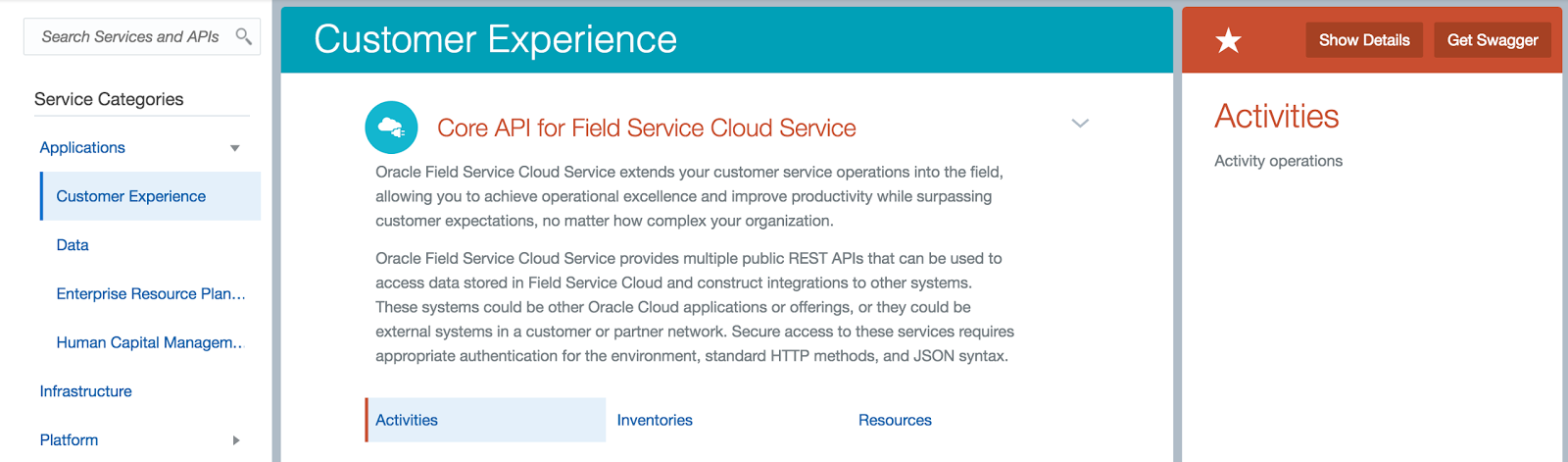
There is no doubt that web [Rest] APIs have become extremely popular and its usage has gone well beyond just building APIs in support of mobile apps. We can see the adoption of resource-oriented architectures (ROA) by probably all SaaS vendors who provide out-of-the-box APIs as the means to connect and interact with their cloud applications. Take for example the Oracle Cloud. To discover and consume publicly available Oracle SaaS APIs, all one need to do is browse the Oracle API Catalog Cloud Service (which is publicly accessible) and just select the Swagger definition for any given API.

But (as you probably already know) the adoption of web APIs hasn’t stopped there.  With the increased popularity of Microservice Architectures , initiatives such as Open Legacy ,  and node.js based frameworks like loopback and sails (to name a few), API-enabling system of records is becoming a lot easier.
This is putting a lot of pressure in software vendors to quickly modernise their integration suites to natively support the technology-stacks and patterns prevalent in these type of architectures. For example, if an organisations mobile application needs to interact with a system of record (on premise or the cloud) that already exposes a web API, the integration stack should be capable of supporting JSON over HTTP end-to-end without having to convert to XML back and forth. Not only is this impractical but introduces more processing burden to the core stack…
Luckily for many Oracle’s customers and Oracle Fusion Middleware / Oracle PaaS practitioners like myself, with the latest release of Oracle SOA Suite (12.2.1) , one of the many new features introduced is the support for handing JSON end-to-end.  I don’t want to understate the importance of this as with such feature it is possible to use BPEL for example to orchestrate several APIs (all in native JSON and also in-memory with the new SOA in-memory feature) and therefore deliver coarse grained business APIs that actually perform.
For me this represents an important milestone for Oracle SOA Suite as it shows the departure from traditional SOA tech-stack and into SOA 2.0 (as I like to call it) as the suite is now better suited to support the adoption of ROA, microservices, IoT, and so on. Having worked with SOA Suite since 10.1.3.1 this is very exiting. Read the complete article here.

SOA & BPM Partner Community

For regular information on Oracle SOA Suite become a member in the SOA & BPM Partner Community for registration please visit www.oracle.com/goto/emea/soa (OPN account required) If you need support with your account please contact the Oracle Partner Business Center.

Blog Twitter LinkedIn image[7][2][2][2] Facebook clip_image002[8][4][2][2][2] Wiki

How Dev/Test in the cloud is accelerating delivery of Oracle Middleware projects by Matt Wright

clip_image002


The source of competitive advantage and value that an organization delivers to its end customers is increasingly defined by the software “systems” that underpin them. As a result, organizations find themselves in a digital race, where the speed at which IT can reliably deliver new features and innovations is what sets them apart from their competition.

In an industrial company, avoid software at your own peril . . . a software company could disintermediate GE someday, and we’re better off being paranoid about that.”

Jeff Immelt, CEO, General Electric

These innovations are seldom delivered by pre-packaged business applications, whether running on-premise or delivered as Software as a Service (SaaS), but by custom solutions derived in-house. Yet, most organizations have neither the time nor funds to build these systems of innovation from the ground up. Instead, they are delivered by layering new capabilities on top of existing applications, an approach defined by Gartner as “Pace-Layered”.

Oracle Middleware, such as the Oracle BPM Suite and Oracle SOA Suite provides the application glue to rapidly and continually combine these business apps, like puzzle pieces, into a custom integrated solution in order to deliver a seamless and unified experience to the customer.

Yet even with this Pace-Layered approach, many IT projects are still failing to deliver either on-time or on-budget, with development teams often held back by their own IT organization. So how can you reduce the cost of the software you develop and decrease the time it takes to get it right?

Research shows moving development to the cloud can initially reduce development time by an order of 11 to 20 percent. Organizations that fully embrace the cloud for Dev and Test are experiencing 30%+ time savings upon maturing their DevOps capabilities. Read the complete article here.

SOA & BPM Partner Community

For regular information on Oracle SOA Suite become a member in the SOA & BPM Partner Community for registration please visit www.oracle.com/goto/emea/soa (OPN account required) If you need support with your account please contact the Oracle Partner Business Center.

Blog Twitter LinkedIn image[7][2][2][2] Facebook clip_image002[8][4][2][2][2] Wiki

Real-Time Integration Business Insight: External Dashboard


clip_image002

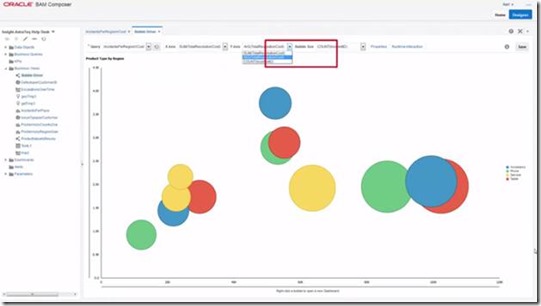
This video demonstrates how to include external dashboards in Oracle Real-Time Integration Business Insight. Watch the video here.

SOA & BPM Partner Community

For regular information on Oracle SOA Suite become a member in the SOA & BPM Partner Community for registration please visit www.oracle.com/goto/emea/soa (OPN account required) If you need support with your account please contact the Oracle Partner Business Center.

Blog Twitter LinkedIn image[7][2][2][2] Facebook clip_image002[8][4][2][2][2] Wiki

Tapping into life – An Introduction to Stream Analytics by Jose Rodrigues

clip_image001Welcome to a new stream (no pun intended) on Red Mavericks articles. This time, we’ll be doing an introduction on Oracle’s new Stream Analytics.

We’ll be guiding you through this new, and very cool, product showing what it is and what it can do to leverage this largely untapped resource which is event stream analysis. In fact, streams are everywhere and are becoming more and more open and accessible. If you “wiretap” these, listen to them and understand the behavioral patterns , you can build extremely valuable applications that will help you deliver more to your customers.

It’s a whole new ball game. I hope you find this interesting.

What is Oracle Stream Analytics?

Oracle Stream Analytics (previously Oracle Stream Explorer) is, in fact, an application builder platform, focused on applications that process events coming from the most various systems, internal or external to the organization, thus enabling Business Insight information and deriving relevant data from these events.

It works using an Event Processing Engine to perform Fast Data Analysis over a large number of events that typically appear in a given timeframe.

It also provides a run-time platform that will allow you to run and manage the applications you built.

It’s not a new Oracle Event Processor. It uses OEP as the underlying Event Processing Engine (you can also use Apache Spark as a processing engine, if you prefer. More on this in other articles)

The real power in Oracle Stream Analytics is, curiously, in its UI. As an application builder, it went to great lengths to keep the UI really easy to use. The result is, in my view, very well achieved, with enough simplicity to allow that Business Users, provided they have a bit of technical knowledge, can actually build  applications on their own or with little help from the IT. Read the complete article here.

SOA & BPM Partner Community

For regular information on Oracle SOA Suite become a member in the SOA & BPM Partner Community for registration please visit www.oracle.com/goto/emea/soa (OPN account required) If you need support with your account please contact the Oracle Partner Business Center.

Blog Twitter LinkedIn image[7][2][2][2] Facebook clip_image002[8][4][2][2][2] Wiki

Stream Analytics (OSA): the new Oracle Stream Explorer by Guido Schmutz

clip_image002

A few days ago, Oracle released the new version of Oracle Stream Explorer and renamed it to Oracle Stream Analytics (OSA). This new version is an impressive release with over 15 new major features! It really deserves the name change.

Enhanced Patterns Library

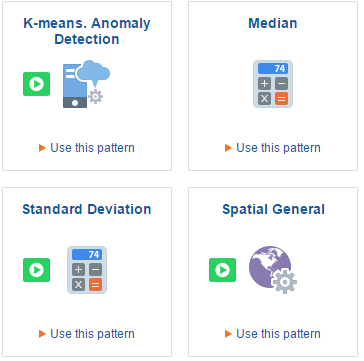
The existing patterns have been enhanced substantially  now including Spatial, Statistical, General industry and Anomaly detection through streaming machine learning.

New Geo-spatial pattern

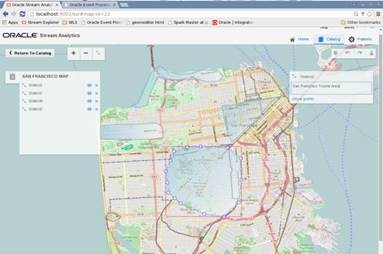
This pattern can be used to analyze streams containing geo-location data and determine how events relate to pre-defined geo-fences in your maps.

Integrated Expression Builder

The Expression Builder allows to add calculated/derived fields on the Live Output Stream of an exploration, an important step towards the “streaming Excel sheet” idea of Oracle Stream Analytics.

It provides the ability to apply and insert mathematical and statistical calculations into the active live output stream. Once a new expression has been defined and validated, a column will be added next to the column of relevance. This new column can then be used in subsequent filters and explorations. Read the complete article here.

SOA & BPM Partner Community

For regular information on Oracle SOA Suite become a member in the SOA & BPM Partner Community for registration please visit www.oracle.com/goto/emea/soa (OPN account required) If you need support with your account please contact the Oracle Partner Business Center.

Blog Twitter LinkedIn image[7][2][2][2] Facebook clip_image002[8][4][2][2][2] Wiki

Stream Analytics platform

clip_image002


Stream Analytics platform provides a compelling combination of an easy-to-use visual façade to rapidly create and dynamically change Real Time Streaming Analytics (Fast Data) applications, together with a comprehensive run-time platform to manage and execute these solutions. Completely abstracting the entire development and deployment processes, it simplifies the rapid creation of event driven applications for any type of real time business solution, enabling the Enterprise to really immerse itself in next generation real time applications, with times to market of minutes, rather than days or weeks.
Oracle Stream Analytics embraces an industry focus approach with features to leverage preexisting patterns of well known event processing implementations, the definition of Streams that represent the connection to the most popular protocols and methodologies, References which allow immediate joining of streaming data to relational databases and Explorations that provide a stunning visual representation of real time disparate event data flows providing customers with insightful data interrogation in real-time so that downstream applications, service oriented architectures and event-driven architectures are driven by true, real-time intelligence.
Oracle Stream Analytics provides organizations with a complete “top-down” solution for designing, defining, developing and implementing Event Stream Processing applications that not only meet business requirements but perform to the highest levels of the enterprise expectation. Built on the latest industry-standards including ANSI SQL, Java, Spring DM and OSGi, the Oracle Stream Analytics Event Processing runtime component provides an open architecture for sourcing, processing, and publishing complex events throughout the enterprise.  Now together with this ease-of-use web tooling and a visual development environment, as well as standard Java-based tooling, this ensures that your IT and line of business teams can be developing event-driven applications without the hurdle of specialized training or unique skill-set investment. Read the complete article here.

SOA & BPM Partner Community

For regular information on Oracle SOA Suite become a member in the SOA & BPM Partner Community for registration please visit www.oracle.com/goto/emea/soa (OPN account required) If you need support with your account please contact the Oracle Partner Business Center.

Blog Twitter LinkedIn image[7][2][2][2] Facebook clip_image002[8][4][2][2][2] Wiki

Importing SOA VM to Amazon Cloud – Part 1 by Grzegorz Lysko

clip_image002

Introduction

Aldough Oracle is pushing it’s own cloud solutions agresivly there are still other cloud providers in the market that can be used to build similar functionality. Migration of existing infrastructure to the comercial cloud is a scenario worth considering. Today I will show how to use Amazon Cloud Services (AWS) to move an existing SOA suite VM to Amazon Elastic Compute Cloud (Amazon EC2). For this porpuose I will use a Oracle Pre-built Virtual Machine for SOA Suite 12.2.1 and import it to AWS. After the import I will create a running instance that can be used further deployment and development of integration solutions.

Prerequsites for the tasks

  1. Installed 7 zip
  2. Oracle VM Virtualbox
  3. Amazon web services account with administrative rights

Downloading and preparing the VM

Before importing the VM from oracle some adjustemnts have to be made for the import to succed. The main reason for the adjustment is the fact that the import task will not allow Oracle Unbreakable Enterprise Kernel. Also aldough previous versions where of the VM where in the OVA format the current version is in an OVF (Open Virtualization Format) package. For the amazon import OVA is better so after adjusting the VM i will prepare an OVA file.

  • Download the VM
  • After the download extract the files using 7 zip
Importing and starting the VM in Oracle VM Virtualbox
  • Start Oracle VM VirtualBox
  • Import the VM ( go to File-> Import Appliance)
  • Chose the Integration_12.2.1_OTN.ovf file and start the import

Read the complete article here.

SOA & BPM Partner Community

For regular information on Oracle SOA Suite become a member in the SOA & BPM Partner Community for registration please visit www.oracle.com/goto/emea/soa (OPN account required) If you need support with your account please contact the Oracle Partner Business Center.

Blog Twitter LinkedIn image[7][2][2][2] Facebook clip_image002[8][4][2][2][2] Wiki