API Platform for your APIs across Cloud and on-Premises – Partner Webcast November 29th 2016

imageAPI Platform for your APIs across Cloud and on-Premises

Presenter: Robert Wunderlich, Oracle Senior Principal Product Manager

Webcast description

This is an introduction to API Platform due to release early 2017. API Platform allows you to design APIs in the cloud, and run them anywhere from Oracle Public Cloud, to Amazon, to Azure, or even on-premises. Come learn about how API Platform fits into a complete Integration Platform.

Presenter’s bio:

Robert is the outbound Product Manager for API Platform Cloud Service. Formerly the PM for Oracle Service Bus, his background is in Integration and Microservice Architectures.

Schedule:

November 29th 9:00 AM GMT

For details please visit the registration page here

SOA & BPM Partner Community

For regular information on Oracle SOA Suite become a member in the SOA & BPM Partner Community for registration please visit www.oracle.com/goto/emea/soa (OPN account required) If you need support with your account please contact the Oracle Partner Business Center.

Blog Twitter LinkedIn image[7][2][2][2] Facebook clip_image002[8][4][2][2][2] Wiki

Technorati Tags: SOA Community,Oracle SOA,Oracle BPM,OPN,Jürgen Kress

Doing performance measurements of an OSB Proxy Service by programmatically extracting performance metrics via the ServiceDomainMBean and presenting them as an image via a PowerPoint VBA module by Marc Lameriks

clip_image002


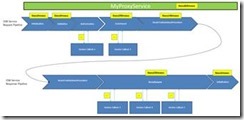
This article explains how the process of doing performance measurements of an OSB Proxy Service and presenting them in a “performance analysis document” was partly automated. After running a SoapUI based Test Step (sending a request to the service), extracting the service performance metrics was done by using the ServiceDomainMBean in the public API of the Oracle Service Bus. These service performance metrics can be seen in the Oracle Service Bus Console via the Service Monitoring Details. Furthermore this article explains how these service performance metrics are used by a PowerPoint VBA module and slide with placeholders, to generate an image, using injected service performance metric values. This image is used to present the measurements in a “performance analysis document”.

Performance issues

In a web application we had performance issues in a page where data was being shown that was loaded using a web service (deployed on Oracle Service Bus 11gR1). In the web page, an application user can fill in some search criteria and when a search button is pressed, data is being retrieved (from a database) , via the MyProxyService, and shown on the page in table format.

Performance analysis document

Based on knowledge about the data, the business owner of the application, put together a number of test cases that should be used to do performance measurements, in order to determine if the performance requirements are met. All in all there were 9 different test cases. For some of these test cases, data was being retrieved for example concerning a period of 2 weeks and for others a period of 2 months.

Because it was not certain what caused the lack of performance, besides the front-end, also the back-end OSB Proxy Service was to be investigated and performance measurement results were to be documented (in the “performance analysis document ”). It was known from the start that once the problem was pinpointed and a solution was chosen and put in place, again performance measurements should be carried out and the results were again to be documented. Read the complete article here.

SOA & BPM Partner Community

For regular information on Oracle SOA Suite become a member in the SOA & BPM Partner Community for registration please visit www.oracle.com/goto/emea/soa (OPN account required) If you need support with your account please contact the Oracle Partner Business Center.

Blog Twitter LinkedIn image[7][2][2][2] Facebook clip_image002[8][4][2][2][2] Wiki

Patching JDeveloper 12.1.3 for OSB and SOA by Jon Petter Hjulstad Keeping your JDeveloper SOA/OSB Quickstart environment up to date

clip_image002


Oracle released new patches some weeks ago, and to keep your JDeveloper updated for SOA Suite and Oracle Service Bus there are three products you should patch:

  • Oracle SOA Suite
  • Oracle Service Bus
  • Weblogic

When you search My Oracle Support (MOS) for patches – you can see which ones are the recommended ones. There are also notes in MOS which are updated regularly:

  • OSB 11g and 12c: Bundle Patch Reference (Doc ID 1499170.1)
  • SOA 11g and 12c: Bundle Patch Reference (Doc ID 1485949.1)
  • Master Note on WebLogic Server Patch Set Updates (PSUs) (Doc ID 1470197.1)

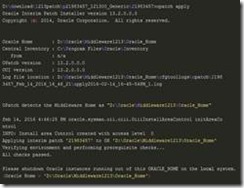
In the environment I used for this example. Patch 19707784: SOA Bundle Patch 12.1.3.0.1 was applied before. This will be detected by OPatch, and that patch will be rolled back.

The patching is simplified in the 12c-version, because now there is only one OPatch-folder to care about (in version 11 there were one per product). You can read more about it here: Oracle Documentation link

For each patch there is a README.txt, whick you should read. It contains Pre-Installation Instructions, Install and Post-Instructions. For the SOA-patch, you should look through the steps for the Post-steps

I use Windows environment in this example, so I set the environment variables first (run as Administrator): Read the complete article here.

SOA & BPM Partner Community

For regular information on Oracle SOA Suite become a member in the SOA & BPM Partner Community for registration please visit www.oracle.com/goto/emea/soa (OPN account required) If you need support with your account please contact the Oracle Partner Business Center.

Blog Twitter LinkedIn image[7][2][2][2] Facebook clip_image002[8][4][2][2][2] Wiki

Advisor Webcast: SOA and SOACS Upgrade Best Practices and Roadmap December 6th 2016

image


Register Now! Advisor Webcast SOA and SOACS Upgrade Best Practices and Roadmap December 6, 2016

This one-hour Advisor Webcast is recommended for system administrators who are interested on best practices to upgrade to SOA 12c or move to SOA Cloud Services (SOACS) .  Presented by SOA Product Management.

Schedule:

  • Tuesday , December 06, 2016 11:00 AM (US Pacific Time)
  • Tuesday , December 06, 2016 02:00 PM (US Eastern Time)
  • Tuesday , December 06, 2016 08:00 PM (Central European Time)
  • Wednesday, December 07, 2016 12:30 AM (India Standard Time)

Topics Include:

  • In-Place SOA Upgrades
  • Side by Side SOA Upgrade
  • Options Benefits Comparison
  • OnPrem SOA to SOA Cloud (SOACS) Upgrade

Duration: 1 hr Current Schedule and Archived Downloads can be found in <<Note 740966.1>>

WebEx Conference Details Topic: SOA and SOACS Upgrade Best Practices and Roadmap
Event Number: 590 560 413
Event Passcode: 909090

Register Here!

SOA & BPM Partner Community

For regular information on Oracle SOA Suite become a member in the SOA & BPM Partner Community for registration please visit www.oracle.com/goto/emea/soa (OPN account required) If you need support with your account please contact the Oracle Partner Business Center.

Blog Twitter LinkedIn image[7][2][2][2] Facebook clip_image002[8][4][2][2][2] Wiki

Connect and consume data assets with OSB12c and WebCenter Sites 11g using the REST api by Fabio Persico

clip_image002


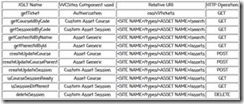
In one of the project I’ve worked on, I configured an automatic creation/update and delete of assets in WebCenter Sites 11g using its REST api via OSB.
The configuration is a bit tricky so I want to share the solution.
I am not giving the details step by step of how this can be implemented as I am sharing the code, btw I’ll explain the main important concept.

What it is needed for this tip:
  • JDeveloper 12.1.3 (SOA Quick start version)
  • An account with read/write right permission in a WebCenter Sites server
  • The AssetType created in Sites
OSB Services Implemented

The Pipeline in the project contains the below services: Read the complete article here.

SOA & BPM Partner Community

For regular information on Oracle SOA Suite become a member in the SOA & BPM Partner Community for registration please visit www.oracle.com/goto/emea/soa (OPN account required) If you need support with your account please contact the Oracle Partner Business Center.

Blog Twitter LinkedIn image[7][2][2][2] Facebook clip_image002[8][4][2][2][2] Wiki

Service Bus 12.2.1 JVM Settings: PermSize, Heap, Non-Heap, and ResourceManagement by Frank Munz

clip_image002

Oracle Service Bus comes with JVM settings that cause questions to some customers. This posting provides answers to the most common questions I discussed in workshops or received so far.

Warning about PermSize Option

Question 1: “I see the following warning:

Java HotSpot(TM) 64-Bit Server VM warning: ignoring option MaxPermSize=1024m; support was removed in 8

Does that mean that Oracle generates the startup scripts with wrong JVM flags?”

Answer: With Oracle JVM 8 the permanent space was removed. Not having a perm space was a JRockit “feature” that has been ported over to the Oracle JVM. The warnings of course are harmless. Startup scripts for WebLogic only domains are generated correctly for WebLogic 12.2.1. So Oracle needs to change this for OSB domains and they know about it.

Heap Size

Question 2: “How big is Oracle Service Bus now? I used to be able to create and run a cluster on my laptop with earlier versions but now I run into resource problems.”

Answer: Default startup parameters are: -Xms1024m -Xmx2048m, i.e. minimum heap size is 1 GB, maximum heap size is 2 GB. Hence you should expect your process size to be larger than 1 GB right from the start. Read the complete article here.

SOA & BPM Partner Community

For regular information on Oracle SOA Suite become a member in the SOA & BPM Partner Community for registration please visit www.oracle.com/goto/emea/soa (OPN account required) If you need support with your account please contact the Oracle Partner Business Center.

Blog Twitter LinkedIn image[7][2][2][2] Facebook clip_image002[8][4][2][2][2] Wiki

DB Link integration or ESB based by Dalibor Blazevic

 clip_image002

Pros. and Cons.

As the state owned electric company of one East European country is undergoing transformation to conform to EU standards it has been transformed from one monolith organization to different smaller entities, each with his own task. Furthermore these entities have been further subdivided based on a region. Also the new players arrived on the market as the law has ben changed to accommodate that possibility. Now the different organizations that emerged from this dividing and subdividing have not been able to use a single monolith ERP and billing application to process and accommodate all possible use cases that the process of selling, producing, provisioning, and supplying electric current, requires. Different companies have been allowed to use their own IT systems to satisfy their business needs. IT systems have become heterogeneous. However because of the need for cooperation and data sharing between these organizations as both required by law and by business needs, numerous use cases requiring integration have emerged. Organizations are faced faced with dilemma whether to invest in ESB based integration solution or use, from his point of view, simpler and chipper solution. Point-to-Point Solution that is based on numerous database links between different heterogeneous databases.

Integration entities

Beside the needs to exchange data between two organizations doing business in different regions, most of the data exchange occurs between entities doing cooperative efforts from selling to provisioning of electric current to the end users. First of all the end user has open possibility to buy electric current from different sellers based on the different package offering provided by seller. On the other hand seller has the possibility to choose from which producer to buy electric current based on the current market prices for electric production and future trend analyses. That means that distribution channel from the producer to the end user does not have to be constant as producer, provisioning channel from producer to distributor and supplier, and in some cases also supplier himself might get changed during the duration of the contract period. Numerous use cases are needed to satisfy previously mentioned requirements and we are going to mention end explain some of them and present them in both use case UML diagrams and possible implementation outcomes.

Use cases

From the moment when the end-user signs contract with the supplier to the moment when the electric current in delivered to the end user there are several basic use cases.

Use case 1: Sending user data to supplier

As the seller of the electric current does not have to be business that is directly related with provisioning and distributing of the electric current, electric current supply can be part of the bigger packages that can include e.g. telephone plus Internet plus TV plus electric current in the same package. Read the complete article here.

SOA & BPM Partner Community

For regular information on Oracle SOA Suite become a member in the SOA & BPM Partner Community for registration please visit www.oracle.com/goto/emea/soa (OPN account required) If you need support with your account please contact the Oracle Partner Business Center.

Blog Twitter LinkedIn image[7][2][2][2] Facebook clip_image002[8][4][2][2][2] Wiki

Asynchronous interaction in Oracle BPEL and BPM. WS-Addressing and Correlation sets by Maarten Smeets

clip_image002


There are different ways to achieve asynchronous interaction in Oracle SOA Suite. In this blog article, I’ll explain some differences between WS-Addressing and using correlation sets (in BPEL but also mostly valid for BPM). I’ll cover topics like how to put the Service Bus between calls, possible integration patterns and technical challenges.

I will also shortly describe recovery options. You can of course depend on the fault management framework. This framework however does not catch for example a BPEL Assign activity gone wrong or a failed transformation. Developer defined error handling can sometimes leave holes if not thoroughly checked. If a process which should have performed a callback, terminates because of unexpected reasons, you might be able to manually perform recovery actions to achieve the same result as when the process was successful. This usually implies manually executing a callback to a calling service. Depending on your choice of implementation for asynchronous interaction, this callback can be easy or hard.

WS-Addressing

The below part describes a WS-Addressing implementation based on BPEL templates. There are alternatives possible (requiring more manual work) such as using the OWSM WS-Addressing policy and explicitly defining a callback port. This has slightly different characteristics (benefits, drawbacks) which can be abstracted from the below description. BPM has similar characteristics but also slightly different templates.

When creating a BPEL process, you get several choices for templates to base a new process on. The Synchronous BPEL template creates a port which contains a reply (output message) in the WSDL. When you want to reply, you can use the ‘Reply’ activity in your BPEL process. The activity is present when opening your BPEL process after generation by the template, but you can use it in other locations, such as for example in exception handlers to reply with a SOAP fault. If you want to call a synchronous service, you only need a single ‘Invoke’ activity.

The output message is not created in the WSDL when using the One Way or Asynchronous templates. Also when sending an asynchronous ‘reply’, you have to use the Invoke activity in your BPEL process instead of the ‘Reply’ activity. One Way BPEL process and Asynchronous BPEL process templates are quite similar. The Asynchronous template creates a callback port and message. The ‘Invoke’ activity to actually do the asynchronous callback is already present in the BPEL process after it has been generated based on the template. The One Way template does not create a callback port in the WSDL and callback invoke in the BPEL process. If you want to call an Asynchronous service and want to do something with an asynchronous callback, you should first use an ‘Invoke’ activity to call the service and then wait with a ‘Receive’ activity for the callback. Read the complete article here.

SOA & BPM Partner Community

For regular information on Oracle SOA Suite become a member in the SOA & BPM Partner Community for registration please visit www.oracle.com/goto/emea/soa (OPN account required) If you need support with your account please contact the Oracle Partner Business Center.

Blog Twitter LinkedIn image[7][2][2][2] Facebook clip_image002[8][4][2][2][2] Wiki

Managed File Transfer for SOA Customers: Overview, Demo, Q&A with Product Mgmt, Engineering and Partners – November 15th, 2016

imageRegister Now! (all registrants will receive a link after the session to the presentation, session recording and Q&A)

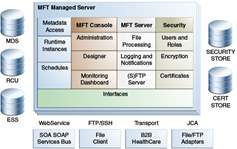
This session provides a basic product introduction to Oracle MFT from the product management team, along with real-world implementation experience and advice from an experienced SOA partner doing a cloud MFT implementation. Nearly all SOA Suite customers have needs for moving files around using managed file transfer approaches and now that Oracle has a SOA Suite component offering this functionality, we want to answer the typical questions SOA customers have around MFT, such as: what does it do and how does it work? When should I use MFT vs the SOA Suite file capabilities? What are other SOA customers doing with Oracle MFT today? Etc.

Participants in this session include:

  • Dave Berry from the Oracle Service and Cloud Integration prod mgmt team, responsible for the MFT product, providing a product overview, release timeline and demo
  • Ben Kothari of Ampliflex, talking about lessons learned and best practices from implementing MFT in the cloud for a SOA Suite 12c transportation services customer, including integrating with MFT to HR systems (e.g. Fusion HCM, Taleo, payroll, benefit providers)
  • David Shaffer of Middleworks, moderating and providing additional resources

Register Now!

SOA & BPM Partner Community

For regular information on Oracle SOA Suite become a member in the SOA & BPM Partner Community for registration please visit www.oracle.com/goto/emea/soa (OPN account required) If you need support with your account please contact the Oracle Partner Business Center.

Blog Twitter LinkedIn image[7][2][2][2] Facebook clip_image002[8][4][2][2][2] Wiki

Podcast Show Notes: Author Roundtable: SOA Suite 12c Administration by Bob Rhubart

clip_image001


What is the role of the SOA Suite Administrator? What are the key responsibilities and challenges? These and other questions are addressed in the latest OTN ArchBeat Podcast in a wide-ranging discussion with the authors of the Oracle SOA Suite 12c Administrator’s Guide (2015, Packt Publishing).

Listen to the podcast.

The Panelists

clip_image002

Arun Pareek, Principal Consultant, Rubicon Red

clip_image003clip_image004clip_image005

clip_image006

Ahmed Aboulnaga, Oracle ACE, Technical Director, Raastech Inc.

clip_image003[1]clip_image004[1]clip_image005[1]clip_image007

clip_image009

Harold Dost, Oracle ACE Associate, Principal Consultant, Raastech Inc.

clip_image003[2]clip_image004[2]clip_image005[2]clip_image010

Additional Resources

  • Oracle SOA Suite 12c: Startup and Shutdown
    This 18-page sample chapter from the Oracle SOA Suite 12c Administrator’s Guide focuses exclusively on the startup and shutdown of the Oracle SOA Suite infrastructure and how to verify the completion of each component.
  • Community Discussion: Oracle SOA Suite
    Have a technical question about SOA Suite? Have insight to share? The Oracle SOA Suite community space includes nearly 20,000 discussions about all aspects of SOA Suite. Jump in!

SOA & BPM Partner Community

For regular information on Oracle SOA Suite become a member in the SOA & BPM Partner Community for registration please visit www.oracle.com/goto/emea/soa (OPN account required) If you need support with your account please contact the Oracle Partner Business Center.

Blog Twitter LinkedIn image[7][2][2][2] Facebook clip_image002[8][4][2][2][2] Wiki